
Why evangelicals are so slow to recognize Israeli war crimes: An evangelical critique of evangelicals
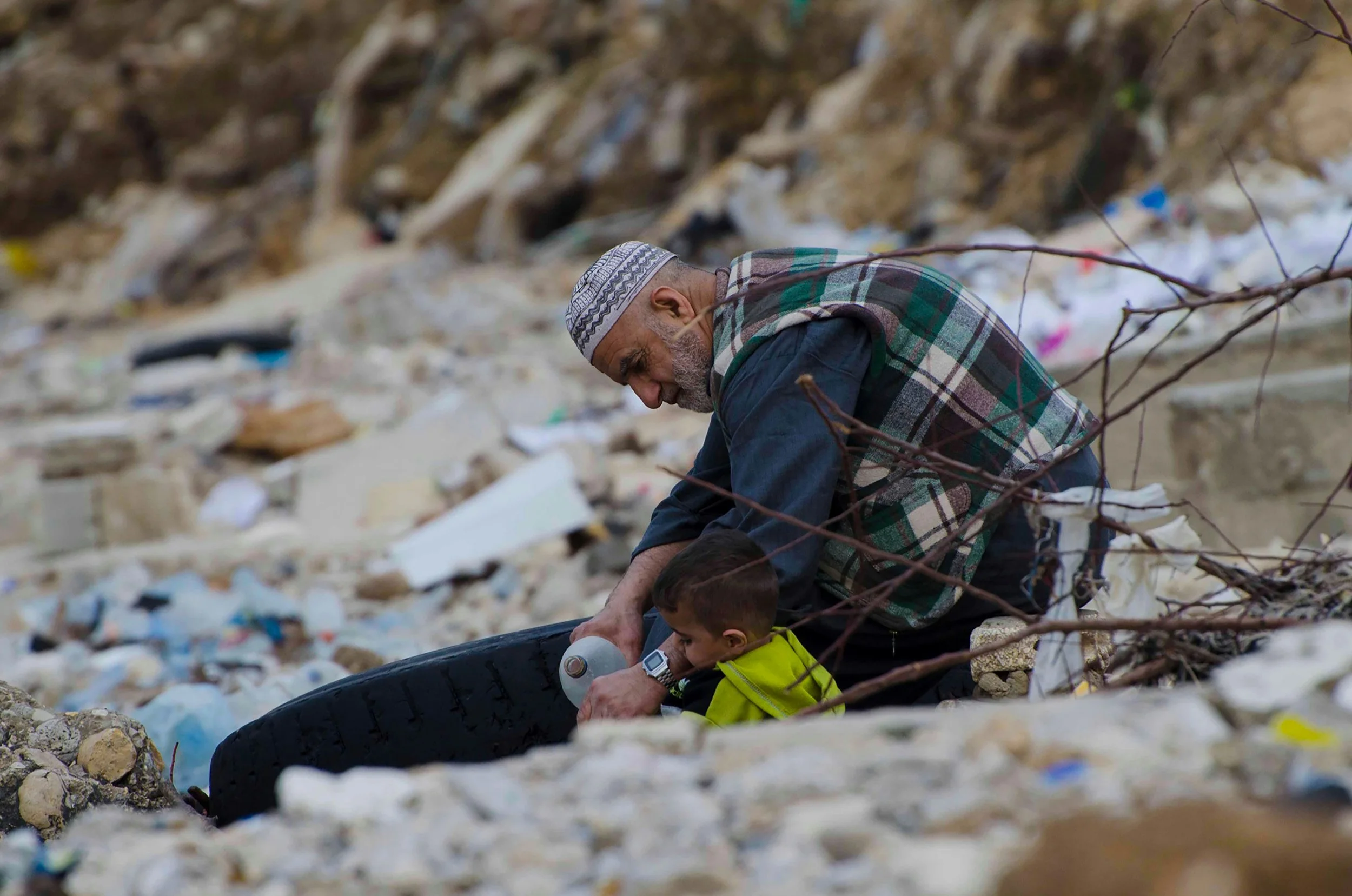
Photograph by Ahmad Bader via Unsplash
Rubin James Yi McClain
After nearly six weeks of joint U.S. and Israeli bombing in Iran, there is a temporary ceasefire in place. Even as the Trump administration remains optimistic about the outcome, the Strait of Hormuz has been closed, sending global markets into chaos. Furthermore, the rationale for military action in Iran has changed multiple times with no clear narrative coming from the administration. Meanwhile, Israel does not consider itself bound by the ceasefire and continues to bomb Lebanon.
On March 29, the Iranian Ministry of Health put the number of Iranians killed in the attacks at 2076, including 216 children. In Lebanon, it is estimated that over 2000 Lebanese, including 130 children, perished in the Israeli bombings.
While Iran and Israel may appear to be separate issues, the question of how evangelical Christians have approached them remains urgent. According to a complaint submitted to the Military Religious Freedom Foundation (MRFF), an officer stated during a briefing that Trump was “anointed by Jesus to light the signal fire in Iran to cause Armageddon and mark his return to Earth.” Animating Christian support for the devastation of both Gaza and Iran is a similar conviction that these events are part of “God’s plan.”
Over two years have passed since October 7, 2023. During this time, especially in the first months after the attacks, the world came together and unity was defined by empathy for those killed by Hamas. But as the dust settled, the devastation in Gaza unfolded in the killing of tens of thousands of people also made in the image of God, with their homes, schools, and places of worship being destroyed. Since October 7, 2023, over 70,000 Palestinians have died in Gaza, over 80% of the Gaza Strip’s infrastructure has been destroyed or damaged, and the water supplies have been intentionally targeted and restricted. Those seemingly most resistant to acknowledging what is happening have been evangelical Christians — my own community. Why, then, do so many evangelicals remain so eager to support the war in Iran as well as Israeli action in Gaza? The theological undercurrent of “Armageddon” and it all being a part of “God’s plan” offers us some key insights into this phenomenon.
The theological engine: Christian Zionism
Evangelicals maintain a deep historical sympathy for the Jewish people, rooted in centuries of European antisemitism, the horrors of the Holocaust, and the global support that followed for a Jewish homeland. Reading Theodor Herzl’s vision in Der Judenstaat or “The Jewish State,” and the context surrounding his writings makes clear why the early Zionist project resonated with Christians. Herzl laments with hope that “Oppression and persecution cannot exterminate us. No nation on earth has survived such struggles and sufferings as we have gone through.” Unfortunately, the story did not end with Herzl and his vision for a Jewish state. The founding of Israel in 1948 also meant the Nakba, which led to the displacement of over 700,000 Palestinians, and decades of occupation, military campaigns, and systemic dispossession.
The theological backbone of evangelical support for Israel is Christian Zionism and before that, the restorationist movement, which conflate the promises to Abraham with the modern state of Israel, and are intent on seeing this ethno-state control much or all of the region of the Middle East. This historical and religious framework is embedded in the theological system called Dispensationalism, the belief that history unfolds in distinct divine eras and that the return of Jews to the land of Israel is a prerequisite for Christ’s second coming. These ideas, widely popularized through the work of John Nelson Darby, Cyrus Scofield, Hal Lindsey’s “The Late Great Planet Earth,” and the “Left Behind” series, shape how millions of evangelicals interpret current events. For these Christian Zionist evangelicals, God is not only on the side of the Jewish people, he is equally on the side of the modern nation-state of Israel which is viewed as the fulfillment of Jewish restoration to the land.
While many activists, leaders, and Christians have raised their voices in opposition, many have not. And this is not a critique from outside evangelicalism. I write as an evangelical myself, formed by its virtues, shaped by its institutions, and still committed to its core convictions. Yet evangelicalism has forgotten much of its social ethic.
While these beliefs are not universal, they remain powerful forces in evangelical discourse. A 2024 Chicago Council Survey found that 64% of white evangelicals said Israel was acting appropriately in Gaza, twice the rate of the general public, while over one-third believe the U.S. is not supporting Israel enough. Other polling shows almost no decline in the belief that Jews remain “God’s chosen people,” comparing 2021 and 2025. Structural forces amplify and sustain these beliefs, such as pro-Israeli political and religious networks such as AIPAC and Christians United for Israel (CUFI), collectively totaling over 15 million members. Evangelicals are not simply influenced by these networks; they are integral to them.
A moral blind spot
One of the clearest blind spots among many U.S. Christians is the inability to see how their political framework is bound up with the horrors and tragedies unfolding abroad. Mae Elise Cannon and Allison Wattenbarger critique the Trump peace plan and expose the moral tension at the heart of U.S. involvement: “The Trump peace agreement institutes a new era of American occupation in the Palestinian Territories. Americans are not directly occupying Palestinian land, but we are currently aiding and abetting and overseeing daily violations of international law and fundamental human rights.” For many Christians, their own theological convictions impel them to support actions that run counter to their own purported moral underpinnings.
The material conditions of Gaza are utterly bleak. By late 2023, South Africa had filed its case at the International Court of Justice (ICJ), arguing that Israel was committing genocide, drawing directly from Article II of the Genocide Convention, which defines genocide through a range of acts, such as killing members of a group, inflicting bodily or mental harm, and destroying conditions of life necessary for survival. By January 2024, researchers had documented over 500 instances of public incitement to genocide by Israeli officials and public figures. Considering this data, in 2025, a UN Commission concluded that Israel is in fact committing genocide in Gaza. Public outcry has only served to accentuate these findings, as more than 450 prominent Jewish scholars, activists, and public figures signed an open letter calling on world leaders to impose sanctions on Israel for its treatment of Palestinians.
While many activists, leaders, and Christians have raised their voices in opposition, many have not. And this is not a critique from outside evangelicalism. I write as an evangelical myself, formed by its virtues, shaped by its institutions, and still committed to its core convictions. Yet evangelicalism has forgotten much of its social ethic. Carl F. H. Henry identified this failure in the mid-20th century, arguing that fundamentalists/evangelicals lacked a serious moral framework for confronting social injustice. Although institutions were later built to address this deficiency, the problem Henry named persists today in earnest. Evangelicalism, for all its progress and achievements, still exhibits retreatism, anti-intellectualism, and moral paralysis in the face of clear ethical crises. The war crimes in Gaza have exposed just how deep that paralysis runs.
Considering these factors, modern evangelical identity has been formed through decades of political alignment that frames Israel as righteous and Palestinians as evil. Evangelicals have been discipled more by media ecosystems, lobby groups, and partisan narratives than by the biblical prophets who unrelentingly denounce the oppression of vulnerable peoples. To criticize the state of Israel feels, as it did for me, like a betrayal of one’s own identity. And identity, once fused with politics and theology, is hard to disentangle.
Conclusion: Naming the powers
Here is the heart of the matter: evangelical moral intuitions have been shaped by history, theology, and, most powerfully, by the political culture wars of the last fifty years. Walter Wink’s framework of “Naming the Powers” is useful here. Before “Powers” of doctrine, politics, and social identity can be resisted, they must be named. Christian Zionism, Christian nationalism, AIPAC, CUFI, and an Israeli-centric hermeneutic that replaces Jesus are the “Powers” that evangelicals must identify before they can dismantle them. My hope and prayer is that evangelicals discover a social ethic that awakens to the suffering of those in Gaza made in the image of God. I pray they claim a moral clarity shaped not by political alliances but by Jesus, who sides with the oppressed and calls His people to do the same. The stakes are immense, and the world is watching whether evangelicals will choose indifference or courage.
Rubin McClain is an Ambassador Warren Clark Fellow (AWCF). He completed his Ph.D. in New Testament Studies at the University of Glasgow, holds a Th.M. in Biblical Studies from Asbury Theological Seminary, and an M.A. in New Testament from Trinity Evangelical Divinity School. His research examines multiethnic identities in the Greco-Roman and New Testament world. He also focuses on the intersections of biblical studies, theology of the land, and the influence of Evangelical theology on perspectives of Israel and Palestine.
The views expressed are those of the author and not necessarily those of American Baptist Home Mission Societies.
Get early access to the newest stories from Christian Citizen writers, receive contextual stories which support Christian Citizen content from the world’s top publications and join a community sharing the latest in justice, mercy and faith.