
What we learned when our congregation protested
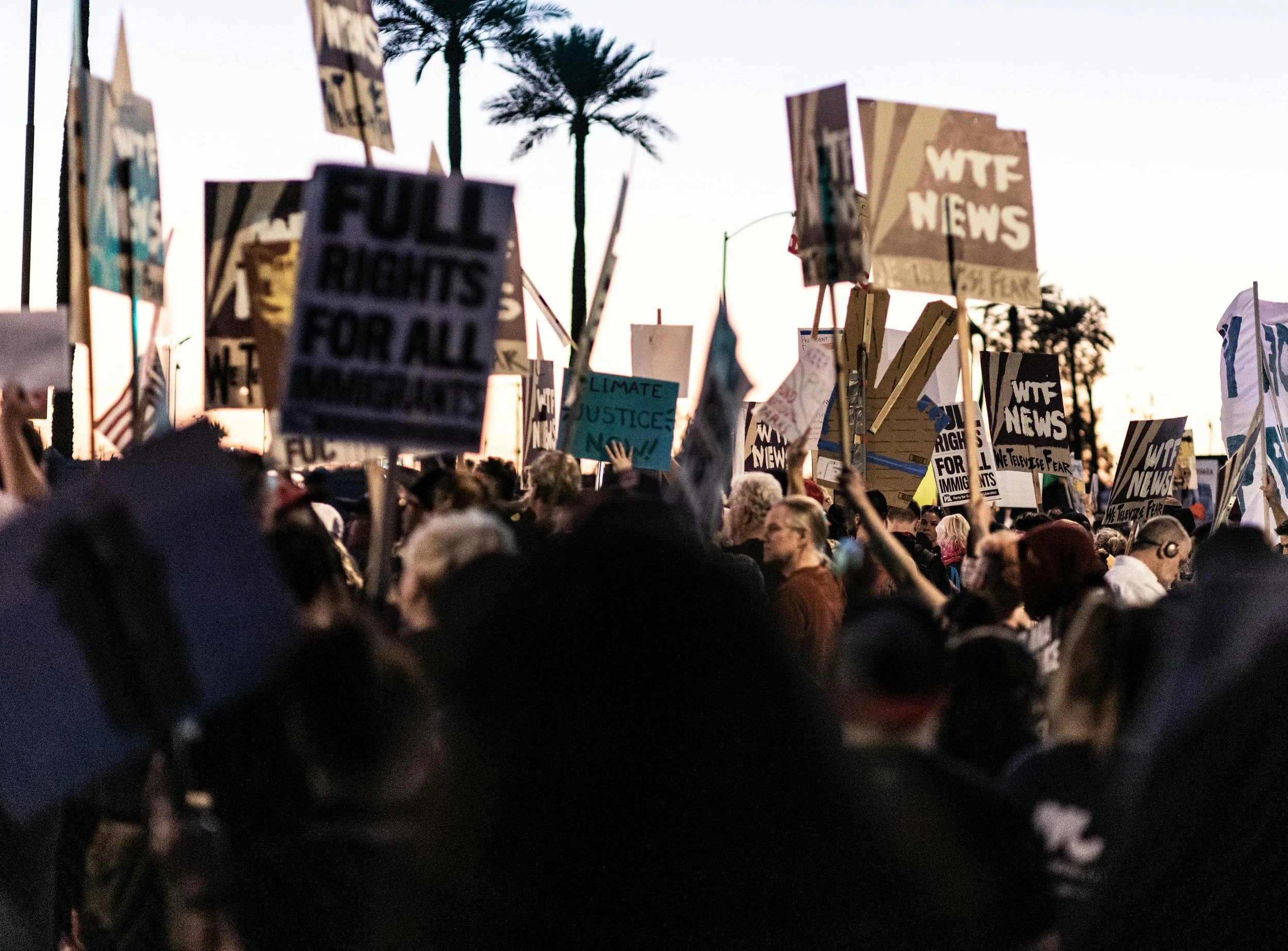
Photograph by Sides Imagery via Pexels
Rev. Clint Schnekloth
Author’s note: This essay begins the “Spiritual Practices for Public Faith” series which reflects The Christian Citizen’s commitment to connecting discipleship and citizenship by focusing both on what congregations are actually doing in their local contexts and how those practices sustain people spiritually for public engagement. Each piece will offer a short, accessible case study drawn from real ministry contexts, naming specific practices, what they aim to form in people, and what has or hasn’t worked in practice, while also attending to the inner life shaped by this work: burnout, resilience, anger, hope, and the habits that make long-term engagement possible. Many people assume that the most public practice is protest, so I want to start there.
Last Lent, our congregation tried something new in worship. We set aside a significant portion of the service each week for small group conversation. Over the course of the season, we entered into a process of discernment: what might emerge as a shared act of public faith in response to so much in our common life that runs contrary to Lutheran faith and practice?
It did not take long for a clear direction to emerge. People wanted to protest.
In the weeks leading up to Palm Sunday, those conversations became more concrete. The congregation used time during worship to plan, and the Sunday before Palm Sunday we held a poster-making session. Then, on Palm Sunday, we held a protest walk on the church grounds after worship.
Somewhere between 60 and 80 percent of those present stayed for the walk. The congregation had identified four primary concerns: trans rights (human rights), the war in Gaza, immigration, and climate change. It was a meaningful and, for many, powerful moment.
It was also not easy for everyone. Some people — especially those who are more introverted or who come to worship seeking a more contemplative experience — had to decide how, or whether, they would participate.
Afterward, I realized that we needed to think more carefully about sustainability. The experience was good, but it was also tiring. In a broader context where people are already overwhelmed, bringing that level of topical engagement into worship requires attention. It forms people, but it can also exhaust them.
By summer, we stepped back from the extended in-worship conversations. But the practice had already reshaped our life together.
Most noticeably, the sharing of the peace changed. It has become the primary interactive moment in worship. Without any specific instructions, people now move throughout the sanctuary, greeting one another, connecting with newcomers, and catching up with those they have not seen since the previous Sunday. It often takes a long time to gather everyone back together.
In that sense, the Lenten practice of intentional conversation permanently altered one of our core worship dynamics.
But its impact extended beyond worship. It equipped people to think of protest as a personal part of their faith.
Since then, when local protests have taken place, many in the congregation have participated, without any formal organizing from the church or direction from me as pastor. On one recent Sunday, I asked how many had attended a “No Kings” protest the day before. It was easily more than half the congregation. I had not even been there; I was out of town chaperoning a percussion ensemble trip. But the congregation had gone.
This is the spiritual shift I’m paying attention to. It means the question is no longer how to organize a protest through the church. The question is how to provide the spiritual resources people need to process what they have already experienced.
That does not necessarily mean repeating the slogans from the protest in the sermon, even if I agree with them. My role is pastoral. It is to offer biblical and theological resources that can sustain people over the long haul.
It is worth considering that whatever you write on a poster is a kind of prayer. If you need examples, just read the Psalms.
The formation that began in Lent has continued in other ways. One of our worship band leaders, Ted Hammig, who has been playing in the band since he was a child and is now a working musician (you can check out Ted’s music here) was invited to perform at a protest and has written a protest song.
One weekday at lunchtime, amid heightened anxiety about possible military escalation with Iran, Ted sent a text to our church council: he was heading to the courthouse with his guitar and invited others to join him. I was sitting in my office, admittedly stewing on things in a less than productive way, until I ran home, grabbed my clergy ball cap, and headed to the courthouse.
It was not a large group — just part of the band and some friends — but people kept arriving. Many were from our congregation, though not all. It was the middle of the day, so people came as they were able, in between other responsibilities. I still had a nursing home visit that afternoon. Others had classes or work commitments. We sang songs from the protest tradition. At one point, at my request, we sang a rough version of “War Pigs.” Then I had to leave.
Later, a parishioner who could not attend thanked us for being there. Her message to me underscored something important. Many people feel guilt or shame about not doing more. Part of spiritual formation in this context is helping people remember that their primary vocation may be their work or their family. If they cannot go to a protest, others will. We are one body in Christ. When some are present, all are represented.
Vocation, too, is a practice that needs cultivation — one I will return to in a future essay on vocation.
Looking back, I suspect that our Palm Sunday protest helped shape the imagination that made these later actions possible. It gave people freedom to act, whether in large demonstrations or small, spontaneous gatherings.
At the same time, I have had to learn that I do not need to initiate every action. This year, we observed Palm Sunday in a more traditional way. Other congregations organized protests in their own contexts. We can give thanks for what we have done, and we can receive inspiration from what others do next.
Finally, there is the question of what we do when we are actually at a protest.
Spiritual practice matters there as well. Singing matters. Resources developed by groups like Singing Resistance help form people for this work. Even for those who simply show up, formation is taking place.
It is worth considering that whatever you write on a poster is a kind of prayer.
I do not mean that in a restrictive or pietistic sense, as if only certain words are allowed. Quite the opposite. A lot more is allowed in prayer than we sometimes think. If you need examples, just read the Psalms.
Rev. Clint Schnekloth is pastor of Good Shepherd Lutheran Church in Fayetteville, Arkansas, a progressive church in the South. He is the founder of Canopy NWA (a refugee resettlement agency) and Queer Camp, and is the author of “A Guidebook to Progressive Church.” He blogs as Lutheran Confessions at Substack.
The views expressed are those of the author and not necessarily those of American Baptist Home Mission Societies.
Get early access to the newest stories from Christian Citizen writers, receive contextual stories which support Christian Citizen content from the world’s top publications and join a community sharing the latest in justice, mercy and faith.