
Can the war against Iran be justified morally?
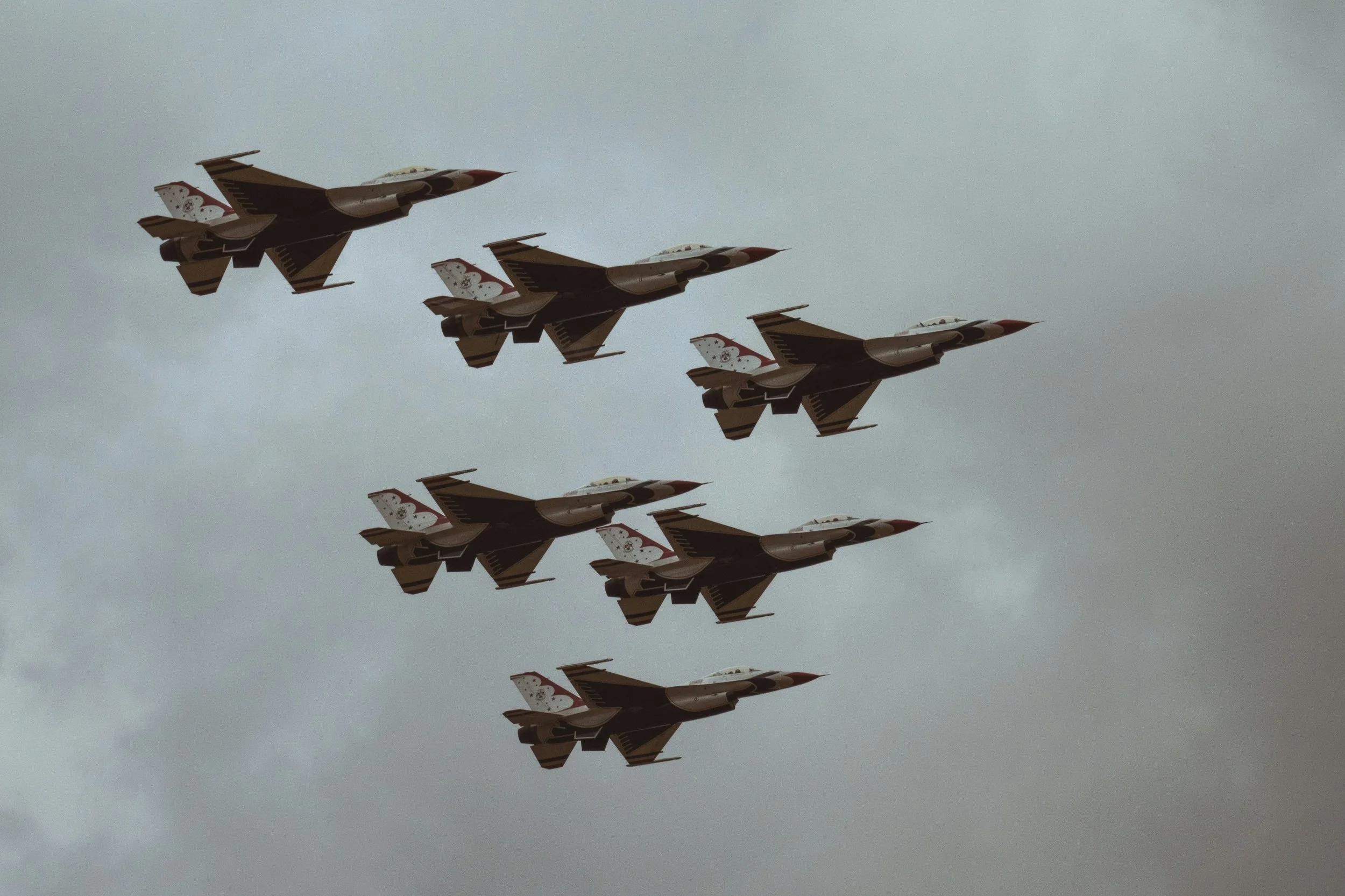
Photograph by UX Gun via Unsplash
Jim Huffman
The airwaves and media run over with analyses of the world’s latest military adventure. Were the U.S.-Israeli attacks on Iran smart? Is regime change realistic? Will the war truly obliterate Iran’s ability to make a nuclear bomb? What are its goals?
One also hears a multitude of criticisms of what we have done: the failure to consult the U.S. Congress, the possibility of making conflicts in the Middle East even messier and broader, the examples from Vietnam, Iraq, and Afghanistan, where predictions of easy victories were illusory.
Missing from nearly all the commentary, however, has been the moral question. Is the war right? Can it be justified morally?
I am neither a theologian nor an academic specialist on the questions that surround just war theory. But I am a human being, a child of God who thinks often and hard about such questions. And that compels me to share my answer in this frightening moment.
The first thing that causes me to say a loud NO to the moral question is the charter of the United Nations, which the U.S. Senate ratified in July 1945, even as war still was raging in the Pacific. That charter states that “all members shall refrain in their international relations from the threat or use of force against the territorial integrity or political independence of any state.” The only exceptions are self-defense and collective action authorized by the UN Security Council.
The United States, in other words, has promised not to use force against any state. We have, of course, broken that promise often, but that does not make the current attack — particularly against a state that poses no immediate threat to us — any less immoral, or any less criminal.
Neither does the claim that international politics are messy necessitate the cutting of corners at times. A promise broken is a promise broken. When a powerful nation breaks it, the rest of the world suffers and the trust that is essential to peace is undermined, if not destroyed.
A second question about the attack’s morality lies in the witness of every faith tradition. Jesus used dramatic examples when he talked about eschewing violence. If someone slaps me on the cheek, I am to turn and say, in effect, “Go ahead; slap the other cheek too”; if they demand my shirt, I’m to give my coat also, leaving myself naked. Later in the same sermon he turned common sense on its head when he said, “Love your enemies and pray for your persecutors. . .Be perfect, therefore, as your heavenly Father is perfect.” (Matthew 5:44, 48)
Nor was he alone in demanding peace. He was drawing on his own Jewish tradition in which the great prophet Isaiah said swords should be repurposed into parts of plows and nations should “learn war no more.” (Isaiah 2:4) In Islam, one of God’s names is As-Salam, which means “peace.” Despite stereotypes propagated by many Christians, the Qur’an, which describes the divine essence as beneficence and mercy, allows for no fighting except in self-defense.
The non-violent principles of the world’s major religions have been violated endlessly, often by the very leaders of those religions. But that in no way negates the principles.
Buddhism demands that its followers avoid killing — or even harming anything that lives. And Hinduism, which has ahimsa or non-violence as a core principle, was exemplified by Mahatma Gandhi who said that when ahimsa “becomes all-embracing it transforms everything it touches. There is no limit to its power.”[i]
The non-violent principles of the world’s major religions have been violated endlessly, often by the very leaders of those religions. But that in no way negates the principles. Attacking someone I oppose makes communion with that person impossible. It allows the strong to rule the weak. It is immoral.
Then there are the practical results of war, things that also speak loudly about the morality of the U.S. and Israeli attacks.
Already in this war, more than 150 students in a girls’ school in southeastern Iran — all of them God’s children — have been killed. By the war’s third day, more than 500 Iranians and a few Americans and Israelis were dead. Thousands more have been killed and injured across the Middle East in the two months since. That killing is a moral issue.
What is more, the war is creating new enmities among people created to love each other, enmities almost certain to stew and bubble for years, until they boil over into even worse wars. President Trump has told the Iranian citizens to create a new regime, but the enmities and physical destruction will make united action even more difficult.
The Middle East has been unstable for a long time, and the Western countries, United States included, have had a hand in creating this instability. This war promises not greater stability but broader and more intense fighting, even among nations that long have worked together. That fact, in turn, has the potential of triggering the use of nuclear weapons, an eventuality that could end much of world as we know it.
Killing the innocent. Turning friends into enemies. Intensifying the sense of victimhood. Inviting nuclear war. Each of those realities speaks to the question of whether this war is moral, making it clear that the moral questions are more fundamental than the analyses of whether the war is smart or realistic — or likely to succeed.
Moral questions? If we do not ask them, we face a future in which the beloved community is nothing but an illusion, a dream of the simple-minded.
Jim Huffman spent his career teaching East Asian history at Wittenberg University, then moved to Chicago. Since retirement, he has been a board member of Chicago Area Peace Action and a member of Lake Street Church in Evanston, Illinois.
The views expressed are those of the author and not necessarily those of American Baptist Home Mission Societies.
[i] Gandhi, Mahatma. The Essential Gandhi: An Anthology of His Writings on His Life, Work, and Ideas. Louis Fischer, ed. New York: Vintage Books, 1983, p. 14.
Get early access to the newest stories from Christian Citizen writers, receive contextual stories which support Christian Citizen content from the world’s top publications and join a community sharing the latest in justice, mercy and faith.