
The ‘pursuit of happiness,’ but at what price?
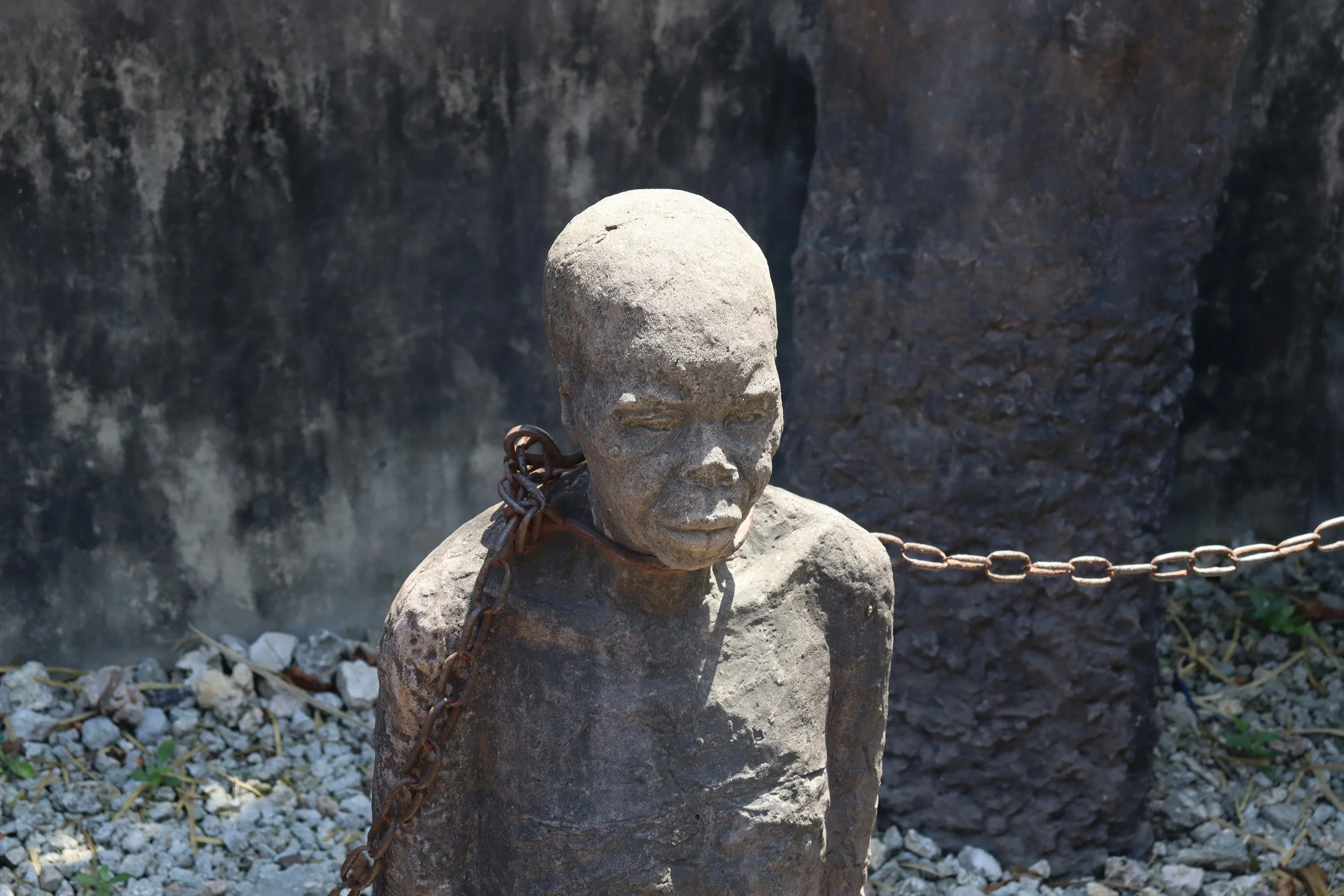
Photograph by Polly Sadler via Unsplash
Dr. Marvin A. McMickle
In the 1977 TV miniseries entitled “Roots: The Saga of an American Family” based upon the book by Alex Haley,[1] one line spoken helps me frame both the promise and the problems of America’s Independence Day. An enslaved character named Fiddler, who is portrayed by Louis Gossett, Jr., jokingly says to other Black people living and working on that Virginia plantation, “I sure am glad the white folks got their freedom.” Fiddler, who had access to the main house on the plantation, had undoubtedly overheard conversations about the thirteen British colonies in North America that had come together and declared their independence from their mother country.
On July 4, 1776, those delegates to the Second Continental Congress took the dramatic step of beginning a new nation around a central claim: “We hold these truths to be self-evident that all men are created equal, and that they are endowed by their creator with certain inalienable rights, and among these are life, liberty, and the pursuit of happiness.”There has never been a more powerful claim about the aspirations of the human spirit than those words in our Declaration of Independence. Life, liberty, and the pursuit of happiness! The biographer Walter Isaacson referred to these words as the basis for the title of his most recent book, “The Greatest Sentence Ever Written.”[2]
The Virginia Declaration of Rights, adopted on June 12, 1776, and used as inspiration for the Declaration of Independence, includes “the means of acquiring and possessing property” alongside “pursuing and obtaining happiness and safety” in its list of fundamental rights. Both declarations were influenced by British philosopher John Locke and his Second Treatise of Government. For Locke, the role of government was to provide safeguards against people having their property unfairly, or even forcibly, taken from them. For people in England and in the British colonies, property included both the land owned and the slaves that worked that land without choice and without compensation.
The drafting committee for the Declaration of Independence that included Thomas Jefferson, Benjamin Franklin, John Adams, Robert Livingston, and Roger Sherman agreed to alter the words of Locke and emphasize “happiness” instead of “property.” They did so for two reasons. First, because they concluded that happiness could be secured by means other than by owning property. Second, and more important, they did so to soften the language of the document for the sake of the members of the Continental Congress that were both landowners and slave owners. As a result, the legally sanctioned practice of human chattel slavery was written into the founding documents of this country both in 1776 and again in 1787.
Like my fellow Americans, I will take time this year to enjoy all the festivities associated with the celebration of the Fourth of July. However, I encourage people to remember the backs, the blood, the beatings, and the brutality associated with 246 years of slavery that laid the economic foundation for this country. This is the promise and the problem with our Independence Day!
Here is where the Fourth of July becomes as inherent a contradiction at America’s 250th birthday in 2026 as it was for Fiddler on a Virginia plantation in 1776. “The white folks got their freedom,” but the newly declared nation saw itself as free to hold human beings in lifelong servitude and enslavement. Those enslaved people were the property that guaranteed the happiness of slave owners and those who benefited from slavery in one way or another. People of African descent were at the very center of the pursuit of happiness for white people in this country that declared their independence from Great Britain. This became the cornerstone of what today is called white nationalism and white supremacy!
While most enslaved persons in the United States were in the southern states of Virginia, North and South Carolina, and Georgia, slavery was legal in all thirteen colonies in 1776. Remember that Frederick Douglass and Harriet Tubman were enslaved in Maryland. Sojourner Truth, first known as Isabella Van Wagenen, was enslaved in New York State.
This was brought into greater clarity when Donald Trump ordered the restoration of a statue honoring Caesar Rodney, a signer of the Declaration of Independence who was also a slave owner in Delaware. That statue was taken down from its perch in Wilmington, Delaware in 2020 after the killing of George Floyd to protest aspects of America’s brutal treatment of its Black citizens. That project to restore it cost the taxpayers of this country over $527,000. To make matters worse, the resurrected statue was relocated from Wilmington, Delaware to a park near the White House in Washington, D.C. The current President of the United States pays homage to a slave owner from Delaware at the very time this nation is celebrating its 250th anniversary.
Delaware was not the only state where slavery and the Declaration of Independence collided. Rodney was one of 12 plantation owners to sign the Declaration, and 41 of the 56 signers owned slaves. It is painful to remember that some people sought life, liberty, and the pursuit of happiness through the brutal, legally sanctioned practice of human slavery. This was America’s original sin. This was America’s peculiar institution.[3] This was what caused Frederick Douglass to declare in 1852, “What, to the American slave is your Fourth of July? I answer: a day that reveals to him, more than all other days in the year, the gross injustice and cruelty to which he is the constant victim...”[4]
Like my fellow Americans, I will take time this year to enjoy all the festivities associated with the celebration of the Fourth of July. However, I encourage people to remember the backs, the blood, the beatings, and the brutality associated with 246 years of slavery that laid the economic foundation for this country. This is the promise and the problem with our Independence Day!
Marvin McMickle is pastor emeritus at Antioch Baptist Church in Cleveland, Ohio, professor emeritus at Ashland Theological Seminary, OH, and retired president of Colgate Rochester Crozer Divinity School in Rochester, NY.
The views expressed are those of the author and not necessarily those of American Baptist Home Mission Societies.
[1] Alex Haley, Roots: The Saga of an American Family. Garden City, NY: Doubleday Books, 1976.
[2] Walter Isaacson, The Greatest Sentence Ever Written. New York: Simon & Schuster, 2025.
[3] Kenneth Stampp, The Peculiar Institution, New York: Knopf, 1956.
[4] Frederick Douglass, “The Meaning of July 4th for the Negro,” in The Voice of Black America: Major Speeches by Negroes in the United States 1797-1971, edited by Philip Foner. New York: Simon and Schuster, 1972, p. 117.
Get early access to the newest stories from Christian Citizen writers, receive contextual stories which support Christian Citizen content from the world’s top publications and join a community sharing the latest in justice, mercy and faith.