
My journey into disability
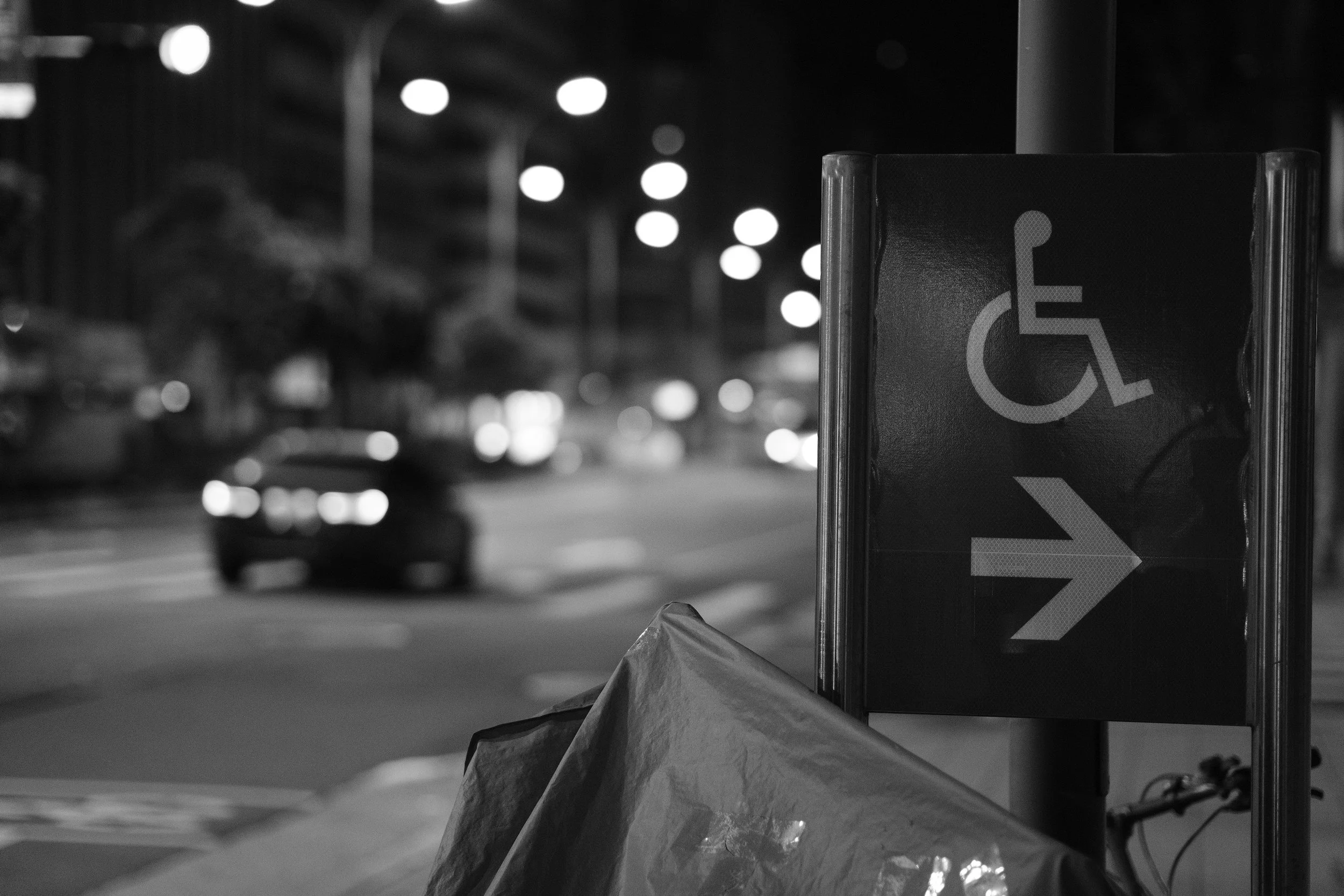
Photograph by Zhou Cheng You via Unsplash
Dr. Marvin A. McMickle
It was a cold night in New York City, where my family and I planned to take photographs in front of the Christmas tree at Rockefeller Center and then walk a few short blocks to a theater to enjoy a Broadway show about the life of Louis Armstrong. We drove into Manhattan from Brooklyn and pulled into a parking garage where we had reserved a space close to our destinations. So far so good. However, as soon as I stepped out of the heated car and began breathing in the cold New York City air, I fell into respiratory distress. I literally could not breathe. Gasping for air, I leaned on a street sign and used a rescue inhaler I usually carried with me because of my condition called chronic obstructive pulmonary disease (COPD). Whatever respiratory problems one might have, COPD makes them even more severe.
That night was the beginning of a battle to breathe that continues to this day. When my wife and I returned to Cleveland, Ohio, I spent New Year’s Eve in an ICU unit where I stayed for eight days with a case of pneumonia. Upon my release from the hospital, I was back there again within a few weeks for another eight days with a second case of pneumonia and a diagnosis of lung disease that has resulted in my need for continuous oxygen 24 hours a day. I have shortness of breath so severe that the simplest tasks leave me winded and weak. Things I once did with no thought or hesitation can either no longer be done or require twice as much time and three times as much effort. I climb the stairs one slow step at a time with the hope that I can make it to the top. I plan ahead when I come downstairs in the morning for everything I might need during the day, because I dread the idea of having to face those steps more than once a day.
Two factors now govern my life: the length of the tubing that connects my portable oxygen machine to its power cable, and the amount of charge in that machine when I have to be away from a power source for an extended period of time. Whenever I stand up to walk, I must reach for my oxygen machine. Whenever I get into the car, I need to connect my machine to the charger in the car. Recently, my wife and I were about to have dinner at a local restaurant. Just as I was about to get out of the car, I realized that my oxygen machine only had 32% of its power available. That would not be a problem if I had been able to plug it into a wall outlet, but how many restaurants provide patrons with a menu, utensils, and an electrical outlet for one’s oxygen machine? The same is true at our local church. When we can get out to attend a church service in person, we sit in an adjacent chapel where the sound of the motor in my machine will not distract or disrupt the service and where an electrical outlet is available — something not available at any pew in the sanctuary.
My recent disability experiences have helped me to see how poorly prepared most of our churches are to serve their disabled members.
Speaking of the sanctuary, my recent disability experiences have helped me to see how poorly prepared most of our churches are to serve their disabled members. Above all, there are stairs everywhere. There are stairs to enter the building at the front doors. There are stairs to connect one level of the building to another. There are stairs that connect one building at our church in Cleveland to an educational wing that was built over fifty years after the original structure. That means that no progress was made, and no acknowledgement seemed to have been made between 1906 and the late 1950s toward accessibility for those who are restricted in their mobility.
We installed an elevator in our church in 1993 as part of the church’s observance of its 100th anniversary. However, even then the primary issue was not the mobility of members that were disabled. The primary issue was funerals and getting caskets into and out of the sanctuary without having the pallbearers carry the casket down two short flights of stairs. That was always a worrisome sight as you wondered if someone might not be able to hold up under the weight. With the elevator, that problem has been solved. However, the elevator did not solve all our accessibility challenges. The elevator takes one from the parking lot level up to the sanctuary and down to the fellowship hall. It does not go to the balcony level of the sanctuary, and it does not resolve the challenge of stairs elsewhere throughout the buildings. It is difficult for persons with disabilities to “enter God’s gates with thanksgiving and enter God’s court with praise” when the prospect of having to navigate stairs inside their local church fills them with dread!
Hopefully, all new church buildings are being designed for 100% accessibility for the disabled. In existing church buildings, installing an elevator would be a blessing. If that cost is too prohibitive, then consider a wheelchair ramp. Churches should keep track of which of their members cannot leave their homes to attend services. Special attention should be given to them in terms of deacons and clergy being sent to their homes to serve communion, to host a small Bible study class, or simply share fellowship and food. These are the things we always do inside the church. It is important that we find ways to carry these practices over to include those whose disabilities prevent them from attending church.
Now, a word to those that are disabled. I understand better than I ever have before how isolating it can be to have a physical disability. It is exhausting to move. It is wearying to get dressed. It is disheartening to discover that you simply cannot make it out of the house to some special event. Thank God, I am now fully retired and do not have to worry about getting to a job every day. I do not know what I would do if I had to do that since it took me over two hours, with rest stops, to get from my bed upstairs to the first level of our home. I thank God for my wife, who has been my salvation during this transition period into disability. However, not everybody with a disability has a support system. May your family and friends come to your aid. May God in heaven bring you comfort and relief. May you find within yourself both the determination and the faith to carry on one slow, short step at a time.
Marvin McMickle is pastor emeritus at Antioch Baptist Church in Cleveland, Ohio, professor emeritus at Ashland Theological Seminary, OH, and retired president of Colgate Rochester Crozer Divinity School in Rochester, NY.
The views expressed are those of the author and not necessarily those of American Baptist Home Mission Societies.
Get early access to the newest stories from Christian Citizen writers, receive contextual stories which support Christian Citizen content from the world’s top publications and join a community sharing the latest in justice, mercy and faith.