
James Baldwin, me, and the stupidity of homophobia: A cautionary tale
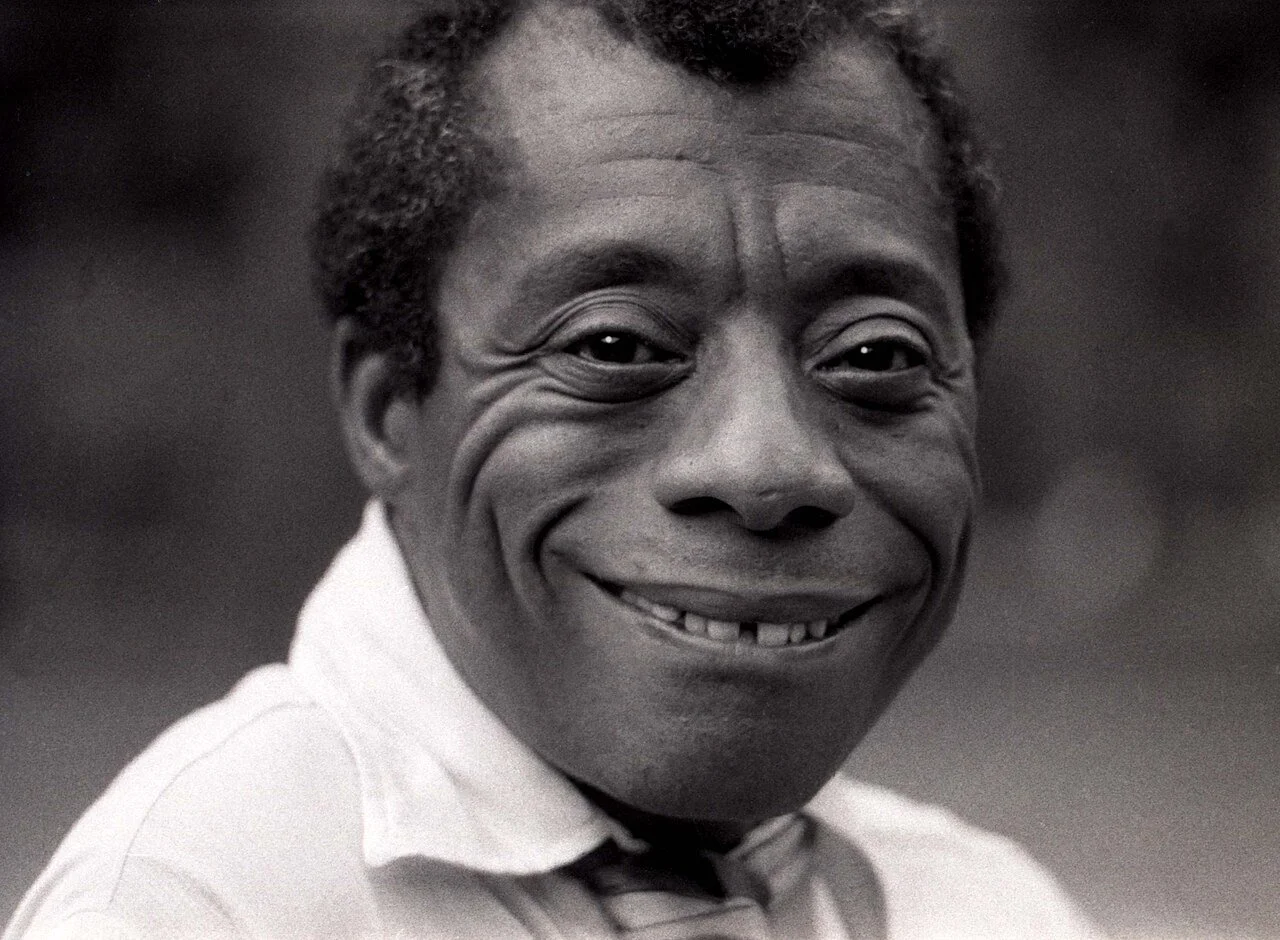
James Baldwin. Photograph by Allan Warren. Own work via Wikimedia Commons. Creative Commons Deed - Attribution ShareAlike 3.0 Unported License.
Dr. Obery Hendricks
This is a story I tell my students. It is quite embarrassing, but I guess that is the point. As I’ve shared in my earlier writings, my formative years, from my mid-teens onward, were spent in the Black Cultural Nationalist movement, in an organization in Newark, NJ, headed by the political revolutionary and acclaimed literary figure, Amiri Baraka (aka Leroi Jones). That experience introduced me to some of the foremost luminaries in the progressive jazz and Black Arts literary scenes. When I began working in New York City in the mid-1970s, I quite fortunately fell in with a group of musicians, actors, poets, and playwrights in Harlem. We would often convene at Mikell’s, a very hip black-owned jazz club at the corner of 95th Street and Columbus Avenue on the Upper West Side (the site is now a Whole Foods).
The group included the singer, songwriter, poet, and playwright, Oscar Brown, Jr., a major musical figure in the 1960s and ’70s, who created the Broadway musical adaptation of Joseph Dolan Tuotti’s play “Big Time Buck White.” Brown’s Broadway adaptation, “Buck White,” starred Muhammad Ali. The group also included Quincy Troupe, the amazingly prolific writer who co-wrote the award-winning classic, “Miles: The Autobiography”; Charlie Smalls, who wrote the music and the lyrics for the long-running Broadway musical, “The Wiz”; and several wonderful struggling poets and off-Broadway actors whose names are lost to me in the fog of time. I was the young’un in the group, a twenty-something working on Wall Street, a very sharp dresser and very self-impressed.
One particular evening we convened at Mikell’s about 8:30 p.m. to settle in for a long evening of brilliant, stimulating, alcohol-infused discussions on the kinds of subjects one would expect of such a brilliant, multifacetedly creative assembly. The drinks kept coming and the discussions became more and more intense, enjoyable, and illuminating and, as we used to say, much more deep, especially in the estimation of me, the young’un. Here I was a twenty-something Jersey boy born in Farmville, Virginia, hanging out with some of the heaviest creators and intellectuals in the New York City arts scene, being treated like I belonged (probably because I had the good sense to listen much and say very little).
At about 9:00 p.m. someone announced with faux grandiosity, “Here comes James!” and the grinning Mr. James Baldwin walked in and pulled up a chair. He quickly ordered a drink, downed it, then ordered another. Then, fortified and lubricated, he began to hold forth.
A bit of background before I proceed. In addition to the great appreciation I gained in the Movement for avant-garde jazz, radical politics and insurgent black thought and literature, I picked up something else that was rife in the Black Nationalist Movement’s hyper-masculine culture: deeply ingrained homophobia. One of the worst things you could be to us militants, worse than chicken-bone preachers even, was gay. There was nothing lower to us than a “f____,” a term we used prodigiously whenever we wanted to insult a gay man or refer to him as an object of fun. To us they were weak, an affront to real men, an infuriating obstacle to the macho revolution we thought we were fomenting.
I guess you can see where this is going.
At any rate, everyone in the gathering, except me, was a dedicated master or near-master of their respective crafts with their own portion of brilliance. So, when I say that Baldwin held forth, I mean that his incandescent brilliance and dramatic eloquence just organically caused much of the conversation to revolve around him. And it was obvious that he loved the attention that his presence garnered from everyone assembled. That is, from everyone except me. Of course, I knew who he was. He’d already appeared on the cover of TIME magazine, and his books had been feted for several years. But that didn’t matter to me. He was gay.
I am thankful for the realization that justice is not divisible; that the greatest social commandment in every major religion is some form of “love your neighbor as yourself.”
I’m sure Baldwin could read the derision in my face. I’m certain now that’s why he kept glancing at me, meeting my gaze: he was simply trying to figure me out. But me, the well-dressed homophobic genius so full of myself, I was sure that he was flirting with me! The more he looked my way, the more insulted I became.
Yes, I’m embarrassed to tell it, but it’s true. I was sitting in the company of a renowned intellectual, one of the most acclaimed and incisive social commentators on the very quest for black self-determination that consumed me, and I couldn’t hear a word he was saying because I thought he was flirting with me, the sharp dressed, self-impressed fellow that I was. So, what did I do? I did what any indignant homophobic genius would do: I got up and left! Got up and left a conversational dialogue at the center of which sat one of the major literary figures in America, a gathering that many folks would have given their right arm to witness even at a distance, much less to be part of. Got up and forfeited four to five hours of James Baldwin’s unleashed prodigious intellect, shamefully because of the inhumane stupidity of homophobia. I say “inhumane” because, in essence, I had denigrated Baldwin’s very humanity by treating him as a lesser person because of whom he chose to love.
Well, those with clearer heads and (much) more mature judgment remained at Mikell’s with James Baldwin drinking, talking and laughing until 2:00 a.m. Five hours spent with the insights and wisdom of James Baldwin that are still studied and marveled at to this day. Can you imagine the pearls of wisdom that were shared, the stories, the ideas, the world class wisdom that, had I had the sense to remain, could have opened my eyes to a wider intellectual universe, not to mention the years of hit-and-miss literary endeavors his answer to a simple writing process question might have saved me. My friend, Eddie Glaude, has written a best-selling book about Baldwin. At that table I might have gained enough hands-on insight into some of Baldwin’s publicly unexpressed thoughts to write a book, too. And remaining in his presence might have led to other such occasions. As it turned out, though, and rightfully so, I was never invited back. And I was stupid enough not to care.
I am greatly influenced by James Baldwin’s ideas and commitments. And I teach his writings in my classes now. Yet, what I know of him is only what is in the public domain. Yet imagine how much richer my teaching and understanding of him could be if homophobia hadn’t driven me to absent myself from the table of James Baldwin’s sagacity.
I am thankful that I have grown to not only reject homophobia in all its forms, but to also fight against it. I’ve published articles that have gone viral and I have an extended chapter in my latest book that comprehensively demonstrates that the Bible, the foremost tool used to justify homophobia, does not definitively pronounce homosexuality a sin. When did my consciousness change? When I got to know a gay brother who is a beloved friend now. It went like this: I met him, we bonded, developed a great friendship, only matter-of-factly to find out later that he was gay. Talk about cognitive dissonance! But it was a confusion, a dissonance that has been one of the greatest realized blessings of my life. For out of that confusion emerged a man who is more fully human.
And it signaled an intellectual awakening for me as well. From my teens I’d been a justice activist, but clearly an activist with a limited understanding of what justice is because it didn’t include treating my gay brothers and sisters as equals. I am thankful for the realization, the truly blessed realization, that justice is not divisible, that the greatest social commandment in every major religion is some form of “love your neighbor as yourself,” and that the Christian Gospel’s foremost mode of judgment, Matthew 25:31-46, judges us by whether we have tried to treat others justly and attend to their crying needs. And not by whom we love, but that we love. And the more we love, the more human we become.
Dr. Obery Hendricks has been a Wall Street investment executive, a theological seminary president, served in the U.S. Department of State’s Religion and Foreign Policy Working Group, and is an ordained elder in the AME Church. Currently he teaches Religion and African American and African Diasporic Studies at Columbia University. Among his books are the best-selling The Politics of Jesus: Rediscovering the True Revolutionary Nature of Jesus’ Teachings and How They Have Been Corrupted (Doubleday, 2006) and Christians Against Christianity: How Right-Wing Evangelicals Are Destroying Our Nation and Our Faith (Beacon, 2021).
Originally published on Substack. Republished by permission.
The views expressed are those of the author and not necessarily those of American Baptist Home Mission Societies.
Get early access to the newest stories from Christian Citizen writers, receive contextual stories which support Christian Citizen content from the world’s top publications and join a community sharing the latest in justice, mercy and faith.