
God’s answer
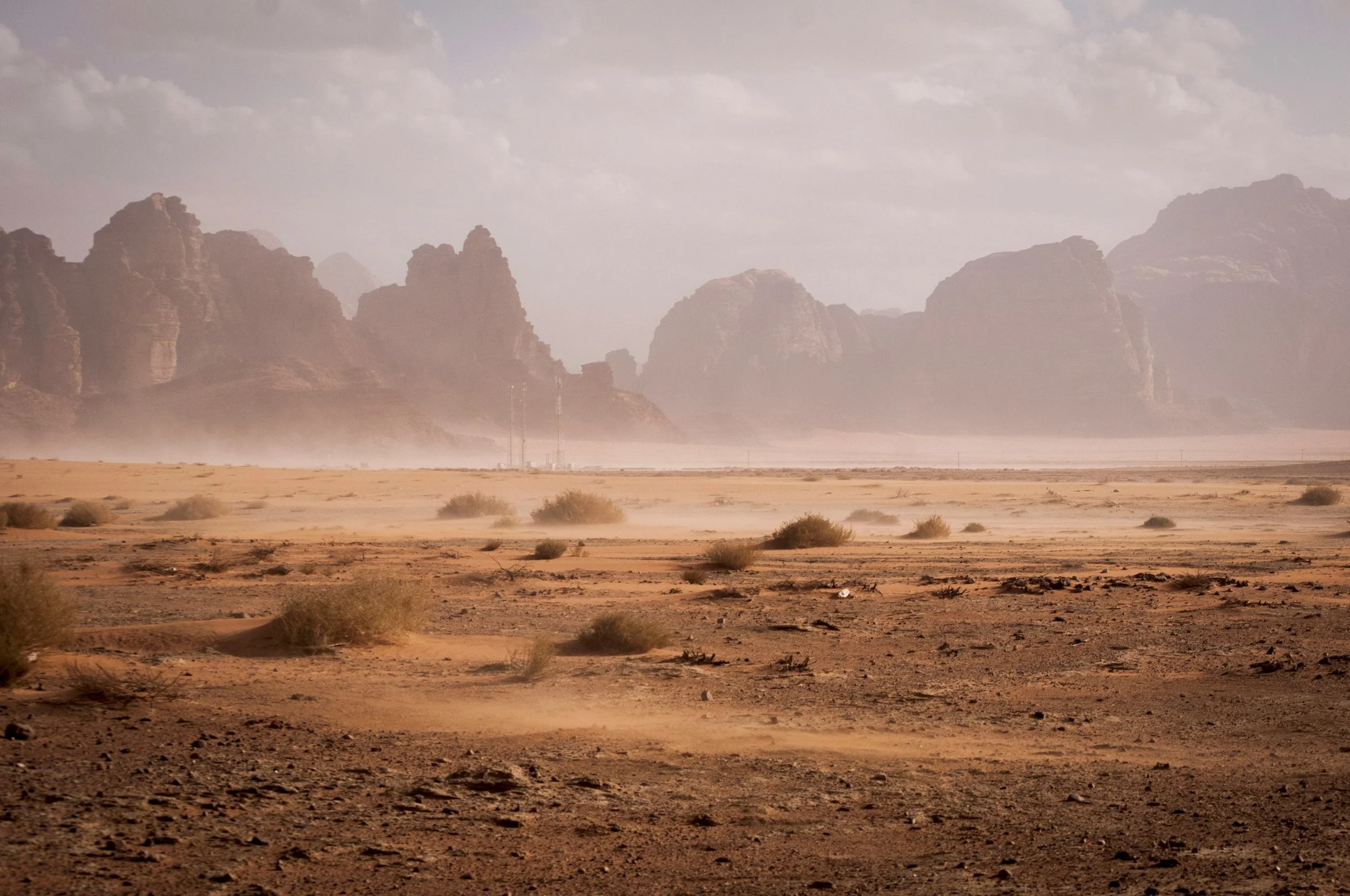
Photograph by Juli Kosolapova via Unsplash
Rev. Jerrod H. Hugenot
The vision of Ezekiel is unsettling: a vast valley filled with bones. The bones are described as dried out, no life to be found, “desiccated” you might say. Whatever brought about this mass number of deaths happened long ago. No matter how your mind’s eye depicts this scene with Ezekiel seeing this vast field, I imagine that the image is disturbing.
If you use your other senses in imagining this scene, undoubtedly, perhaps you will envision this scene without sound. Stillness, a deafening silence, broods over this scene of dry bones.
I recollect places I have been where great loss has taken place: standing amid the grounds of the Auschwitz concentration camp, where millions were murdered by the Nazi regime. The stories of the victims are told through various displays set up in the camp’s various buildings, a somber museum given to the recounting of terrible memory, a reminder that powerful countries fueled by fear, especially of “the other,” can commit great atrocities.
I remember the silence of standing at Cape Coast, a “slave castle” on the shores of Ghana where thousands of Africans were brought to be forced into the transatlantic slave trade. Hundreds of people were crammed into the castle’s dungeon with little light, little sanitation, and little hope for days before being rowed out to waiting slave ships to lives of servitude — provided they survived the voyage.
I find that you do not say much of anything in such places.
Words, my trade in life, escape me, as my mind ponders the great and sad history that created these places, places of loss and inhumanity. Sometimes, silence is the only appropriate response, to stand in the midst of the barren moment and ponder the memories so bereft that such places evoke.
The silence is broken by the divine voice. “Mortal, can these bones live?”
Such an odd question, given the grim panoramic reality before Ezekiel’s eyes. Life is nowhere to be found! In his lifetime, Ezekiel has experienced deeply traumatic events in the history of Israel. A nation unrepentant of its sins is toppled handily by outside forces. The proud city of Jerusalem has been ransacked. Very few dare speak of days past, as mistakes and remorse seem to outnumber any recollection of the good. Ezekiel has seen the “world” as he knew it come crashing down.
In Ezekiel’s vision, a valley of dry bones with no hope whatsoever is given immediate and abundant life. The breath of God summons back to life that which had no hope.
The prophetic tongue is numbed a bit, yet Ezekiel says, “O Lord God, you know.” One commentator suggests that you can read “resignation” into Ezekiel’s comment (“O Lord God,…sigh! y’know”), or you can hear a hint of deep trust at work in his response: “O Lord God, YOU, i.e. you alone, know.”[i]
I would be remiss if I did not note that the human experience, in all its glory and despair, would be easily given to “resignation.” Experiencing Auschwitz and Cape Coast was unsettling, and they made me ponder (and still I ponder) the questions of God’s presence and absence.
But the text of Ezekiel reminds us that even amidst great loss, fragments of hope can also be found. Part of the beauty of the prophetic traditions of Ezekiel, Jeremiah, and Isaiah, some of the most stirring parts of the Hebrew Scriptures, involves the prophet stepping into the midst of the peril befalling Israel and bringing words that sting and sear the hearts of the people. These words address the lament of the people of Israel as well, acquainted (like the rest of the world) with the deep suffering and travail of violence.
Yet, with due reverence, the prophet can say, “O Lord God, you know….”
When reading Ezekiel 37, you might start humming a tune drawn from the spirituals of African American song and worship: “Dem bones/dem bones/dem dry bones… hear the word of the Lord.” The spiritual draws our attention to the great hope that redeems this desolate vision.
“Hear the word of the Lord.”
Ezekiel is prompted to speak to these bones. In his speaking, Ezekiel brings God’s promise of hope: these bones shall indeed live! (The dry bones are often described as “desiccated” for good reason — these bones are so dead that it is unfathomable that they can be anything remotely lively or vital.
Unlike the joke in “The Princess Bride,” these bones are not merely “mostly dead.” They are nearly ready to turn back to dust!). The divine breath is promised to these bones, and indeed, these bones are summoned back to life in a spectacular manner. One of the great teachings of the Hebrew Scriptures is the intimacy between God and life. It is God’s breath that sparks and sustains life. In the view of the Scriptures, without breath, we do not live.
Biologically, we know that, but theologically, the very difference between “living” and “not living” is God’s breath. Hence, in Genesis, the book of beginnings, the first human is summoned to life from the earth by God’s breath. Furthermore, the same word in Hebrew for “breath” serves as the same word for referring to the Spirit. (Indeed, even the pronunciation of the Hebrew word ruach is breathy!)
God alone brings the hope beyond hope: life despite death, life abundant, and a remarkable word called resurrection.
A valley of dry bones with no hope whatsoever is given immediate and abundant life. The breath of God summons back to life that which had no hope. It is a vision that recalls another biblical concept: that of resurrection. In both testaments, it is the power of God, not humanity that can overcome the finality of death. We finite humans have the ability to extend life, but we still die. God alone brings the hope beyond hope: life despite death, life abundant, and a remarkable word called resurrection.
I recently read a 1984 speech on the book of Ezekiel written by noted writer and Holocaust survivor Elie Wiesel. In his commentary on “the valley of dry bones,” Wiesel points to the variety of visions Ezekiel describes in his writings, fourteen in all, that are experienced by Ezekiel upon specific occasions for specific prophetic moments.
However, Wiesel notes that “the vision of the valley of dry bones” does not have a specific date given. It is unclear when in Ezekiel’s life and prophetic witness that this vision took place. Wiesel notes that the ambiguity is actually an indication that the resurrection that Ezekiel witnesses take place among the dry bones in the valley is not specific to any one moment in history. Rather, this vision is given so that generation to generation, the hope of this valley of dry bones come back to the fullness of life can be a vision for successive generations to claim.
This vision, this hope, is not just for a long distant past. Hence, it is the survivor of the Holocaust and the descendants of the Africans taken off into slavery that can offer redeeming words. Humanity can be inhumane to one another, can create systems of oppression and justifications of worldviews to maintain it, but in the end, we do not have the last word. It is God alone who holds the power of life.
The vision of Ezekiel is given as a word of hope to Israel lying in ruins, despondent and anxiety ridden. It brings us into a different view of the world, one given to trust and hope, a different sort of “fate” that might better be called “providence.” We still live in a violent world where natural and manmade evil and disasters can happen.
In our lifetimes, it has become possible for humanity to wipe itself substantially off the face of the planet with nuclear bombs or grievously harm the ecological web of life through indiscriminate ransacking of the natural environment.
The witness of Ezekiel, the “Dem Bones” spiritual, and Wiesel would say that the finality or the despair that we fear is transformed by the hope and trust we place in God. However, the entire purpose of such stirring writing is not to give a placebo that lulls us into dreams of “a sweet by-and-by” but to call the singers of the spiritual and the readers of the sacred texts to living out that hope of abundant life, despite living in a world well acquainted with death.
The valley of dry bones, grim as that image may be, and the historical memory of atrocities like Auschwitz and Cape Coast are reminders that we must ensure that such histories are not repeated. We sing the spiritual and read sacred text so that we are given hope, a hope that prompts us into action. Living in the hope of this vision, we are summoned to live lively in the praise of God.
We are drawn near to the pain of the world and feel that pain ourselves. We are like the prophets, summoned to stand in the barren places of this world, and call out to those who think themselves wrung out and feeling lifeless, “now hear the word of the Lord!” Working for equality, seeking justice, offering compassionate and caring acts in service to others, especially those who we would otherwise forget or feel led to marginalize out of our own fear, is part of living the vision of Ezekiel.
To keep the faith, we must see life despite death — life abundant, enlivened by the Spirit.
The Rev. Jerrod H. Hugenot serves as Executive Minister for the American Baptist Churches of New York State.
The views expressed are those of the author and not necessarily those of American Baptist Home Mission Societies.
[i] Katheryn Pfisterer Darr, “Ezekiel,” New Interpreters Bible Commentary, Vol. VI, (Nashville, TN: Abingdon Press, 2001), p. 1499.
Get early access to the newest stories from Christian Citizen writers, receive contextual stories which support Christian Citizen content from the world’s top publications and join a community sharing the latest in justice, mercy and faith.