
Finding our door to resurrection
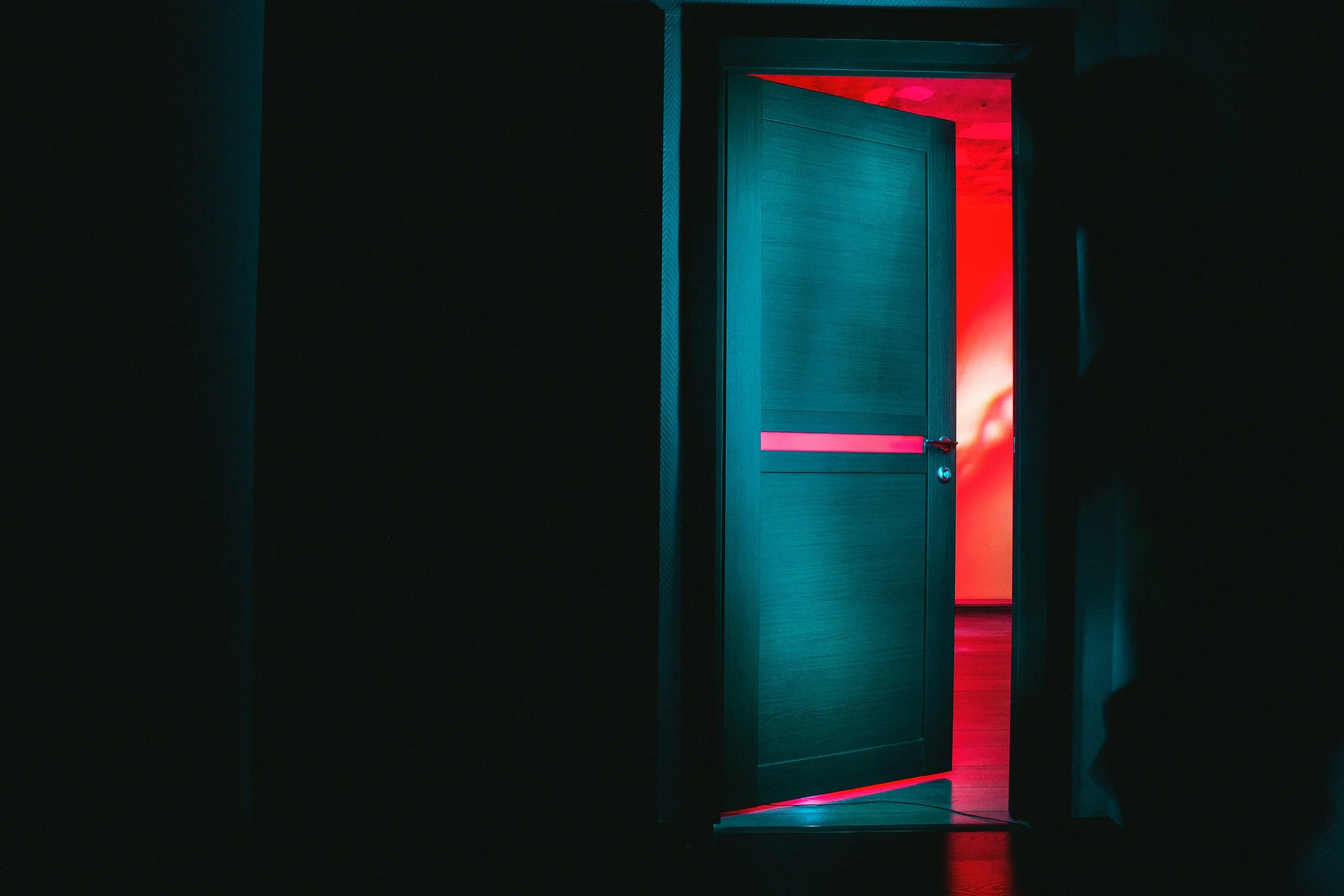
Photograph by Dima Pechurin via Unsplash
Rev. Dr. Michael Woolf
The last episode of the third season of Paramount’s cult favorite, “School Spirits,” premiered at the beginning of March. While the show centers on the plight of several ghosts who are stuck at the site of their death, Split River High School, “School Spirits” is a touching reflection on trauma and the ways that it snakes its tendrils over every form of our life and even after life.
The central conceit of the show is that the ghosts must navigate what led them to their traumatic deaths to “get their door” to the place beyond the high school. Each of the ghosts must confront either the villainous figures who sent them to the grave, their own fears and foibles, or undue attachments to move on. In that way, it is similar to ABC’s “Ghosts”; both shows make personal growth and confronting past trauma the barrier to the afterlife.
While the focus has been on trauma, this season makes a marked departure by having our protagonists attempt to face the founding trauma of their town, Split River. As the name implies, the modern version was founded by the splitting of the local river, which inundated a local church filled with Finnish immigrants. The town has been covering up this history, but the show makes a formidable case that, just as the ghosts are individually unable to move on from the past without confronting it, as a society we must confront our pasts in order for us to find our “door” as well.
In this way, “School Spirits” reminds us of other media that has urged us to confront our pasts, no matter how difficult they might be. Take, for instance, “Zootopia 2,” which saw mammals having to confront that their entire civilization was built on a lie and erasure and exclusion of their reptilian neighbors.
It also has direct resonance with the Gospels, which confront the trauma of the crucifixion head on. Indeed, the Gospels do not shy away from the gruesome nature of Jesus’ death on a cross; they make it the centerpiece of salvation. They also warn us that we cannot simply move directly to the resurrection and bypass the pain that is at the heart of this story.
One scene in particular from John’s gospel shows us something important about the nature of resurrection:
But Thomas (who was called the Twin), one of the twelve, was not with them when Jesus came. So the other disciples told him, “We have seen the Lord.” But he said to them, “Unless I see the mark of the nails in his hands and put my finger in the mark of the nails and my hand in his side, I will not believe.” A week later his disciples were again in the house, and Thomas was with them. Although the doors were shut, Jesus came and stood among them and said, “Peace be with you.” Then he said to Thomas, “Put your finger here and see my hands. Reach out your hand and put it in my side. Do not doubt but believe.” Thomas answered him, “My Lord and my God!” (John 20:24-28)
In this crucial scene, we learn two things. First, that the resurrected Jesus bears the wounds from the cross. There is no undoing of the pain that took place. And second, Thomas' recognition of Jesus’ lordship is based in his touching of these wounds. The path to new life goes through recognition and wrestling with the pain that has taken place in the past.
As Christians, there can be two impulses with the crucifixion and resurrection. We can avert our eyes and seek to go directly to the resurrection, with its awesome display of God’s power over death, or we can dwell on the crucifixion and never make our way to the resurrection.
As Christians, there can be two impulses with the crucifixion and resurrection. We can avert our eyes and seek to go directly to the resurrection, with its awesome display of God’s power over death, or we can dwell on the crucifixion and never make our way to the resurrection.
The Christian rush to the resurrection is understandable. The Christian story does not end with Jesus’ death on the cross, but that foundational trauma persists. Instead of the resurrection, trauma theologian Shelley Rambo gives an account of “remaining,” which takes into account trauma and yet sees “life resurrecting amidst the ongoingness of death.”[i]
Trauma is part of our redemption story. But a generation of womanist theologians have critiqued the way that a focus on the crucifixion has enabled a valorization of suffering. Calling the cross “divine child abuse,” Joanne Carlson Brown and Rebecca Parker note how the crucifixion has an ongoing effect on Black women’s bodies: “The Christian is to ‘be like Jesus’…imitation of Christ is first and foremost obedient willingness to endure pain.”[ii]
This is not an either-or experience. What seems clear is that we must touch the wounds of this life to reach our door. That is true as individuals, just as it is as a society. For far too long, we have been willing to, as Jeremiah says, proclaim “peace, peace, when there is no peace” when it comes to racism and a broken immigration system.
If we want to see our way out of the trauma of the moment we inhabit, with the rise of fascism and dehumanization, we cannot rush to a midterm election or some other event as a resurrection that will magically make it all better. Instead, we must touch our wounds, seeing the ways that the immigration cruelty we witness from ICE is bound up with this country’s anti-Blackness, and acknowledging the ways that the brutality done to this nation’s immigrants has left wounds that must be confronted, both corporately and personally.
Only then might we be able to, like the lovable ghosts of “School Spirits,” find our door to what lies beyond. To, as Rambo urges us, find life amidst the ongoingness of death.
Rev. Dr. Michael Woolf is senior minister, Lake Street Church of Evanston, Illinois. He currently serves as the co-associate regional minister with the American Baptist Churches Metro Chicago. His most recent book, co-authored with Anna Piela, Confronting Islamophobia in the Church: Liturgical Tools for Justice (Judson Press 2026) offers a theology of interfaith engagement with Muslims. Woolf is also a co-founder of Challenging Islamophobia Together Chicagoland, an initiative that brings together people of all faiths to counter Islamophobia from a religious perspective.
The views expressed are those of the author and not necessarily those of American Baptist Home Mission Societies.
[i] Rambo, Shelly. Resurrecting Wounds: Living in the Afterlife of Trauma. Waco, TX: Baylor University Press, 2017, p. 7.
[ii] Joanne Carlson Brown and Rebecca Parker, “For God So Loved the World?,” in Christianity, Patriarchy, and Abuse: A Feminist Critique, ed. Joanne Carlson Brown and Carole R. Bohn. New York, NY: Pilgrim Press, 1989.
Get early access to the newest stories from Christian Citizen writers, receive contextual stories which support Christian Citizen content from the world’s top publications and join a community sharing the latest in justice, mercy and faith.