
A peace plan with no peace: The future of Gaza under the U.S.
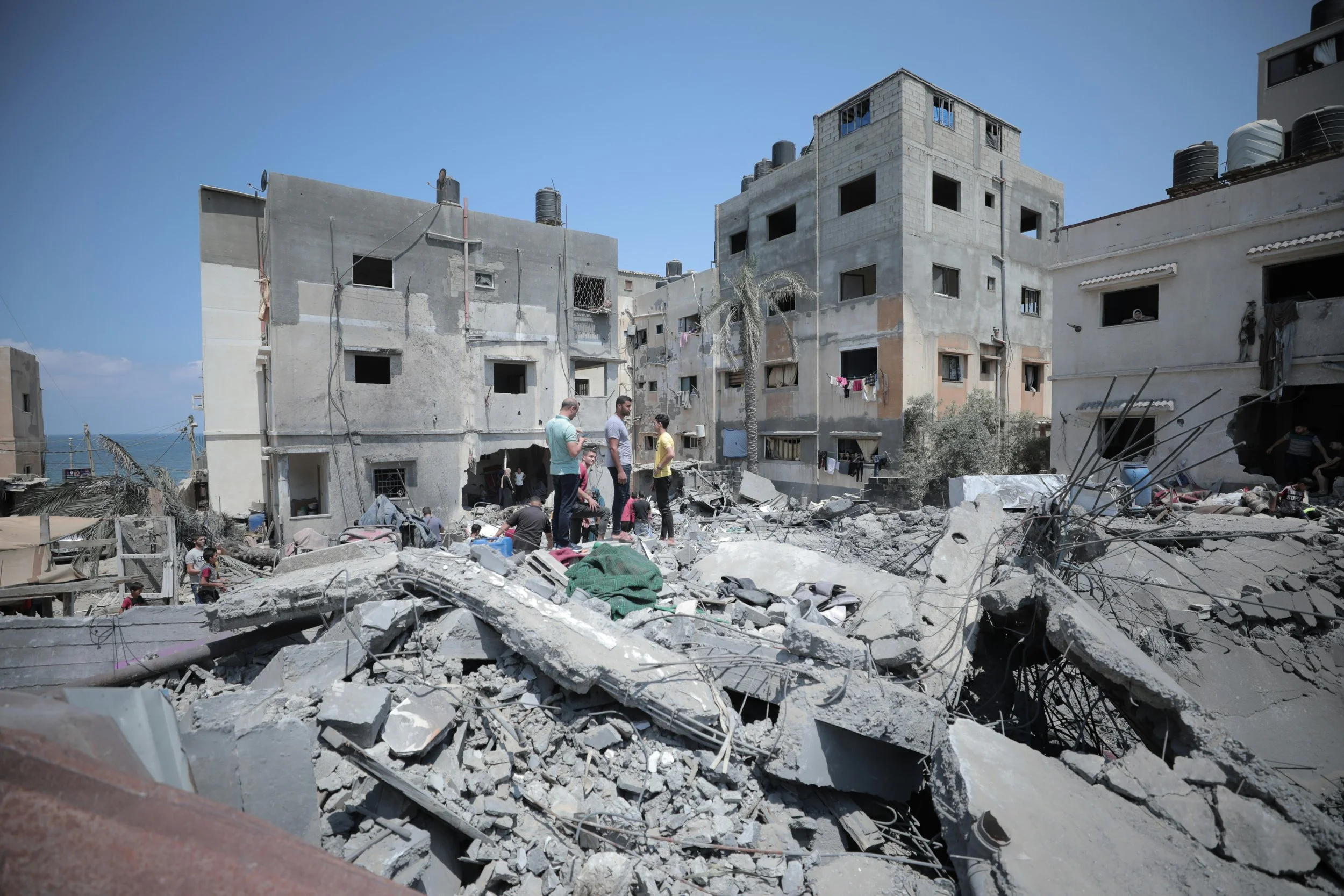
Photograph by Mohammed Ibrahim via Unsplash
Rev. Dr. Mae Elise Cannon and Dr. Allison Wattenbarger
President Trump wants to be known as the “Peace President.” He insists that he deserves a Nobel Peace Prize and campaigned on a promise to end the war in Gaza on his first day in office. It took longer than a day, but nine months after his inauguration, Hamas and the State of Israel both signed a ceasefire deal, often called the “Trump Twenty-Point Peace Plan,” which went into effect on October 10, 2025. Five weeks later, the United Nations Security Council formally endorsed the plan and instructed member states to implement it.
The peace deal inspires mixed feelings for those of us with ties to the region. We thank God for the tempering of violence in Gaza, and for the hope the plan proffers of a continued, lasting peace. The plan does suggest aspirations, but no concrete steps, to move towards an end to Israel’s military occupation of the West Bank and Gaza and towards Palestinian self-determination and statehood. We have grave concerns about a future under the plan.
Already, consistent violations of the deal have made clear that Trump’s peace plan cannot and will not hold parties to their word. Since the ceasefire took effect, hundreds of Gazans have been killed, including at least 100 children, in Israeli bombings and gunfire. Although the Trump agreement stipulates that sufficient humanitarian aid be allowed into the Strip, Israel continues to restrict aid entry. Cold winter rains soak starving and sick people to the bone. Gazans are not safe and not at peace.
This lack of enforcement is compounded by the Trump Peace Plan’s persistent refusal to indicate timelines for the withdrawal of the Israeli Defense Forces (IDF) from Gaza and for Palestinian self-determination. Indeed, rather than preserve Palestinian rights to self-governance, the agreement seeks to establish a new order in Gaza.
The Plan indicates that Gaza will be divided into two parts: one to remain under Israeli military control, and one where Israeli military rule will be replaced by an American-led occupation of the Gaza Strip. Under the agreement, the IDF withdrew to a “Yellow Line” in October. The Israeli military now controls approximately 58% of Gaza. According to the plan, the IDF will withdraw further at some point in the future but will maintain control over a “security perimeter” within Gaza. The date and details of the withdrawal remain unclear. And almost daily, Palestinians are killed for crossing over the “Yellow Line” either knowingly or unknowingly, militant or not.
We thank God for the tempering of violence in Gaza, and for the hope the plan proffers of a continued, lasting peace. Yet we seek and strive for peace with justice. This agreement, intended to bring about peace, has not yet manifested substantive progress toward peace, nor does it offer a negotiated settlement that is inclusive of both peace and justice.
Especially because the plan does not indicate a pace for further withdrawal nor define the extent of this security perimeter, the agreement leaves worrying potential for Israel to effectively annex and occupy even more of the Gaza Strip.
The remainder of Gaza will be governed and policed for an indefinite time by a new Board of Peace headed and hand-picked by President Trump, consisting of active heads of state and senior global leaders. This board will oversee a committee responsible for civil services and an International Stabilization Force (ISF) assembled from various international armies, and will redevelop what the plan calls “New Gaza” in tandem with international investors and developers. In other words, Trump and his committee will choose administrators and developers to run and rebuild Gaza, will enlist external military forces to enforce their decisions, and will remain the chief authority there for an indeterminate period. A key point of discussion in the past months has been whether or not Turkey will be allowed to serve on the ISF. Israel says no, but Turkey was one of the leading players that helped broker the 20-point plan.
The Trump peace agreement institutes a new era of American occupation in the Palestinian Territories. Americans are not directly occupying Palestinian land, but we are currently aiding and abetting and overseeing daily violations of international law and fundamental human rights. Given the lack of criteria for a turnover to the Palestinian Authority, this occupation could last years or even decades, as has the ongoing Israeli occupation of East Jerusalem, the West Bank, and Gaza, and the early 20th-century British occupation of Palestine, not to mention the United States’ disastrous involvement in Afghanistan and Iraq in the early 2000s.
While the Trump plan acknowledges that Palestinians “aspire” to self-determination and statehood, it does little to involve Gazans in the government and rebuilding of their own land. The agreement suggests that “qualified Palestinians and international experts” may both be appointed to the civil governance committee, without specifying how many of those committee members should be Palestinian (or Gazan), or who will determine who is “qualified” for such a role. Meanwhile, the Israeli government is supplying weapons to anti-Hamas groups in Gaza, actively contributing to current and future violent power struggles in the Strip. Despite the lip service to Palestinian sovereignty, these choices demonstrate little commitment to that goal.
Trump’s success in bringing Hamas and Israel to an agreement on the 20-point plan and the subsequent United Nations vote on November 17, 2025, affirming the Trump Peace Plan, have been welcome accomplishments. Nonetheless, the devil is in the details, and thus far, those are terribly lacking. How will Hamas be disarmed? When will Israel withdraw from Gaza? These are just two of the fundamental questions that remain unanswered. We seek and strive for peace with justice. This agreement, intended to bring about peace, has not yet manifested substantive progress toward peace, nor does it offer a negotiated settlement that is inclusive of both peace and justice.
Rev. Dr. Mae Elise Cannon is the executive director of Churches for Middle East Peace (CMEP), ordained in the Reformed Church in America (RCA), and editor of A Land Full of God: Christian Perspectives of the Holy Land, in addition to being an author of several additional books.
Dr. Allison Wattenbarger has a Doctor of Theology in Hebrew Bible and the Old Testament from Duke Divinity School. She is an Ambassador Warren Clark Fellow (AWCF) at Churches for Middle East Peace (CMEP).
The views expressed are those of the author and not necessarily those of American Baptist Home Mission Societies.
Get early access to the newest stories from Christian Citizen writers, receive contextual stories which support Christian Citizen content from the world’s top publications and join a community sharing the latest in justice, mercy and faith.