
Winning isn’t everything
Photograph by Kirt Morris via Unsplash
Dr. Marvin A. McMickle
When people think about the biblical story of David and Goliath, they think almost entirely about how that story ends. They think about a young shepherd boy equipped only with a slingshot and a handful of stones, going out to fight a man who was covered in armor and carrying weapons of war. They think about the way that Goliath laughed at and taunted David when he saw this young boy approaching him. Goliath “said to David, ‘Am I a dog, that you come at me with sticks?’ And the Philistine cursed David by his gods. ‘Come here,’ he said, ‘and I’ll give your flesh to the birds and the wild animals.’” (1 Samuel 17:43-44). Then, people remember that David took one of his stones, used his slingshot to launch it toward Goliath, struck the giant in the forehead, and killed him.
The story of David and Goliath ends well for David and the nation of Israel. However, the most instructive part of that story is not how the story ends, it is how that story begins. The heart of that story is not that David had the skill to go out and face Goliath. The heart of the story is that David had the courage and the faith in God that caused him to face Goliath in the first place. When his own older brothers would not face Goliath, David went. When King Saul himself refused to face the giant warrior of the Philistine army, David went. The king offered to let David use the king’s own armor and weapons when he went out to face Goliath. I imagine that David said to King Saul, “No thanks. You had these weapons and armor, and you did not trust them enough for you to go out and meet Goliath. I will use the weapon I have perfected as I have protected the sheep in my father’s flock. I will go out against Goliath with a slingshot and some stones.” The thing to remember about David is not that he won. The thing to remember about David is that he went. Against all the odds, he went.
Winning is not everything. That is my Black History Month message. Do not celebrate the things that Black people achieved without considering the immense courage it required on their part to attempt such undertakings at all. Whatever a celebrated Black hero or heroine has won in their career or in their struggle to advance the cause of human rights, consider the often-deadly circumstances under which they went forward to face their own personal Goliaths.
Do not celebrate Booker T. Washington because he was successful in establishing Tuskegee Institute in 1881. Celebrate Booker T. Washington because he went out to establish a school in rural Alabama for formerly enslaved persons and their children at a time and in a place when racial segregation was the law of the land, and when lynch mobs roamed the countryside to torture and kill any Black person who said or did anything that displeased any white person of any age. It does not matter what Booker T. Washington may have achieved. Nothing would have been achieved if he had not first attempted to put his dreams into action. Like David in his confrontation with Goliath, the point that readers of history often overlook is not that some hero won, but that some courageous person at risk of death went forth with no guarantees of success.
Whatever a celebrated Black hero or heroine has won in their career or in their struggle to advance the cause of human rights, consider the often-deadly circumstances under which they went forward to face their own personal Goliaths.
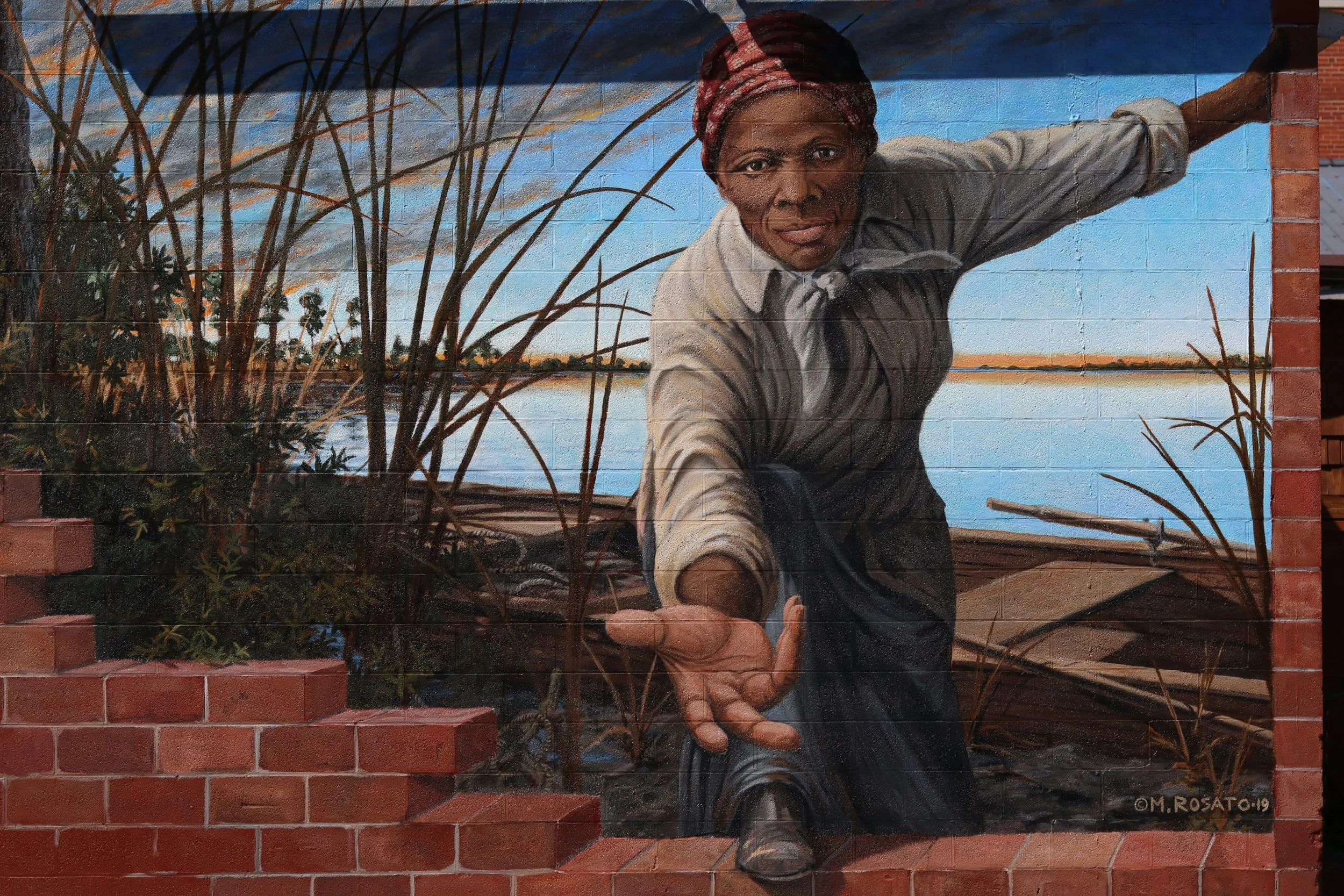
Do not celebrate Harriet Tubman because she was successful in conducting more than a dozen trips through the Underground Railroad bringing hundreds of enslaved people to freedom in the North and even into Canada. Celebrate Harriet Tubman because she was willing to run the risk of being caught and killed while making her many trips from Maryland to locations in the North. There was a bounty on her head. There were slave catchers that hated what she was doing, because she was depriving them of the profits they were reaping from the uncompensated labor of enslaved persons. From the point of view of the Southern system of slavery, what Kenneth Stampp called “the Peculiar Institution,” helping enslaved persons to escape the plantations was the worst crime imaginable. Harriet Tubman knew that because she had been a slave herself. Her first act of courage was to run away herself. Her successive acts of courage were her decisions to return to slaveholding regions over and over again to bring the enslaved out from the burdens and brutality of the wretched practice of holding other human beings as slaves for the entirety of their lives. The important thing about Harriet Tubman is not what she won. The important thing is, like David, that she went out despite all the odds being against her.
Do not celebrate Jackie Robinson because he was the first Black person to break the color barrier in baseball in 1947 when he began playing for the Brooklyn Dodgers before they moved to Los Angeles. Do not celebrate him because he was named Rookie of the Year in 1947 by Major League Baseball that did not want him to play in their league at all. Do not celebrate Jackie Robinson because of what he won. Celebrate him because he went into one of the most hostile environments a Black person could enter in 1947. He was relentlessly heckled and cursed at by fans in every stadium in which he appeared, including Ebbets Field, the Dodgers’ home stadium. Players on other teams hurled racial slurs at him when he came up to bat, but he went. Many of his own teammates would not sit next to him in the dugout or take a shower if he were doing so at the same time. But he went. One player with roots in the deep South purposely slid into first base where Robinson was playing, raised up his spiked shoes, and drove those spikes into Robinson’s leg. Despite all of that, Jackie Robinson went out to play day after day, week after week, month after month, and year after year for nine seasons. He was inducted into the Baseball Hall of Fame in 1962, and for one game every year, every player on every team in Major League Baseball wears a jersey with the number 42 – the number that Jackie Robinson wore when he played for the Brooklyn Dodgers. The reason Jackie Robinson deserves to be celebrated is not because of what he won. We honor him because he went forth and made the world a better place!
During Black History Month 2026, remember to measure what a person has won by considering what they went against in the process. Nothing historic can be achieved if nothing courageous is attempted!
Marvin McMickle is pastor emeritus at Antioch Baptist Church in Cleveland, Ohio, professor emeritus at Ashland Theological Seminary, OH, and retired president of Colgate Rochester Crozer Divinity School in Rochester, NY.
This article was originally published at The Real Deal Press. Republished with permission.
The views expressed are those of the author and not necessarily those of American Baptist Home Mission Societies.
Get early access to the newest stories from Christian Citizen writers, receive contextual stories which support Christian Citizen content from the world’s top publications and join a community sharing the latest in justice, mercy and faith.