
Who is in the picture?
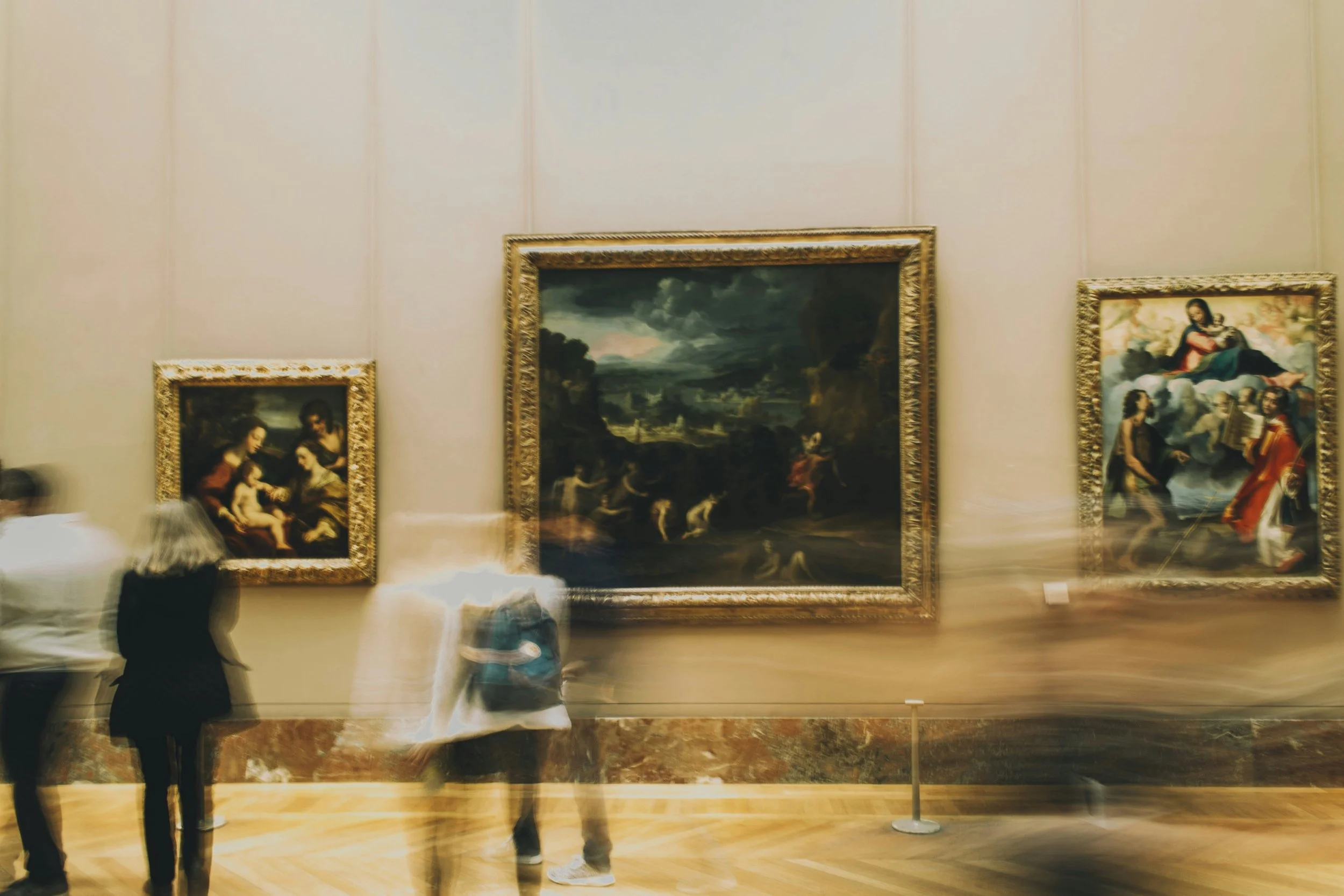
Photograph by Diogo Fagundes via Unsplash
Rev. John Zehring
Being married to an artist, I have been able to visit numerous art museums. We’ve been to many of the world’s greatest, from New York, Philadelphia, Washington, and Boston to Paris, Edinburgh, and St. Petersburg, Russia. On recent visits to some smaller but highly regarded art museums in New England, I launched an experiment. It gave me something to do while she paused to read every explanation on the wall by the painting. As a writer for The Christian Citizen, whose purpose is defined as “justice, mercy, and faith,” I thought I would review the museum’s displays to see how well their art captured that purpose. Would I engage works that portrayed in any way justice, mercy, or faith? Justice, mercy, and faith wasn’t necessarily the museum’s mission or purpose, but why not experiment to see if I could view their holdings through those lenses. For me, it became an interesting and different way to view the art on display.
Mission in mind, I entered the museum’s doors and asked the question: What if I was not who I am? What would I see? Could I put myself in the picture if I wasn’t who I am. What if I was Black, Hispanic, Asian, Native, or from other under-represented peoples? What if I practiced a religion other than Christianity?
Further, how well do the displays represent my values, which in large part define who I am? For example, based upon my understanding of the Christian gospel, I lean strongly towards non-violent resolution to conflict, as summed up in Jesus’ exhortations to love our enemies (Matthew 5:44) and to be peacemakers (Matthew 5:9). And so, in the art of the ages, would I see any of these values exhibited, or would I see instead haughty patriotism, glorification of warriors, and chronicles of battles? Is there any picture into which I could put myself?
The current U.S. President appears to have it in for diversity, equality, and inclusion – ostensibly foundation pillars of American culture. The Leadership Conference on Civil and Human Rights notes that “President Trump issued a series of executive orders (EOs) targeting diversity, equity, and inclusion programs in the public and private sectors. These executive orders are designed to chill and prohibit lawful efforts to advance equal opportunity. They attempt to do so by spreading disinformation and distorting federal laws to advance an agenda based on division and hate.” It made me wonder if museums pulled away even more exhibits depicting people who do not look like me.
Could I put myself in the picture if not everyone can see themselves represented?
Could I put myself in the picture if not everyone can see themselves represented? A recent study “found that more than a quarter (26%) of university educated, ethnically diverse people felt that cultural organizations were ‘not welcoming of people like me.’ What’s more, a follow-up study found that 40% of millennials and 35% of the population as a whole believed history and art museums were ‘not for people like me.’”
What did I view in my experiment? Almost all people depicted were white, mostly European, with several warriors from many eras. There were flowers, sailboats, cottages, and cathedrals. I did not catch any that were standing against a culture of materialism, domination, or resolving conflict in non-violent negotiation. To return to my exercise, did I see works that reflected justice, mercy, and faith? They were few and far between. To continue the exercise, if I was not who I am, could I put myself in the picture? For the most part, no.
From examining the websites of the museums I visited, I earnestly believe that the people who govern and staff the museums I visited are enlightened people striving as much as possible to embrace displays that include diversity, equality, and inclusion of all, even against a hostile governmental attempt to envision the word “all” as a negative value.
The Christian Citizen’s three-word mantra of “Justice. Mercy. Faith” provides us a lens through which to view art, music, literature, news, politics, and all of life. Can you put yourself in the picture? Further, can others put themselves in the picture? Is there anyone who cannot put themselves in the picture today? If so, we need a new picture that will include all.
Rev. John Zehring worked in higher education for a couple decades and then served United Church of Christ congregations as a pastor in Massachusetts, Rhode Island, and Maine. He is the author of dozens of books. His most recent book from Judson Press is “Get Your Church Ready to Grow: A Guide to Building Attendance and Participation.”
The views expressed are those of the author and not necessarily those of American Baptist Home Mission Societies.
Get early access to the newest stories from Christian Citizen writers, receive contextual stories which support Christian Citizen content from the world’s top publications and join a community sharing the latest in justice, mercy and faith.