
Walls and shriveled souls
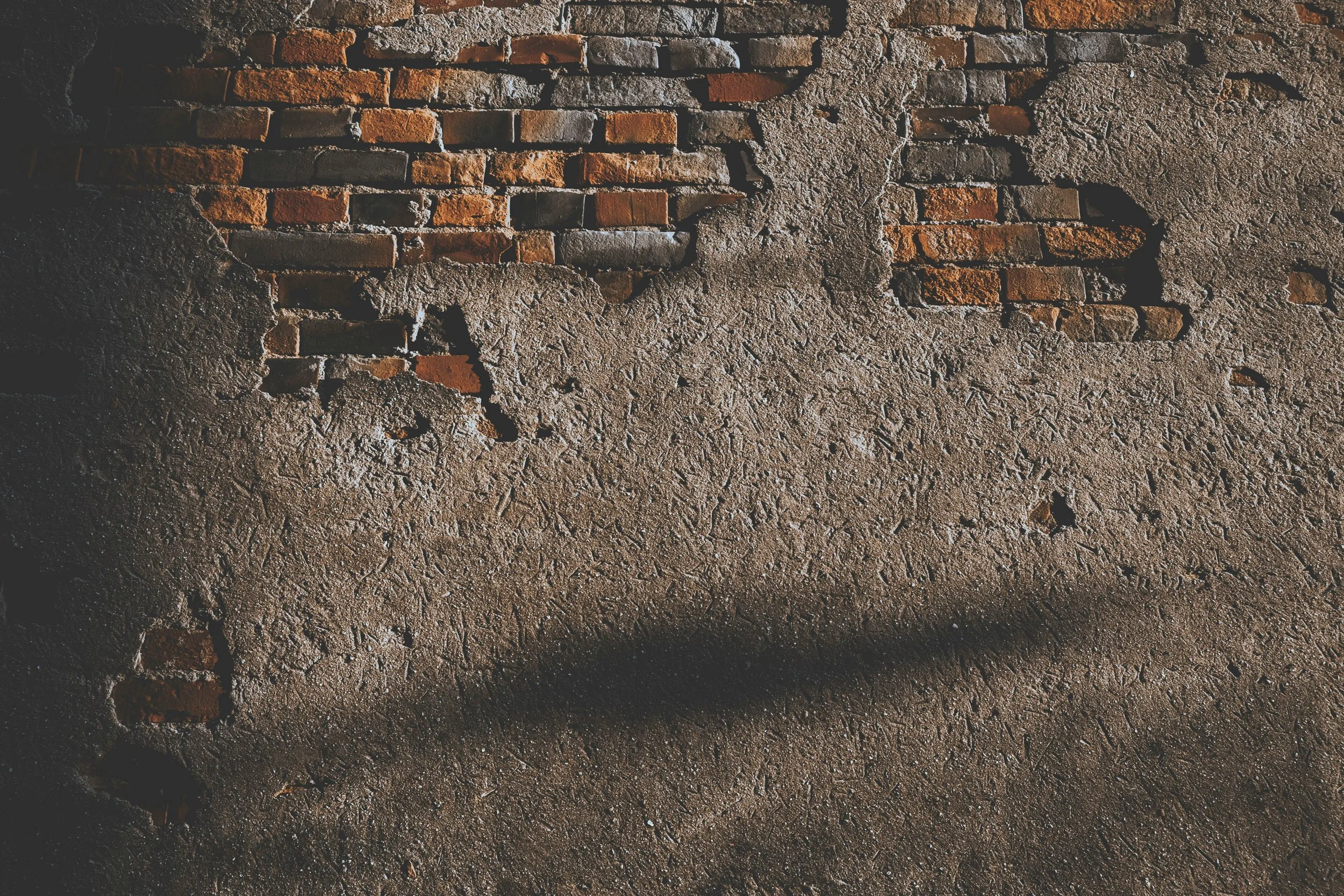
Photograph by H&CO via Unsplash
Jim Huffman
The neighbor in Robert Frost’s famous poem, “Mending Wall,” may have been right when he told us that good fences may make good neighbors. But what about walls?
The last decade has given us many of those: some physical, some economic, some military, some legal, but all designed to keep people apart.
Nearly half of the border between the United States and Mexico is lined by walls now. Israel surrounds Gaza with walls reinforced by sand banks and barbed wire, guarded by troops and tanks. Tariffs separate nations in ways not seen for generations. And immigration authorities are erecting racial walls, turning American streets into militarized spaces as they round up immigrants who have been here for decades and committed no crimes, except for being undocumented.
Do the walls work? Do they promote peace and prosperity? Do they help create the Beloved Community?
To ask these questions is to know the answer, but if we want a clear example of what they do (and don’t do), we might look back to premodern China, that country to which I tried to dig a hole when I was a child.
Some years ago, I walked along a section of the Great Wall, a centuries-old structure built by prisoners and peasants to protect China from the northerners it called barbarians. It stretched for thousands of miles. Hundreds of thousands of people died building it. In several sections, sticky rice and limestone were added to the mortar to build structures strong enough “to withstand earthquakes and other disasters.” And it snaked its way up and down the mountainous landscape, on and on, on and on, in a way that left me feeling linguistically embarrassed. “Amazing!” “Wow!” “Magnificent!” Words just didn’t do it justice.
The most important thing about the wall, however, was that it did not work, that its most impressive accomplishment may have been attracting tourists two millennia after its first sections were constructed.
The wall might hold enemies back temporarily, but not for long. Some of those northern “barbarians” breached it; others bribed the guards; but always, in every age, they came across it. And if their attacks failed to bring down a regime, the expense of constructing and repairing it did instead.
The tragedy is that things then, as now, did not have to be that way. There were more effective ways to keep a country safe.
Walls look magnificent; they may make us feel secure. But they shrivel our souls, they delude us, and they make our world small.
China’s great Muslim eunuch Zheng He showed one way. He served the very Ming dynasty that spent such vast sums on the wall, but his approach was different. In the early 1400s, he put together massive naval fleets of more than 300 ships and 28,000 men, then went calling on peoples around the world. He traveled not to fight or exclude, but to learn about lands as far away as east Africa, and to tell distant peoples about China. In so doing, he made friends and admirers rather than enemies.
Even earlier, in the seventh century, Japan’s Prince Shotoku showed another way of handling outsiders. Learning about China’s powerful and potentially threatening Tang empire, he created no army; he built no walls. Rather, he sent representatives to learn about that great empire to his west, carrying the salutation: “From the Son of Heaven of the land of the rising sun to the Son of Heaven of the land of the setting sun.”[i]
When China’s emperor took offense at that greeting (the sun rises in China too, after all), Shotoku revised it, and when his representatives came back with reports of what they had learned about Chinese life, he and his successors used their information to build a better Japan. The result was a cosmopolitan age in which Japan reached brilliant heights culturally and politically.
Isn’t it always like that? I thought as I walked along the wall.
We spend so many resources, so much energy, walling out enemies. Fortresses make us feel safer. But they delude us. It is unclear whether the wall along the Mexican border slowed the flow of immigrants. Tariffs have not boosted the U.S. economy. Israel’s walls have not made it safer. American dynamism is undermined when we do not welcome people from abroad.
Walls make us enemy-conscious. They hold us in more effectively than they keep our enemies out. They make our world small. They keep us from getting to know people, from finding out why they don’t like us (if, indeed, they don’t), from learning all the rich things others have to teach us.
Worst of all, walls keep us from finding out whether the so-called enemy might actually be a potential friend – or even a teacher in disguise.
Is that not what Jesus meant when he said in Matthew 5 to “love your enemy,” to give your coat to someone who demands your shirt, and to “pray for your persecutors”? There are no walls in those admonitions. There is only an invitation to a community in which persecutors or enemies become friends.
Walls look magnificent; they may make us feel secure. But they shrivel our souls, they separate, they nurture spite, and they seldom keep anyone out. They are, at best, an expensive delusion.
Jim Huffman spent his career teaching East Asian history at Wittenberg University, then moved to Chicago. Since retirement, he has been a board member of Chicago Area Peace Action and a member of Lake Street Church in Evanston, Illinois.
The views expressed are those of the author and not necessarily those of American Baptist Home Mission Societies.
[i] Ryusaku Tsunoda, Wm. Theodore de Bary, Donald Keene, eds., Sources of Japanese Tradition, Vol. 1 (Columbia University Press, 1958), p. 37.
Get early access to the newest stories from Christian Citizen writers, receive contextual stories which support Christian Citizen content from the world’s top publications and join a community sharing the latest in justice, mercy and faith.