
Vines and the queer Christians: The calling we choose
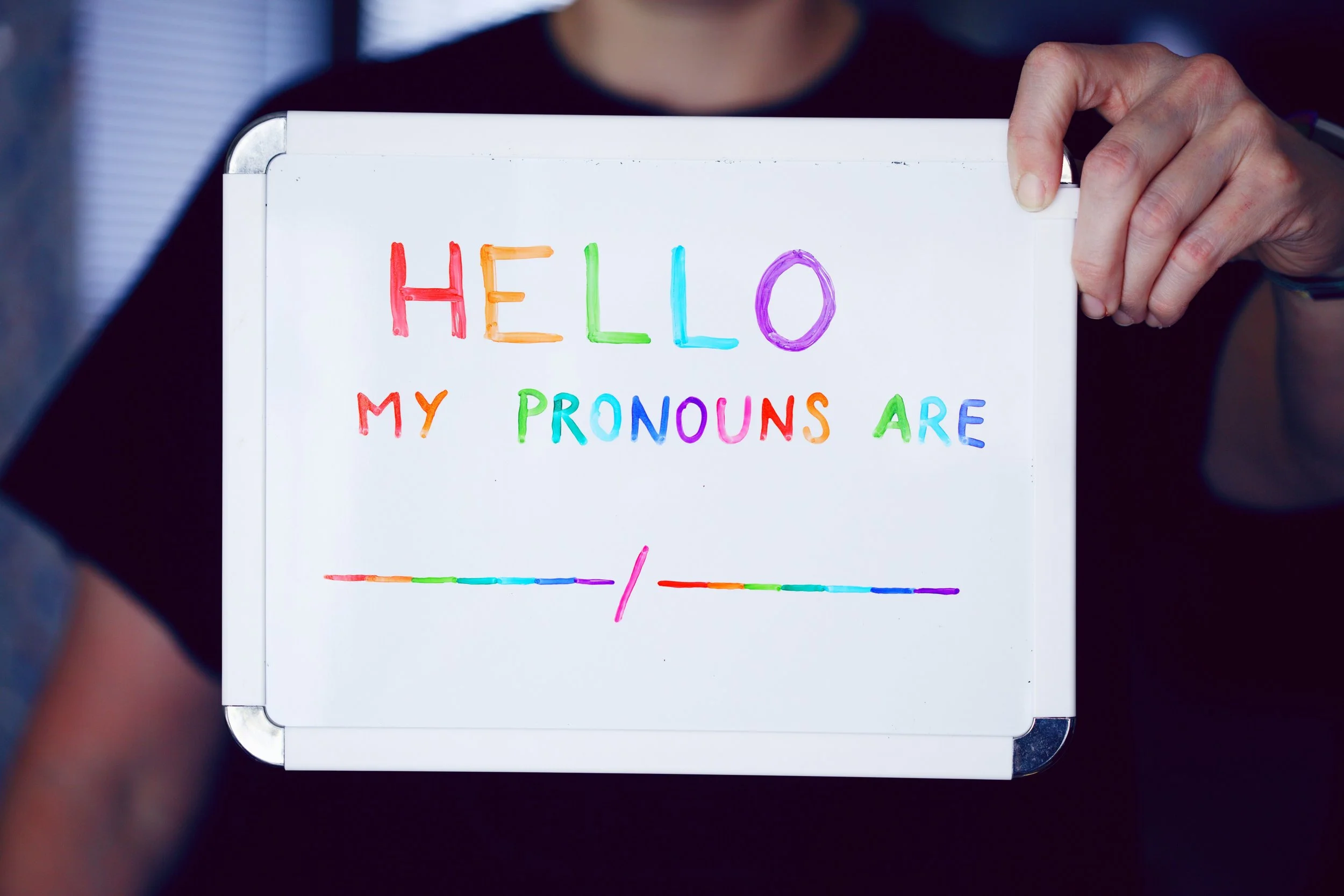
Photograph by Alexander Grey via Unsplash
Madison McClendon
For years, I muddled through. My life was lived in something like a muted emotional daze. It was murky; I was murky. I knew something about myself was different. Something was in the way of my fully realizing myself. But I couldn’t name what it was.
And then one day, I decided: I would go to a party, a Halloween party, “in drag.” I had not expressed an interest in doing drag before in my entire life. I needed my partner at the time to help me even figure out what to wear. Others at that party could tell that whatever I was doing wasn’t drag, but something different.
And coming home from that party, alive with the joy of what I had done, publicly, for the first time, it broke upon me. Joy. Contentment. Satisfaction. Sacredness. I had felt myself, truly felt my own emotions, for the first time.
It was like God pouring living waters into the mouth of a woman who had never had water and telling me to drink deep of the waters of life.
And those waters were, for me, the reality that I am a transgender woman.
And from that moment of calling, I had a choice to make. Many choices, in fact, some of them terrifying. Every transgender person must make them, and to some extent or another, so too does every queer soul who dares to live into their sacred createdness.
Do I walk to the store today in my bra, wearing it outside of the home for the very first time?
Do I go to work today in a dress?
Do I wear makeup, even though I still can’t seem to figure out how to blend my foundation and my concealer?
Is today the day I tell people my pronouns are she/her/hers?
These are terrifying choices, because there is no way for me to tell you that I am transgender without telling you that I am queer. Transgender people may be normal, a natural variation of the human population as normal as having green eyes (2 percent of the population!), but that doesn’t mean that we are any less strange, misunderstood, or frightening.
And it’s something that must be visible. Most of us don’t have the luxury of staying home for a year while hormones take hold and ordering our groceries. Most of us can’t walk away from jobs until we are ready. Most of us don’t even know when we’ll be ready. Trans men don’t know when they can have surgery to remove their breasts. Trans women don’t know when they’ll have the money to pay for beard removal, and not everyone can shave the shadow away.
In short, every single transgender person has a period of their time when they must choose, willingly and with full awareness of the fact, that they must be visibly, undeniably, inescapably queer. We’d like to be treated like we are normal, of course. But there is no escaping the fact that, for most people, we are anything but normal.
Matthew Vines’s recent article, “I’m Gay, Not Queer, It Matters,” has caused quite a stir among the LGBTQ community, both inside and outside church settings.
Many see it as a betrayal, and I’ll admit it hurt me deeply. I respect the desires for normalcy — and the safety and stability that normalcy entails — that it articulates, but I am left reeling at the veiled implication that some kinds of queer people deserve to be seen as normal, whereas other kinds of queer people don’t deserve the same protection.
Vines’s article emerges from a simple premise: gay identity, and support for gay identity, made strides in popular culture when LGBTQ advocates adopted the strategy of relentlessly arguing that queer people are born the way we are; we are, therefore, not queer, not aberrations, not abnormal, but instead a deeply normal part of human life.
For Vines, this claim is central to our defense: if, as he sees happening, queerness becomes a choice, an affectation, or a lifestyle statement, it threatens to undo the hard-won equality that LGBTQ+ people have fought for. Queer people who are born this way become the good queers. Queer people who are choosing their queerness, on the other hand? They are suspect, and they are in fact a threat to the other branches of the LGBTQ family.
While I understand the structure of Vines’s argument, I see in it a sad confusion of rhetorical strategy and slogans born of the need to survive against a world that relentlessly seeks our extermination with the truth. That truth is this: no human being deserves to be hounded from existence, barred from employment, denied access to housing, prevented from safely using public restrooms, simply because they are different.
Queerness may look like a choice to Matthew Vines, who has the luxury of having a relatively straightforward identity without too many complications. But for many of us, even those who know deeply who we are and where we are going, we must work harder to get there.
Because while “being” queer may not be a choice, “acting” queer is.
It is often a choice that keeps us alive; a gay man who chooses to publicly say “I was born this way, I hope to find a husband and raise a family,” is making a choice to behave a certain way, and display to others that his behavior is queer. He is acting out his queerness in public. That is a choice he makes.
In fact, the right has argued that for years: people may be born gay, but they should choose to behave as if they are straight, anyway. Their acting on their “sexual urges” is the problem. But Vines knows what that choice means: choosing the dissolution and sadness and despair of the closet over the joy and authenticity and flourishing of choosing freedom instead.
Because that dissolution is real; I lived it for my entire life. When I first started wearing women’s clothes, when I first started publicly sharing my life and my existence as a woman, I could feel for the first time, breathe for the first time. Light sparked in my eyes; my mother commented, at one point, “Madison, you don’t seem all that different, you’re still you.
“You’re just happier.”
And she was right. God may have called me to be this, to live this.
But at every step of the way, I had to relentlessly, fearlessly, courageously, and fiercely choose. Choosing my queerness was, in the words of Joshua, saying to the world, “As for me and my house, we will serve the Lord” (24:15). Loving God was impossible without loving myself enough to show other human beings who I am, and therefore who she is.
But embracing that queer calling always comes with a choice.
And for some, that choice may appear very much like an affectation.
This is compounded by the fact that for many trans women, the process of healing involves reclaiming things you weren’t allowed to be.
I couldn’t be a little girl. I wasn’t allowed to go to my senior prom as myself. I wasn’t able to be a woman in her twenties, fearlessly facing the world, using a decade to perfect who and what she was until she roared into her thirties with all the force of herself, magnificent for the world to see.
What the world that demands we not be queer wants is for me to bypass all of these critical moments of learning in girlhood and womanhood, immediately metamorphosing into a woman who acts and dresses and speaks and acts her age.
Not because I needed it, but because it makes others more comfortable to not have to see, encounter, or interact with my visible transness. The world doesn’t want to see my queerness, the immanent and obvious ways in which the woman they are encountering in the workplace or the grocery store or the subway is a woman who is trying to pack a lifetime’s worth of experimentation and learning and skill into as quick a timeline as possible.
And that’s hard. I didn’t have to merely decide I was a woman; I had to decide what kind of woman I would be. I had to grieve the little girl I never was, who needed someone to kneel down to her level and tie a bow in her hair and tell her she looked pretty in her Easter dress. I had to honor the pre-teen girl I never got to be, experimenting with lipstick the first time and getting sent home because my shorts were too short for the dress code.
I had to try, as hard as I could, to experience the 17-year-old on the cusp of adulthood I never got to be. I believe this, in my heart of hearts: no matter how old the transgender woman you encounter is, she gets to be 17 for as long as she wants to be. Through tears and pain and struggle, we deserve the chance to heal from the traumas society caused us by telling us, every single day, that we were something other than the people God called us to be.
And now, I’m settling. I was able to go through that. I still like wearing skirts out sometimes, feeling cute, feeling young, but more and more I’m happy where I am, and I’ve figured out how to be a woman just shy of her 40s.
At every stage, the things I had to do, the experiments I had to take, the healing I had to undergo, I had to do in public. I understand how my queerness might have looked to someone else as a choice.
Because they were choices. They were experiments. They were attempts to answer the question: you are a woman, now what? What kind of woman? What kind of human person are you, standing before the sight of all, and utterly bare before the throne of God?
And how will you honor that woman when you find her? How will you transform her into a vessel of grace?
All of my queer siblings are doing the same. Some of them may be affecting it. Some of them may be engaging in a lifestyle choice. Some of them may be making a choice. Some of them may be living away from who they are called to be, just as I wasn’t called to be a 17-year-old forever.
But I want them to live long enough to find the person they are.
Because the world where the gay man who was born this way and the queer nonbinary person who is engaging in their sixth pronoun change and outfit re-invention of 2026 can be safe are the exact same world. That gay man is no less queer because he has found inside of himself who he is; that queer person is no less queer because the imprint of the calling to which they are being pulled has not yet fully realized itself.
With all these things, we love the Lord. And with all these things, we love ourselves. And with all these things, we love our neighbors; queer, gay, trans, and anything else. And we honor the choices they make with the bodies, the hearts, the souls, and the strengths God has appointed to them on this side of heaven.
And the safety of the woman I am relies on the safety of the woman I was becoming; the woman who had to go into work with makeup she had not yet fully learned how to wear, but was wearing because it was the only thing that was going to get her through the week without jumping off a balcony.
And there is a queer person, right now, who is making a choice to try something different, because what they are doing now is going to kill them.
Queerness may look like a choice to Vines, who has the luxury of having a relatively straightforward identity without too many complications. He may want to be able to escape into normalcy, to a world that sees him as just like them. The difference is minor; he just comes home to kiss his husband instead of his wife. No big deal.
But for many of us, even those who know deeply who we are and where we are going, we must work harder to get there. We must take time to heal the traumas of a stolen childhood. We must navigate the complexities of a medical system that costs money and time and energy, often at the same time we deal with joblessness, underemployment, or insufficient insurance (or, under the Trump administration, federal and state efforts to restrict transgender health care in the first place).
And others are making a new choice, a different choice, because the truth of who they are is still murky to them. There is no Christianity I recognize that cannot say, with its full chest, that those still trying to muddle their way through those difficult questions should not be allowed, in the meantime, to go to work, use the restroom, have a roof over their heads, and avoid getting stabbed while going home at night simply for wearing something someone else didn’t like.
Whether we know who we are as surely as Vines does, whether we know ourselves imperfectly and are on the road to that discovery, one truth remains: there came a time when the Almighty maker of heaven and earth reached into the wombs of our mothers — or fathers, as I know more than one trans man whose fatherhood is not in question, and whose womb still did the work.
There, we were knit and formed, not only as the biology of our bodies, but as a sacred framework of hearts, our souls, the very strength of our passions and affections and intellects and desires that construct us as surely as any chromosome can, and certainly more powerfully than whatever external genitalia society has decided should determine our role, place, or purpose in society.
And with all these things, we love the Lord. And with all these things, we love ourselves. And with all these things, we love our neighbors; queer, gay, trans, and anything else.
And we honor the choices they make with the bodies, the hearts, the souls, and the strengths God has appointed to them on this side of heaven.
Madison McClendon obtained her M.Div. from the University of Chicago Divinity School in 2012, where she now serves as the Assistant Director of Alumni Relations and Development. She is the Moderator of North Shore Baptist Church in Chicago, Illinois, and serves on the board of the Baptist Peace Fellowship of North America/Bautistas por la Paz, in addition to previous service on the board of the Association of Welcoming and Affirming Baptists and BJC.
The views expressed are those of the author and not necessarily those of American Baptist Home Mission Societies.
Get early access to the newest stories from Christian Citizen writers, receive contextual stories which support Christian Citizen content from the world’s top publications and join a community sharing the latest in justice, mercy and faith.