
The redemption of the Wolf Man
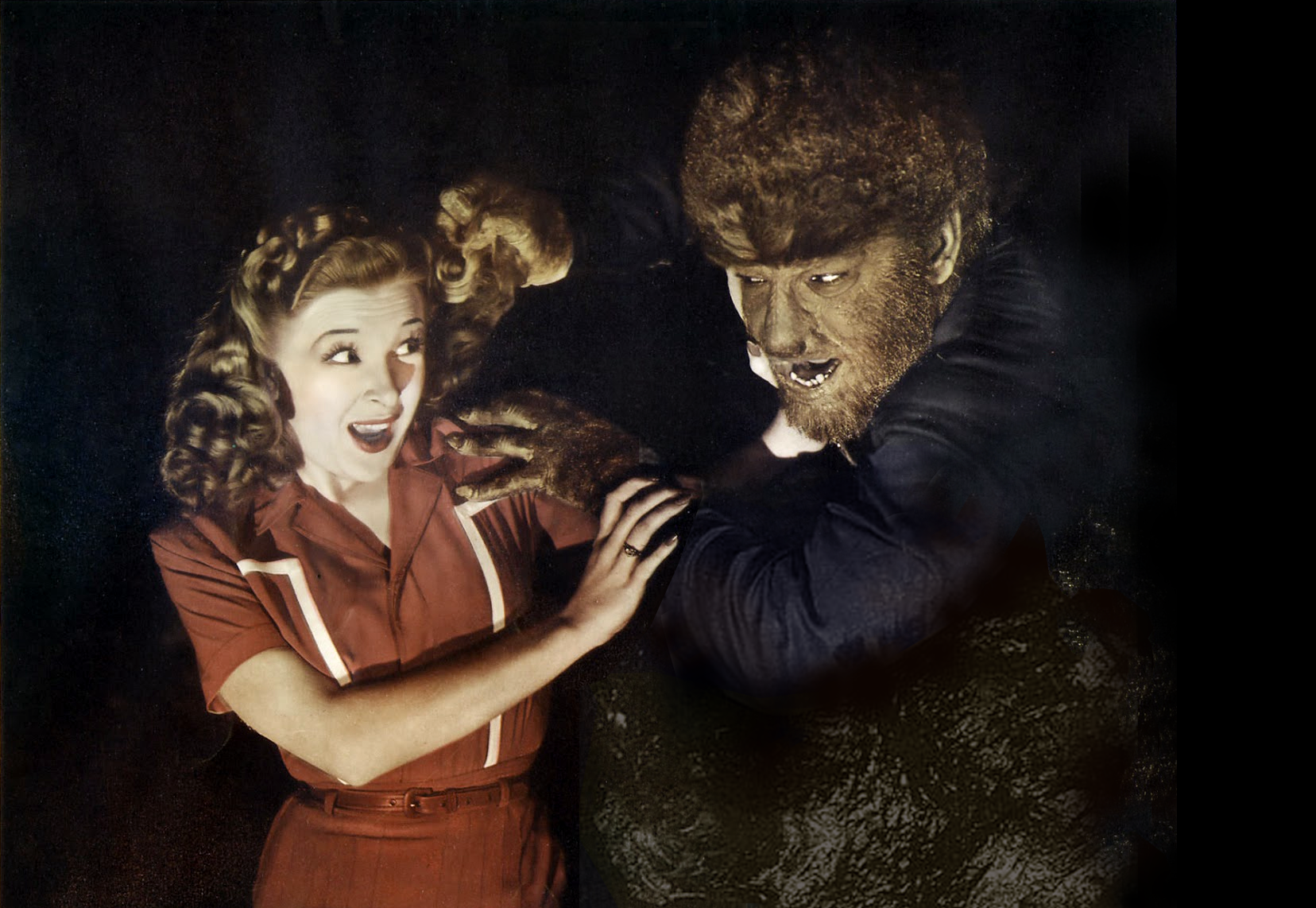
Promotional art for ‘The Wolf Man’ featuring Lon Chaney Jr. as the title character. By Universal Studios, re-released by Realart in 1948. Public domain via Wikimedia Commons.
Nathan Perrin
With Halloween around the corner, I return to my usual traditions. My inner child loves Halloween and the horror genre. So much so that I write horror when an idea strikes me, and I’m a proud member of the Horror Writers Association. One of my favorite traditions is sitting through “The Wolf Man” movies from the Universal Monsters era every fall.
I grew up in a rough neighborhood, so I found a lot of solace in movies. To pass time, I would walk down to the cheap movie theater right down the street from me – especially after I dropped out of high school. I found the black and white Universal Monster movies particularly captivating, but I was really drawn towards the Wolf Man. He was a tragic character that didn’t want to become his monster and actively sought to end his own suffering. That stood in sharp contrast to the other monsters who seemingly lived on carnage and destruction.
Curt Siodmak, the screenwriter, was a Jewish refugee who fled Europe as Nazism rose. He used “The Wolf Man” to express anxiety about what it meant to be Jewish during World War II. In other words, the horror is mainly based not on werewolf transformation but rather based on a forecasting dread about death and destruction.
Long before the Marvel Cinematic Universe, with its world shared by various superheroes, Universal was seeking to mash in all of their monsters for profit. The Wolf Man’s story thus is told in five movies: “The Wolf Man,” “Frankenstein Meets the Wolf Man,” “House of Frankenstein,” “House of Dracula,” and “Abbott and Costello Meet Frankenstein.”
Larry Talbot, the titular werewolf, repeatedly gets revived to his horror after each death until he finally meets a scientist who claims to cure him. In “House of Dracula,” the fourth installment, the scientist, Dr. Franz Edelmann, tells Larry that God led him to him for a cure. It’s a surprisingly happy ending for Larry as he gets to experience the full moon for the first time without transforming.
“The Wolf Man” shows us that there’s something inside of us that refuses to believe that we are the totality of the worst things we’ve done.
Fans dispute whether or not the next movie, “Abbott and Costello Meet Frankenstein,” is Universal Monsters “canon.” It is obviously meant to be a parody of the Universal Monsters, and it succeeds well. The humor and comedy don’t feel out of place at all. However, even if we consider the movie a continual story from the previous films, Larry still gets a fairly positive ending. He is inexplicably a werewolf again. Instead of attempting to escape his fate through suicide, he takes the measures to reduce harm to himself and others. He ends up being the main hero who once and for all destroys Dracula.
As I’ve gotten older, this story is still compelling to me. It makes me wonder if there’s something innate in all of us that seeks redemption for things we feel we can’t control. What also makes the Wolf Man unique is that werewolves were traditionally seen in folklore as being agents of witchcraft or Satan. Curt Siodmak approached werewolves and their full moon mythology in a new way, taking them from being through-and-through monsters to sympathetic characters who don’t want to be monsters.
Why I love these movies to this day is because I find many people like Larry in recovery circles – people consumed by addiction, trauma, and generally bad life choices. I’ve met formerly incarcerated people who did commit crimes but found complete redemption and spend their lives serving the community. Meeting these folks repeatedly brings to mind Jesus’ words in Luke 5:32: “I didn’t come to call righteous people but sinners to change their hearts and lives” (CEB). And, like Larry Talbot, most of the people coming to mind didn’t set out to become monsters or hurt others. They were caught up in systemic injustice, dysfunctional families, and generational poverty. Their actions reflect the trauma they survived and never healed from. They’re also proof that it’s never too late to be redeemed or changed. I see all of that on a regular basis.
Perhaps that is the underscoring message of Larry Talbot’s story. We only view him as a monster because that’s the category he is assigned to and society treats him that way. But what happens when we treat those we fear with sympathy and compassion instead of constant fear? What if we looked at the Larry Talbots of our world with Christlike compassion? I believe that perspective shift is seen repeatedly throughout church history, but also this story shows us that there’s something inside of us that refuses to believe that we are the totality of the worst things we’ve done. The Wolf Man is thus not a story of caution, but of what happens when we dare invite the Other to the table. Who knows? After we’ve done that, he may become the hero of our story that we needed all along.
Nathan Perrin (he/him/his) is a writer and Anabaptist pastor in Chicagoland. He holds an MA in Quaker Studies and is a doctoral student studying Christian Community Development at Northern Seminary. His doctorate work centers on creating a writing program for nonprofits and churches to use to help under-resourced communities process trauma. His work has been published in the Dillydoun Review, Bangalore Review, Collateral Journal, Esoterica Magazine, etc. His novella Memories of Green Rivers was published in 2026 by Running Wild Press. He is also a screenwriter. For more information, visit www.nathanperrinwriter.com
The views expressed are those of the author and not necessarily those of American Baptist Home Mission Societies.
Get early access to the newest stories from Christian Citizen writers, receive contextual stories which support Christian Citizen content from the world’s top publications and join a community sharing the latest in justice, mercy and faith.