
Religious freedom in America today
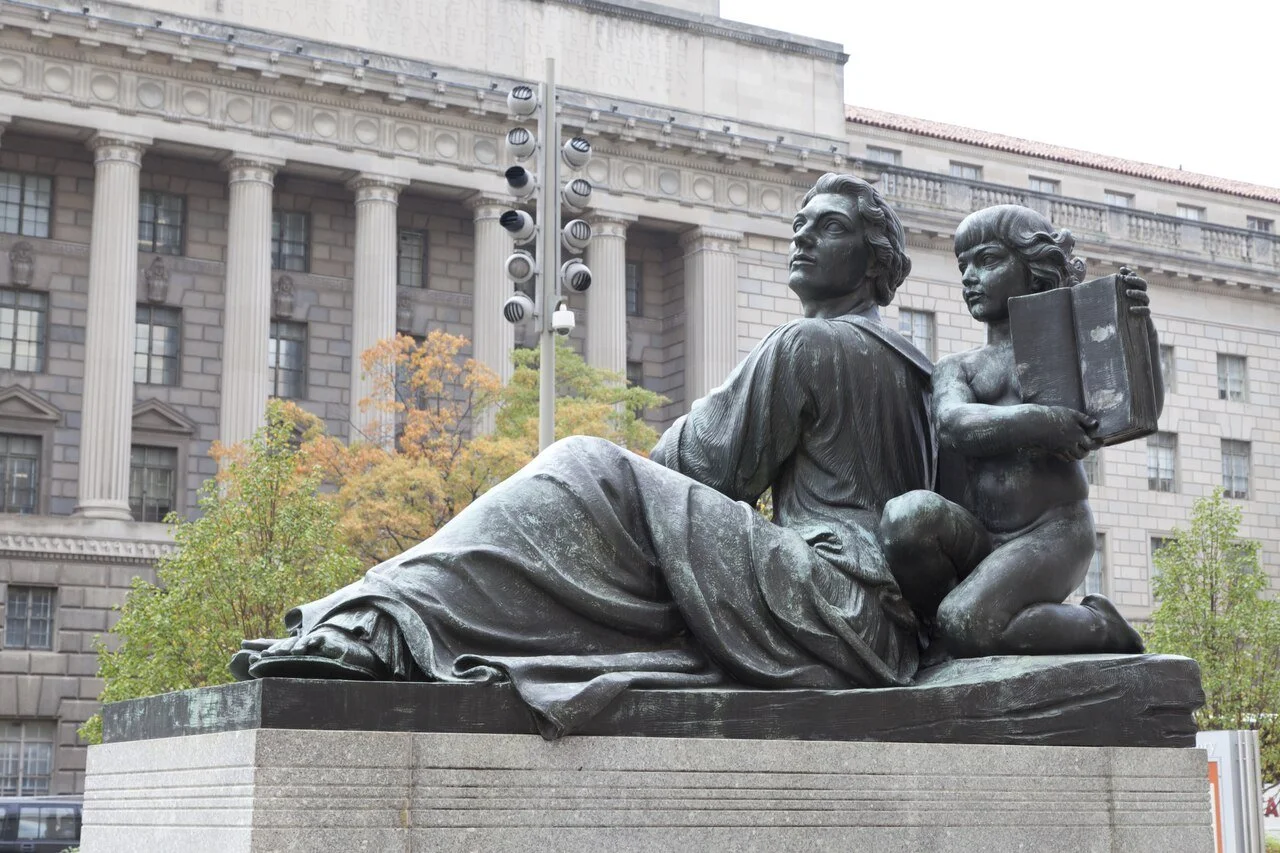
The Liberty of Worship monument in Washington, DC. Photograph by Carol M. Highsmith - Library of Congress Collections via Wikimedia Commons. Public domain.
Rev. Dr. Quintin L. Robertson
As one of the newest Regional Executive Ministers of the thirty-three regions of the American Baptist Church USA, I was asked to give a meditation at the National Leadership Council (NLC) held in Atlanta, Georgia. I shared with them a message I titled “Freedom,” since the Council gathered less than two months before our nation’s celebration of our 250th anniversary. It was (and still is) my conviction that our nation has departed from our founders’ intent of separation of church and state.
In my message, I considered two passages from Paul’s letters to the Galatians and the Corinthians: “For freedom Christ has set us free. Stand firm, therefore, and do not submit again to a yoke of slavery” (Galatians 5:1) and “For why should my freedom be subject to the judgment of someone else’s conscience?” (1 Corinthians 10:29b).
Then-Vice President Kamala Harris asked during a campaign stop in North Carolina in 2024: “The question we face is what kind of country do we want to live in? Do we want to live in a country of freedom, compassion and rule of law?” Harris is a member of the Third Baptist Church of San Francisco (an ABCUSA congregation). Although her words were the words of a politician, we could hear in those words our Baptist identity – the four essential freedoms developed by early Baptists and synthesized by Walter B. Shurden in his book, “The Baptist identity: Four Fragile Freedoms.”
Those four freedoms are Bible freedom, church freedom, soul freedom, and religious freedom. Religious freedom is the separation of church and state and freedom of conscience for all. Just as religious freedom involves the freedom to practice religion, it also includes the freedom not to practice religion.
The belief that freedom is the birthright of every person was enshrined in the Declaration of Independence: “We hold these truths to be self-evident, that all men are created equal, that they are endowed by their Creator with certain inalienable Rights, that among these are Life, Liberty and the pursuit of Happiness.” Believe it or not, that conviction was forged by early headstrong Baptists and others who insisted religious liberty was at the heart of being fully human. Baptists became radical on the separation of church and state because at the time, they were a besieged religious minority in a nation full of state churches.
Let us guard religious freedom and exercise it responsibly, upholding the separation of church and state and using freedom for the benefit of others. Religious freedom flourishes when we guard every person’s conscience as carefully as we guard our own.
Jesus says clearly in Matthew 22:21, “Give therefore to Caesar the things that are Caesar’s and to God the things that are God’s.” This sounds like “separation of church and state” to me. And I believe colonial Baptists read the Bible that way. Indeed, it was John Leland’s lobbying of James Madison, on behalf of Baptists, that finally resulted in the First Amendment being added to the Constitution: “Congress shall make no law respecting an establishment of religion, or prohibiting the free exercise thereof.”
Talk of the USA as a Christian nation — which we hear from the highest political offices these days — implies that our country is a religious union, when, in fact, we are one of the most religiously pluralistic nations in the world. As American Baptists, we have a particular history, a history of once being an oppressed religious minority. And that means we of all people should know the hard questions to ask those eager to collapse the kingdoms of Christ and Caesar into one. Did not our Jesus say, “My kingdom is not of this world”? (John 18:36)
Thank God we live in a nation where we can make that confession without fear, while others who withhold that confession, answer not to government, nor to us, but to God. This is religious freedom, where everyone is able to worship (or not worship) as they wish, without interference by the government.
Therefore, let us guard religious freedom and exercise it responsibly, upholding the separation of church and state and using freedom for the benefit of others. Remember how Paul prompts us with this question: “For why should my freedom be subject to the judgment of someone else’s conscience?” Each citizen of our nation should ask themselves this very question. A few years ago, I saw a sign on a Methodist church that translated this to our current reality. It read: “Thou shalt not use your religion to take away other people’s rights.” Indeed, religious freedom flourishes when we guard every person’s conscience as carefully as we guard our own.
Rev. Dr. Quintin L. Robertson is the Regional Executive Minister of the Philadelphia Baptist Association.
The views expressed are those of the author and not necessarily those of American Baptist Home Mission Societies.
Get early access to the newest stories from Christian Citizen writers, receive contextual stories which support Christian Citizen content from the world’s top publications and join a community sharing the latest in justice, mercy and faith.