
On pilgrimage
Photograph by Robert Carnes via Pexels
Rev. Jerrod H. Hugenot
On May 18-20, 2026, the National Leadership Council of the American Baptist Churches USA convened for an annual meeting of ABCUSA national partners and ABCUSA regional executives in Atlanta, Georgia.
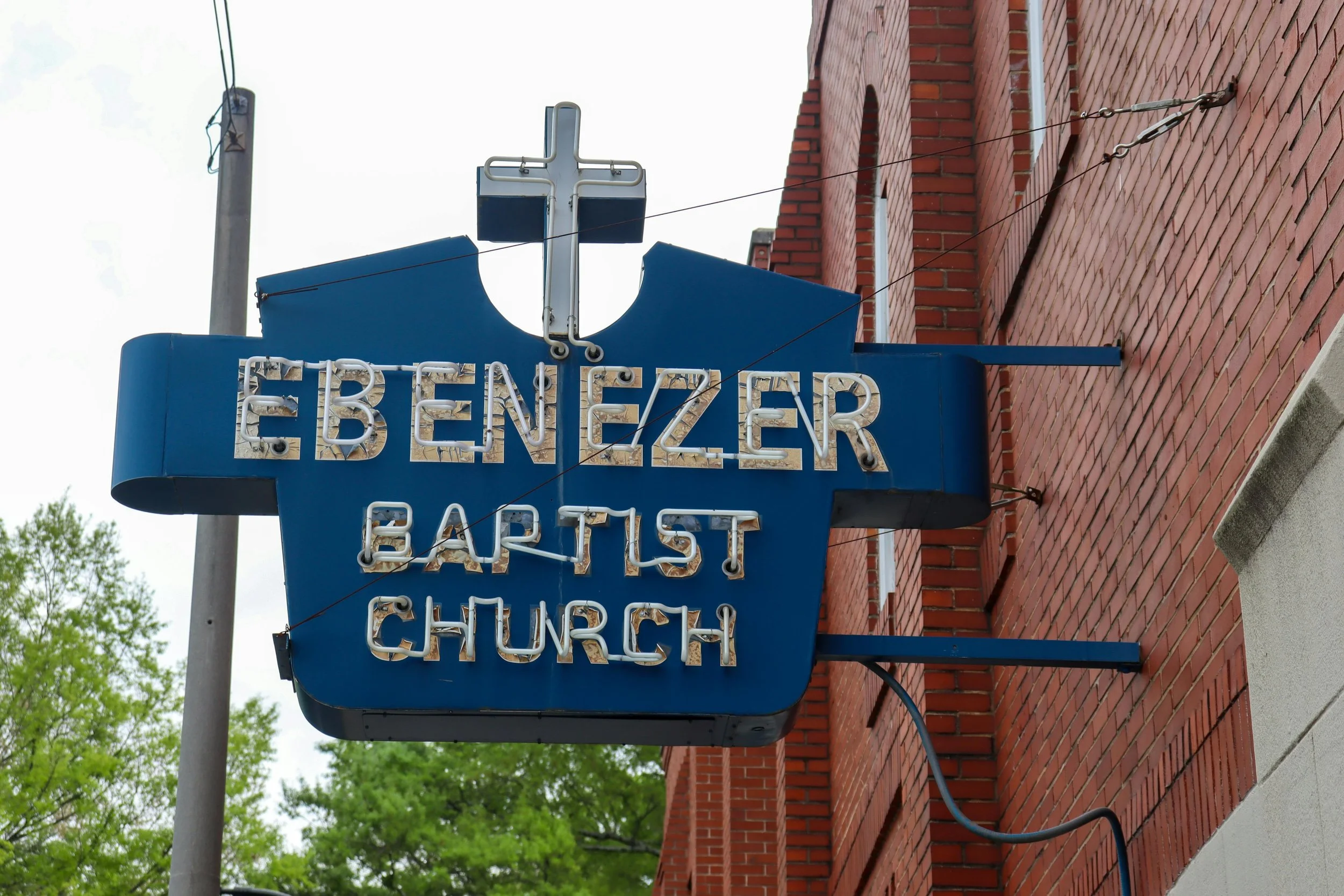
As part of the agenda, the NLC participants engaged in a daylong visit to Atlanta-area sites with significant ties to American Baptist (formerly Northern Baptist) history: the historic Ebenezer Baptist Church, now maintained by the National Park Service; a tour of the American Baptist Historical Society archives; a visit to the Martin Luther King, Jr., International Chapel at Morehouse College; and a dinner gathering with the retired ABCUSA Associate General Secretary Rev. Dr. Albert Brinson, who spoke about his firsthand work alongside the Rev. Dr. King, Jr., and his father, the Rev Dr. Martin Luther King, Sr., at Ebenezer and in Civil Rights work.
For some of our NLC leaders, the trip was a return “home” to places where their own lives (personal, educational, and professional) intersected. For others like me, it was a first-time experience of these sites so sacred to many within our denomination and our nation.
As part of the day’s schedule, I was invited to give the morning worship devotional prior to the tour bus leaving. The worship throughout the NLC meetings invited participants to reflect through prayer, song and devotional thoughts on the Psalms of Ascent (Psalms 120-134), used by Israelites making their pilgrimage, ascending to Jerusalem on foot with these songs on their hearts. With these texts in mind, I shared the following reflection:
When I served as a local church pastor, I enjoyed one of the Psalms of Ascent rotating into the Sunday lectionary readings, as they revolve around an important faith journey: the act of pilgrimage.
In her memoir “Things Seen and Unseen: A Year Lived in Faith,” Episcopal writer Nora Gallagher writes of the congregation where she discovered her Christian faith and learned how to live that faith. She shares, “I came to this church five years ago as a tourist and ended up as a pilgrim.”[i]
Gallagher’s faith flourishes in an Episcopal congregation, a much different setting than my own American Baptist upbringing. We are people not known for our high church liturgy or our wine list.
Yet, when I read Gallagher’s insight into her faith journey, I felt a kinship, a deep resonance with what she shared. We can know something in the abstract about a religious tradition, perhaps appreciate it from afar. But Christian folk who discover faith is a journey realize there’s a great difference between “knowing of” Jesus and actually “loving Jesus.”
Loving Jesus means a lot more about “living with Jesus” and the Gospel. Yet any church knows your membership roll is often far larger than your “active and engaged congregant” list. Most churches have a large alumni association, if you will, veritable tourists who come for a season and then disappear. Blessed be the pilgrims who keep our doors open and the Christ light going.
Today, our tasks include visiting several historical sites. What sort of questions might we ask? Will there be a tour bus? We hope. Will it have good Wi-Fi and robust air conditioning? Truly our prayers are most genuine and devout.
But what will be the outcome intended for an itinerary? The route takes us first to a historic church, then to our denominational archives, and onwards to a distinguished HCBU chapel. And, lest the Baptists grow weary (or worse, cranky), we are also promised dinner at the end, along with a visit from a literal witness to Baptist and civil rights history in the Rev. Dr. Al Brinson.
Again, the question: are we to be tourists, or is something awaiting that sparks or deepens a pilgrimage experience?
Pilgrims. We Baptists often eschew an official list of saints, yet we have them, particularly women and men from our past who exemplify pilgrim lives we can call upon.
Tourists collect a lot of mementos, yet pilgrims know how to stop and build an altar to mark their God encounters, often with calloused hands, weary feet, and aching backs.
At the origins of the US Baptist story, we have Roger Williams, who endured much hardship after being banned from the Puritan colony and sent to the “wilderness” of what is now Rhode Island.
Rhode Island is an early bastion of religious liberty, thanks to Williams. Without a doubt, his story is indeed a pilgrimage, a remarkable journey.
In his early days of being a pariah, Williams composed a veritable psalm after spending a long, lonely winter where he slept inside a hollow tree at night:
God makes a Path, provides a Guide,
And feeds in Wildernesse!
His glorious Name while breath remaines,
O that I may confesse.
Lost many a time, I have had no Guide,
No House, but Hollow Tree!
In stormy Winter night no Fire,
No Food, no Company:
In him I have found a House, a Bed,
A Table, a Company:
No Cup so bitter, but’s made sweet.
When God shall Sweet’ning be.[ii]
Like many of us, Williams did not set out to be a dissenter, yet his faith and conscience compelled him to differ and take issue with institutional power that liked keeping a tight rein on things, especially the freedoms of others (or if you like, the ones the people in power had decided were “other” and therefore suspect).
Our Baptist tradition arose from such origins. And humbly, I contend “our better angels” are with us when we remember such a legacy.
After all, a pilgrim is one who remembers the fuller journey, not just the “Kodak Moments” of the tourist. Tourists collect a lot of mementos, yet pilgrims know how to stop and build an altar to mark their God encounters, often with calloused hands, weary feet, and aching backs.
Tourists have fleeting memories. Pilgrims, however, know that the better path is to look carefully and reverently where we are about to tread.
So today is a day of pilgrimage to sites sacred to our nation’s history as well as our own denomination. The connections between Martin Luther King, Jr., and our legacy as Northern Baptists are significant, yet we must remember the past rightly with full awareness of the tumult and adversity that made these places holy ground and where they insist their work is far from complete.
The past is not the past, especially in this day we live in, where King could still walk among us and find America still in deep need of his word. Theologian James Cone wisely observed that King, in what would be his final years of earthly life, spoke increasingly of America becoming a nightmare rather than a dream.[iii]
In 1967 and 1968 King was speaking out against Vietnam and economic disparities burdening this country. Yet, King found the response to his prophetic vision rebuffed by constant challenge from his critics, ranging from the White House down to fellow religious and civil rights leaders. The advice he heard was “stick with your field.”
King countered with this word:
Now there are those who say, “You’re a Civil Rights leader. What are you doing speaking out? You should stay in your field.” Well, I wish you would go back and tell them for me that before I became a Civil Rights leader, I was a preacher of the Gospel. And when my father and others put their hands on my head and ordained me to the Christian ministry, it was a commission and something said to me that the fire of truth is shut up in my bones, and when it burns me, I must tell it!
Today is not a tour. It is a pilgrimage.
We go forward, remembering.
We remember, so we can go forward.
AMEN.
Rev. Jerrod H. Hugenot serves as executive minister of the American Baptist Churches of New York State.
The views expressed are those of the author and not necessarily those of American Baptist Home Mission Societies.
[i] Nora Gallagher. Things Seen and Unseen: A Year Lived in Faith. New York: Knopf, 1998, p. 11.
[ii] Edwin S. Gaustad, Liberty of Conscience: Roger Williams in America. Grand Rapids, MI: Eerdmans, 1991, p. 46. (Current edition: Judson Press, 1999.)
[iii] Read more in James H. Cone, Martin and Malcolm and America: A Dream or a Nightmare? (Maryknoll, NY: Orbis, 1991).
Get early access to the newest stories from Christian Citizen writers, receive contextual stories which support Christian Citizen content from the world’s top publications and join a community sharing the latest in justice, mercy and faith.