
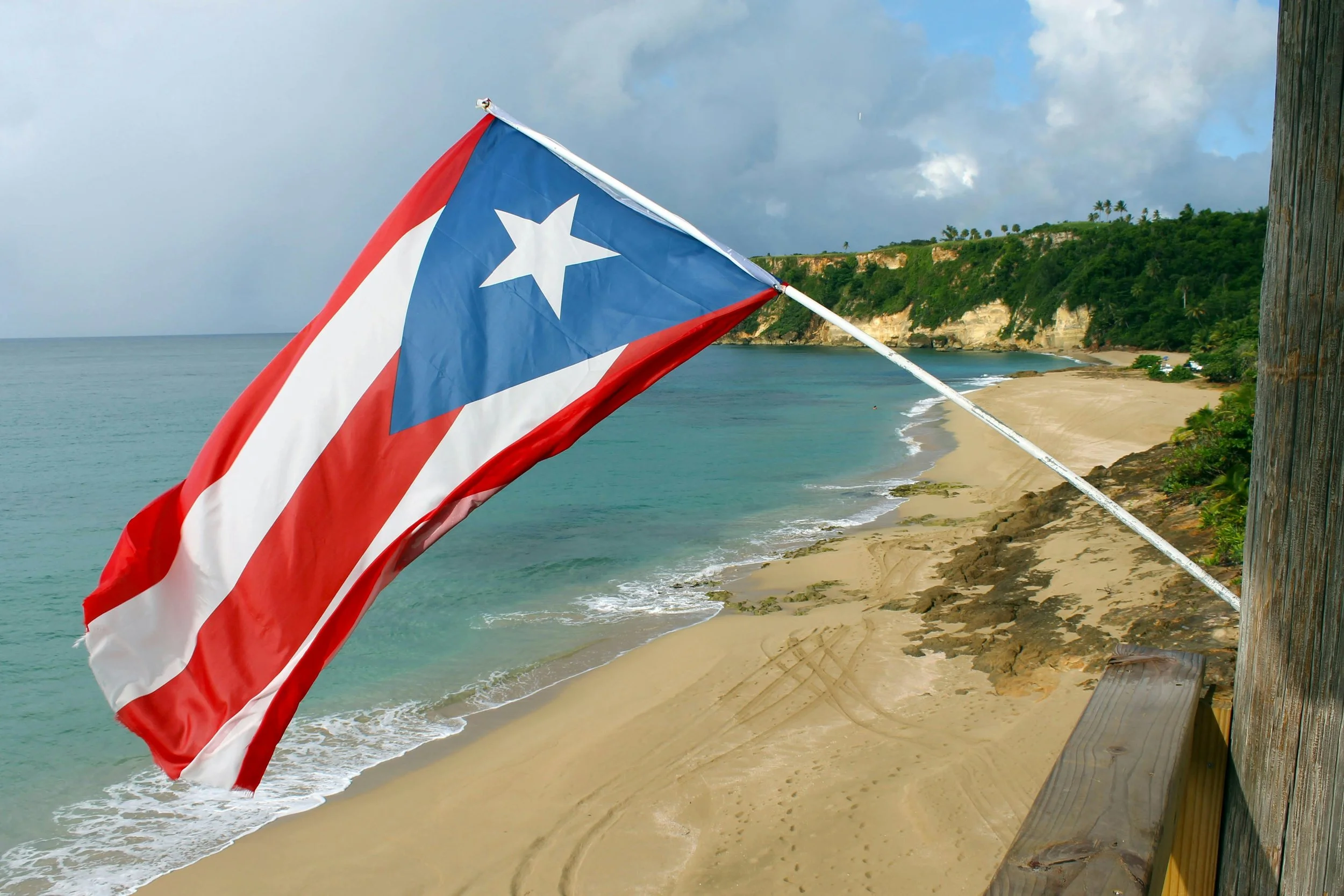
Photograph by Ana Toledo via Unsplash
Rev. Dr. Brian Ellis-Gibbs
As we pulled into the parking lot, protected by stone walls, I paused before stepping out of the vehicle and walking toward the open entryway. I prayed, “God, help me ask the right questions with compassion, and help me to be fully present as I listen to the stories of your people.”
I stopped to look up at the building, a former school in the heart of a once thriving and diverse community in Puerto Rico. The entrance was wide open, welcoming to those who walked inside. The hallway wrapped around the offices and classrooms that met us as we toured the facility. Rooms for learning music and dance stood ready to receive students sitting along the U-shaped hallway, which led to the courtyard in the rear, full of art, sculptures, plants and flowers. My colleagues and I exchanged greetings with the committed staff of this center that provided a plethora of services for the community. After meeting the participants and receiving the tour, we were escorted to a room, sat down, and started the next hour and half of listening and sharing with prayer. I knew the conversation would be difficult, yet I did not know how deeply the stories shared that day would affect me.
Puerto Rico, the “rich port” as designated by the Europeans, has been under the yoke of colonization for centuries, and in this very moment, they were facing another water shortage crisis. This crisis is the result of neglected infrastructure, yet the human beings in the room spoke not only of the current events, but of surviving in their country of birth and ancestry, of facing the continual trauma of dehumanization, displacement, and disenfranchisement while their communities struggle to determine their future.
“How Are You Feeling?”
We opened the meeting with a simple question that we ask one another every day: “How are you feeling?” For the four community organizers in the room, it provided them space to share a reservoir of emotions, thoughts, and pain.
“I was born in a colony. I have not felt worthy of things that other people freely have. I have been fighting for them since I was born” shared an organizer who despite his pain, continues to provide a space of joy for others. Another organizer, who just began working at the center, spoke of living in a constant state of survival: “I am frustrated most of the time, for I am always in survival mode.” Yet her frustration existed alongside hope: “I am optimistic when I contribute to the work and to the community,” she said. Although trauma and crisis had become normalized, participation in community work offered a way to resist that normalization.
Amid dehumanization, displacement, and disenfranchisement, Puerto Rican community organizers also spoke of work rooted in hope. This hope is found in collective action and faithful persistence.
A third, more experienced organizer offered a concise declaration: “I believe we have a right to joy,” and “We have a right to exist, to thrive.” These statements speak to the strength of those who stand on the frontlines and fight against the continued horrors of colonization. A fourth organizer named the accumulation of pressures facing Puerto Rican communities: “We are being systematically expelled. There are so many things happening all at once.” She pointed to the energy crisis, the practice of land grabs, settler colonialism, rising rents, and wealthy people from the States moving to Puerto Rico, while paying no taxes.
The people in the meeting emphasized the importance of naming that “We are a colony.” To name that reality allows residents, supporters, and churches to understand what is happening and what has long been happening.
What communities are already doing
By the end of the session, the pain shared in the room felt overwhelming, but there was also a spirit of determination to live. Organizers named several additional challenges:
Defunding of public education and the closure of 673 public schools within the last two decades.
Unregulated purchases and development.
Legislative policies that favor wealthy interests.
Government fiscal mismanagement.
A large majority of churches remain disconnected from community organizers and progressive action.
Movement toward unifying church and state and restoring the death penalty, which organizers noted was outlawed in Puerto Rico in the 1920s.
Private property interests supersede the communal and social nature of property.
Amid all those issues, the organizers also spoke of work rooted in hope: community organizing, community land trusts, community care, and engagement through cultural arts. These practices not only connect advocacy, collective stewardship, mutual support, and culture as parts of a broader effort to protect communities and sustain their capacity to act, but they are the very tools by which they have been able to endure. Their resiliency was loud and clear. They were not going anywhere. They were not going to leave their land or abandon their people.
What organizers asked of churches and partners
Having a profound understanding of the needs of the people, they asked that partners identify adaptable organizing tools, and provide collective, participatory engagement and education in democratic governance. Their request points toward accompaniment that builds local capacity rather than imposing outside solutions, for it is the most directly impacted who know what they need. Churches and partners can contribute by listening to organizer-defined priorities, connecting communities to useful resources, convening dialogue when invited, and supporting advocacy shaped by those most directly affected. Their recommendations included:
Convene an initial dialogue between Puerto Rican organizers and church leaders, with the agenda set by organizer-identified priorities.
Develop an educational resource for churches that explains the interconnected realities of water, infrastructure, displacement, political power, and community-led resistance.
Establish a process for compensating community leaders who contribute their time, testimony, and expertise to educational or advocacy work.
Identify advocacy actions only after consultation with Puerto Rican partners and communicate clearly how those actions reflect the priorities they named.
Create recurring dialogue spaces that connect community organizers and churches without asking organizers to repeatedly justify their lived reality.
Plan future visits around listening, immersion, learning, and long-term relationship rather than one-time observation.
Hope rooted in the work
The listening session ended with the question, “Do you have hope? In what do you have hope?” The answers these freedom fighters shared were honest. “I have hope, because there are so many people doing great work,” one organizer said. Another acknowledged that hope is not always present, but added, “When I do the work of organizing, I see that I am not alone.”
The organizers found hope in the work they and others continue to do — work that touches people around the world, even when it appears to operate at a micro level. They continue because, as they said, “We will not surrender. We will not leave.” This hope is found in collective action and faithful persistence.
As my colleagues and I departed from the enclosed campus, I remembered the verse in the 19th chapter of the gospel of Luke: “As he came near and saw the city, he wept over it…” (Luke 19:41). I wept because of the pain of our Puerto Rican brothers and sisters, yet I also discovered that within them is a resiliency and courage that provides them with reason and purpose to awake every morning. They are in dire need of healing, yet the system of colonization is in greater need of being dismantled, so that God’s people experience abundant life.
Rev. Dr. Brian Ellis-Gibbs is the national coordinator for Healing and Transforming Communities at the American Baptist Home Mission Societies.
The views expressed are those of the author and not necessarily those of American Baptist Home Mission Societies.
Get early access to the newest stories from Christian Citizen writers, receive contextual stories which support Christian Citizen content from the world’s top publications and join a community sharing the latest in justice, mercy and faith.