
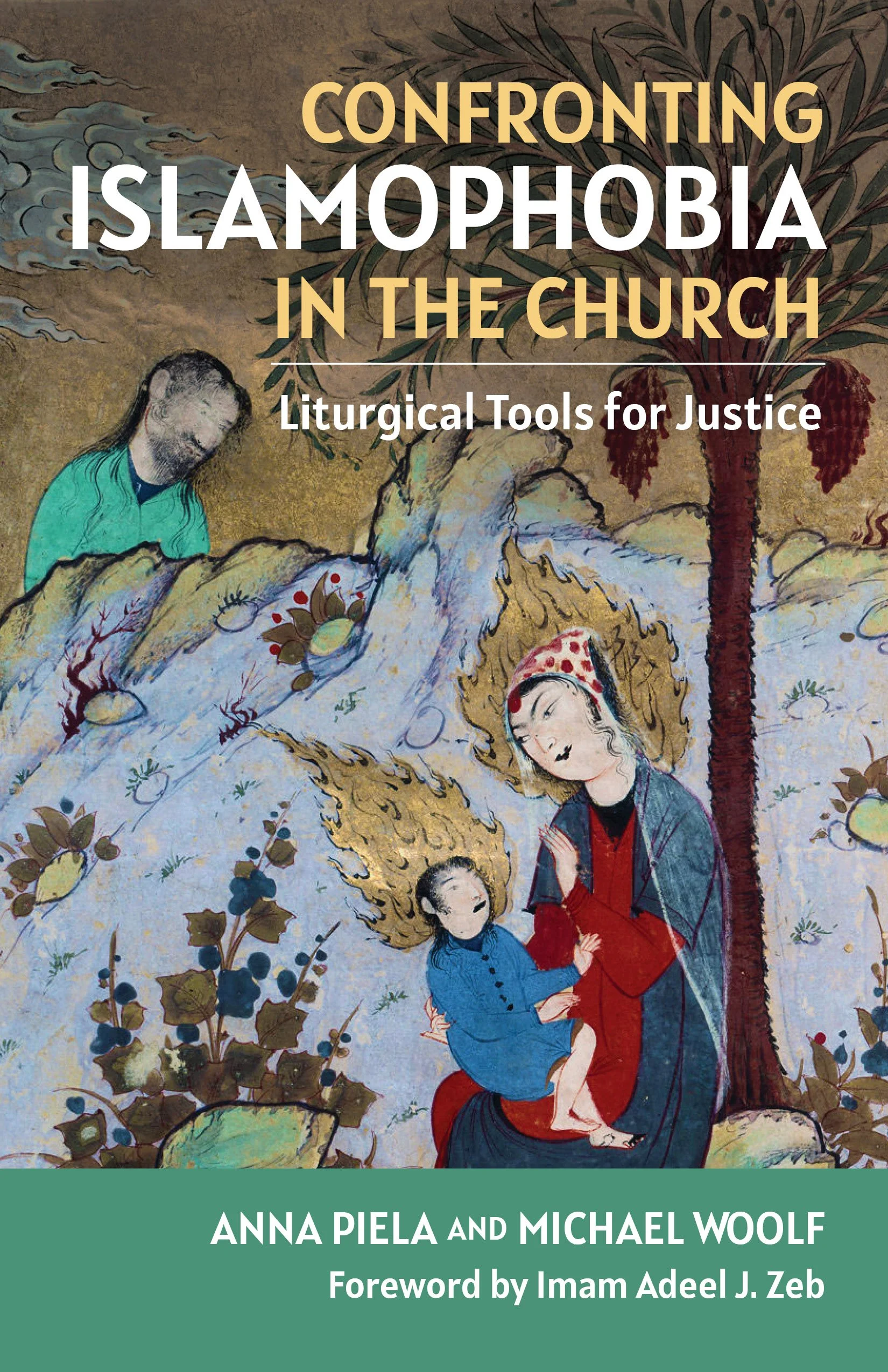
Language for interfaith work: Review of ‘Confronting Islamophobia in the Church’
Nathan Perrin
I once considered myself a Messianic Jew. I have Jewish roots, and during my exploration of different faith traditions I found myself looking with interest into Judaism. I grew up under fundamentalist Christianity and wanted to see what else was out there. I decided to try out a Messianic synagogue near me. I was a member for about a year before I realized that the Messianic congregation was promoting a form of antisemitism called “philosemitism,” which fetishizes Jewish culture and uses it for evangelical ends. The movement stems from the Hebrew Roots Movement, a fringe theological view that believes that Christians are under a mandate to follow the Torah’s laws. This congregation was also proudly Zionist and Islamophobic. I vividly remember sermons from the pastor, who was a Gentile before entering into the stream of Messianic faith, who proudly proclaimed that we should turn the rest of the Middle East “into glass” with nuclear weapons. He also cussed in sermons and often portrayed both Palestinians and Muslims as being subhuman.
When I started dating a Palestinian Christian, I had no context for the occupation beyond what I heard in that church and from mainstream evangelicalism. Her influence on me, as well as reading actual Jewish theology about how all people are made in the image of God, pushed me out of the Messianic movement. That deconstruction of the Hebrew Roots theology began my antiracist journey.
Over the next twelve years or so, I strived to learn and understand the struggles of Muslims and Arabs. There were not many interfaith guides to understanding the culture from a compassionate Christian perspective. I made several mistakes along the way that are common in many journeys to decolonize our theology. That is why both I and my inner teen are deeply grateful for “Confronting Islamophobia in the Church: Liturgical Tools for Justice” by Anna Piela and Michael Woolf.
While written for an American Baptist audience, this book works well in any Christian context. It demystifies many Muslim traditions and elements of Islamic theology, and deconstructs common critiques of the religion. It also includes an excellently written and depressing history of how anti-Muslim hatred in the United States began with the slave trade.
This book guides us to a better sense of loving our neighbors as ourselves, and to help us see clearly Christ’s call to see him among vulnerable groups in our world.
What I appreciated the most about the book is that it gave me language for describing the admiration I have for Muslim culture and traditions. Whenever I hear the call to prayer, my central nervous system fires up, giving me the sense that I have space to lift up my own prayers. I also have this experience in Syriac Orthodox liturgies where chants are used in Syriac and Arabic. Piela and Woolf describe this experience as “holy envy.”
In case this wasn’t clear, I’m not a Muslim and I don’t foresee myself converting. The Resurrection is too important to me and is the basis of my justice work. Jesus is the absolute center of my life. Even during my earlier periods of atheism and agnosticism, I couldn’t shake off the figure of Jesus.
However, I also lean towards an inclusivist view of salvation, and I believe that God is always trying to connect us all in some way – even if we don’t quite understand the spiritual growth that is happening. The Quaker theologian Robert Barclay describes these moments as heart conversions, which arguably could be described as a work of prevenient grace. I leave space for God to be God in my interfaith work and to sort out the particularities later, while also trusting that the image of God that is presented to us through Christ is full of grace and love. In other words, I thank God that I’m not God and trust he knows people’s hearts more than I ever will. I have faith that the Holy Spirit works beyond dogma because all of us have an incomplete view of God, one way or another. Because of that, I can appreciate, as this book shares, the beauty of other religions and seeing how God is attempting to bring all people to himself while still holding onto the faith that I have and hold dear.
I would also recommend this book highly for anyone looking to engage in Palestinian solidarity or seeking a guide to learn how to build relationships with our Muslim neighbors. With the genocide in Gaza and the recent wars with Iran and Lebanon, now is an incredibly important time for those community-building friendships. This book will help guide us to a better sense of loving our neighbors as ourselves, and to help us see clearly Christ’s call to see him among vulnerable groups in our world.
Nathan Perrin (he/him/his) is a writer and Anabaptist pastor in Chicagoland. He holds an MA in Quaker Studies and is a doctoral student studying Christian Community Development at Northern Seminary. His doctorate work centers on creating a writing program for nonprofits and churches to use to help under-resourced communities process trauma. His work has been published in the Dillydoun Review, Bangalore Review, Collateral Journal, Esoterica Magazine, etc. His forthcoming novella Memories of Green Rivers will be released in 2026 by Running Wild Press. He is also a screenwriter. For more information, visit www.nathanperrinwriter.com
The views expressed are those of the author and not necessarily those of American Baptist Home Mission Societies.
Get early access to the newest stories from Christian Citizen writers, receive contextual stories which support Christian Citizen content from the world’s top publications and join a community sharing the latest in justice, mercy and faith.