
I couldn’t segregate freedom
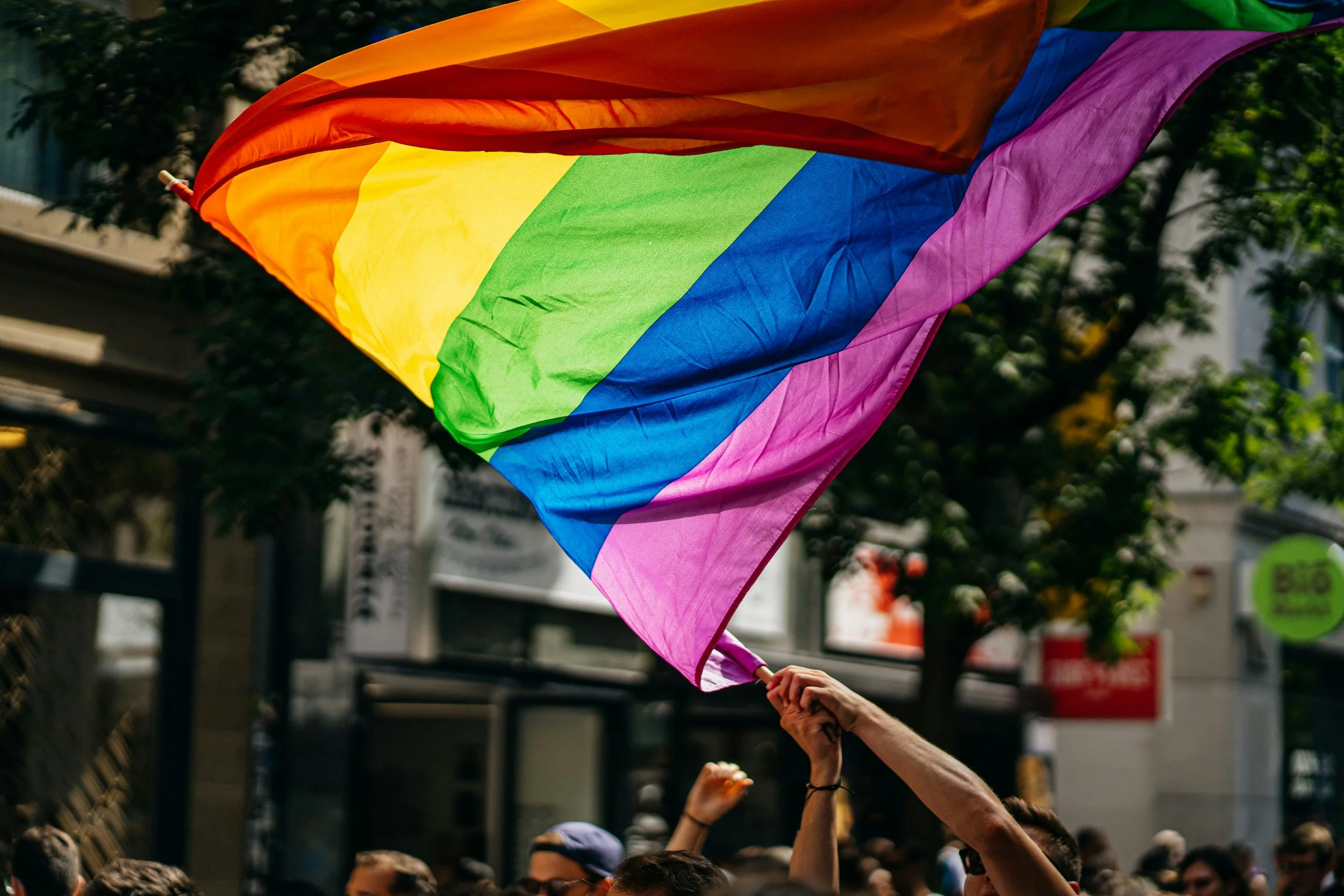
Photograph by Raphael Renter via Unsplash
Rev. Dr. Ralph Watkins
As I took justice seriously, as I took the gospel seriously, as I took Black and womanist theology seriously, I couldn’t segregate freedom. Horace Griffin writes, “Discrimination and exclusion are never acceptable behaviors for treating fellow human beings. When there is recognition of historical discrimination and contemporary parallels with that discrimination, there can be movement toward justice for all.”[i] I saw the parallels with historical discrimination not only in the seminary, but also in the church where I was serving, and in me. These recognitions were incompatible with my understanding of the gospel of Jesus Christ.
The Black Church is not the church of discrimination. We have embraced the struggle for our people’s freedom and for freedom in the world and in the church. We have led movements for justice. We have participated to some degree in every major movement to free our people. We are not perfect; the church is a human institution; we are still fighting to be that which God would have us to be. We have not fully dealt with the affirmation and inclusion of women in leadership in the church, but we are wrestling with this issue; it is on the table. This is key here: Black churches have to get the issue of freedom, justice, and inclusion of our LGBTQ+ siblings on the table. Horace Griffin wrote in 2006, and for the most part, it is still true today, with few exceptions: African American heterosexuals, for the most part, remain unconvinced that their present resistance toward lesbian and gay equality in the church and society is at odds with the gospel and black liberationist thought.
Unlike European American denominations that are engaged in major battles over lesbians and gays in the church, freeing gays from church oppression is hardly an issue in the historically black denominations.[ii] Some are talking; it is on some tables in the church, but not the majority. Why is this? Do we love? Do we care? Can we see? Do we hear? What is God saying to us as the Black Church? What is God calling us to be and do? As a heterosexual, the Horace Griffin quote convicts me as much as it calls me. It calls me back to who I am as a Christian — a Black Christian who believes that God is love, and God’s love is manifested in my acts in line with God’s work of liberation, freedom, and justice for all of God’s children.
I concluded that I couldn’t wait for my denominations (I am ordained Baptist and African Methodist Episcopal) to address the truth of freedom. I had to free myself to share the message of freedom. I knew there would be a backlash. I knew some family members wouldn’t understand. I knew some of my preaching invitations would be rescinded. This all hurt. It was difficult to deal with being misunderstood, my faith being questioned, and old friendships being dissolved. I don’t want to understate the pain of this process; it was real and still is real. I am still being questioned. My sexual orientation has been questioned. To support my LGBTQ+ siblings made some suspect that maybe I was same-gender loving or bisexual. After being married since 1982 and being the father of three children, people still questioned me.
As I began the journey to write this book, my therapist asked me if I was ready for the backlash and if I was ready for someone to question my sexuality. I told him, “I don’t know if I am ready or not, but I do know that I have to speak the truth. I have to tell the truth.” Truth is inherently liberating. Truth sets you free and others free. I had to tell the truth. I had to be free. What we don’t say about freedom is that it doesn’t always feel good. There are some burdens with freedom. There is a cost for freedom. There is some pain with freedom. I had to be free; I had to be a part of fighting for the freedom of my LGBTQ+ siblings. This was the truth and the only truth I knew, and I had been taught by the church that God called us to fight for freedom.
I am asking that we open the lines of communication — not just when it comes to how we talk about human sexuality, but to whom we talk. We have to talk to those who have been created same-gender loving, bisexual, queer, transgender, cisgender, and heterosexual.
I had to find a way to talk about the freedom of all of God’s people, to include my LGBTQ+ siblings. Bishop Yvette Flunder says:
Radical inclusivity recognizes, values, loves, and celebrates people on the margin. Jesus was himself from the edge of society with a ministry to those who were considered least. Jesus’ public ministry and associations were primarily with the poor, weak, outcast, foreigners, and prostitutes.[iii]
It is this call to reach out that beckons me. It is a call to talk with those on the margins, to hear their stories, to share my story, and to create a new story. This is our story, this is our song, praising our savior, all the day long. I had to hear stories, learn a new love language, and love in radical ways that radicalized me. It radicalized me to be a revolutionary lover of all of God’s children, especially those on the margins, my siblings who had been pushed to the margins because God made them LGBTQ+. They had no more choice of being same-gender loving as I did in being heterosexual. I was born a cisgender, heterosexual, African American male. While my previous seminary had pushed me to the margins, I found the center of my faith and the church at Real Inspiration Ministries (RIM).
We have to talk. The Black church has to find a way to have these necessary conversations about human sexuality. We have to care enough to have the conversations of truth if we value liberation and freedom. Horace Griffin says:
Black pastors must begin talking about homosexuality in different ways in order to shift the conversation from simple condemnation to a thoughtful dialogue about the complexities of human sexuality and expressing gay sexuality in faithful and responsible ways. This action is the first step in moving black families from rage and silence about homosexuality to a creative space for constructive dialogue.[iv]
Black pastors and Black Christians are asked to open the lines of communication. That is my ask — this is essentially what I am asking you to consider with this book. I am asking that we open the lines of communication — not just when it comes to how we talk about human sexuality, but to whom we talk. We have to talk to those who have been created same-gender loving, bisexual, queer, transgender, cisgender, and heterosexual. We have to listen to our LGBTQ+ siblings, respect them, love them, and let their love story be told, heard, respected, and responded to. We must do more than listen; we must respond to what we hear in love.
We must respond in love and act in love. What does love do? How does love listen? How does love respond? We also need to talk to God. We must pray and listen to God. Our people have always had to listen to God. We have always realized that God is still speaking. The question for us is: what do we hear God saying about the affirmation and inclusion of our LGBTQ+ siblings as full participating, open, and out members of the African American church?
Rev. Dr. Ralph Watkins, PhD, DMin, MA, is the pastor of Wheat Street Baptist Church and the Associate Professor of Evangelism and Church Growth at Columbia Theological Seminary in Decatur, GA. He was the assistant dean of the African American Church Studies Program and associate professor of society, religion, and Africana studies in the School of Theology at Fuller Theological Seminary. With over 20 years of pastoral, teaching, and administrative experience, Dr. Ralph Watkins is an active teaching scholar with over 250 publications and conference presentations to his credit, including five books.
Excerpted from Inclusive Love: Seeing the Black Church in the Rainbow, by Ralph Basui Watkins, copyright © 2026 by Judson Press. Used by permission of Judson Press.
The views expressed are those of the author and not necessarily those of American Baptist Home Mission Societies.
[i] Griffin, Horace. Their Own Receive Them Not: African American Lesbians & Gays in Black Churches (Cleveland, OH: The Pilgrim Press, 2006), p. 14.
[ii] Ibid., 217.
[iii] Flunder, Yvette A. Where the Edge Gathers (Pilgrim Press, Kindle Edition), p. 155.
[iv] Griffin, Their Own Receive Them Not, 215.
Get early access to the newest stories from Christian Citizen writers, receive contextual stories which support Christian Citizen content from the world’s top publications and join a community sharing the latest in justice, mercy and faith.