
How the state of Israel is failing its Palestinian citizens
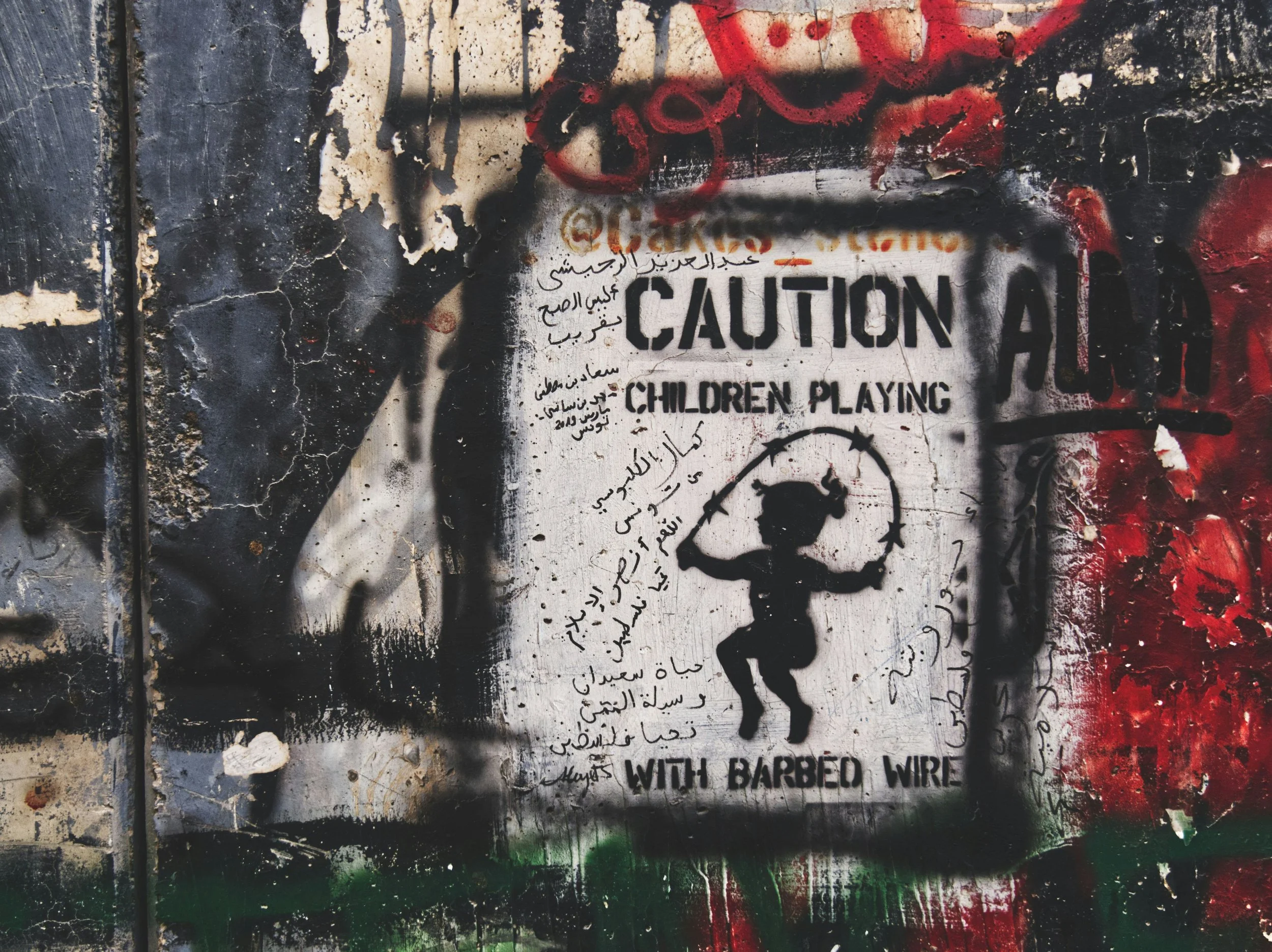
Photograph by Jakob Rubner via Unsplash
Rubin James Yi McClain
Armed groups are fighting in the streets of Gaza, not as Israeli forces, but as factions within Palestinian society. These militant groups present themselves as alternatives to Hamas and are directly backed by Israel, which by extension, is connected to U.S. policy and support. As Hamas weakens and Gaza is further devastated, a discontented population and a growing power vacuum have created space for rival militias to emerge. The militarization and support these militias receive from the Israeli state carries an old danger. Proxy forces rarely remain stable instruments of power, and the alliances built around them often change and shift quickly.
Historically, the policy of arming militant groups has wrought numerous dangers, including the potential for that group to rise up against the very powers that armed them in the first place. Violence and chaos have the unintended effect of casting aside the existing moral and societal orders that structure our daily lives. In moments of political collapse, violence does not remain contained — it proliferates, multiplies, and spreads to the most vulnerable.
That wider reality of fragmentation is not solely confined to Gaza. While anti-Hamas militias fight in Gaza, other splinter organizations and criminal gangs are emerging within Palestinian communities inside of Israel,[i] emerging from a context of abandonment, instability, and a failure of the political order. They focus on protection rackets, extortion of businesses, local arms/drug trafficking, and black-market loans. Notably, they exist alongside multiple powerful Jewish Israeli gangs, which operate more like traditional mafia, controlling large-scale, sophisticated operations like money laundering, online scams, international drug and human trafficking, and gambling.
In Gaza, the destruction of war, genocide, and the weakening of Hamas have opened space for rival armed factions to compete for power. Within Israel, ongoing government neglect, unequal policing, and the shared dehumanization of Palestinians have allowed criminal organizations to flourish and wreak havoc. In many cases, the Israeli security establishment neglects to intervene and police these Palestinian communities in Israel. In both settings, ordinary Palestinians are left vulnerable to forms of violence where political order has failed. The failures and the devastation brought about by U.S. and Israeli policy divides society and degrades stability. This atmosphere of violence has only deepened anxiety within Palestinian communities. Those living within Israel are caught between overlapping cycles of violence such as armed gangs, missile attacks from Iran and Hezbollah, and the potential of sudden attacks from Jewish Israelis.
Intra-community violence is also a pressing issue for Palestinian communities in Israel and the occupied territories, with homicide rates increasing among Palestinian citizens of Israel since 2018. Alongside the staggering death toll in Gaza and the occupied territories, these killings only proliferate the violence and further intensify the suffering of civilians on the ground.
Before any lasting peace can be reached, Palestinian citizens of the state of Israel and elsewhere must have protections and civil rights that promote stability and an end to all violence.
What makes a bad situation even worse is the broader perception of criminal violence in Arab communities. In a recent poll, for example, most Jewish respondents said that cultural factors were the main cause of the violence, while most Palestinian respondents blamed police inaction. These perceptions are reinforced both by the disparity in killings and by the number of cases that are solved. In 2024, for example, 220 Palestinian citizens of Israel died by homicide, compared with 58 Jewish Israelis. When accounting for population distribution, Palestinian citizens of Israel are 14 times more likely to die by homicide than Jewish citizens. In 2025, 252 Palestinian citizens of Israel were killed, the worst figure on record. Yet fewer than 10 percent of cases involving Palestinian victims were solved, while 65 percent of cases involving Jewish Israelis were cleared.
Ongoing protests and the failures of the government
As violence and organized crime continues to devastate Palestinian towns within Israel, Palestinian citizens have escalated their protests. In January, a mass demonstration in Tel Aviv followed a large protest in Sakhnin, which drew tens of thousands of protesters, the largest in Israeli Palestinian communities since 2019. Organizers also made clear that this was not only an internal Palestinian issue but a broader social crisis, calling on Jewish Israelis to join the struggle. By early February, that pressure took the form of a protest convoy from northern Israel to Jerusalem, ending at the Prime Minister’s Office, where a letter was intended to reach Benjamin Netanyahu, but security forces turned the protesters away. In March, the crisis prompted a general strike across all Palestinian local authorities in the 1948 territories, with a full strike held in Arraba.
The failures of the Israeli government in applying law enforcement and accountability have been ongoing. In November of 2025, Deputy Attorney Sharon Afek wrote to the Prime Minister’s Office that the government was failing to act against crime in Arab communities and was stalling key legislation meant to strengthen law enforcement. In the letter he warned that “the strategic threat posed by major crime in general, and crime in the Arab community in particular, is extremely severe.” By the end of the year 2025, that failure became even more visible, when official data shows that Itamar Ben-Gvir’s National Security Ministry had used only half of the funds allocated in the 2022–2026 five-year budget to combat crime and violence in Palestinian communities, even as homicide rates reached record highs. In early June of 2026, under the stated aim of combating organized crime, Israel’s Ministry of Education decided it will cut extracurricular funds for schools that were flagged for budget irregularities, which will disproportionately affect Palestinian children.
The connecting thread throughout these circumstances is the vulnerability of Palestinians at the hands of a political system that actively dehumanizes and disenfranchises them. Palestinians who long for freedom and statehood are terrorized and surrounded by destabilizing violence. That violence comes both from within fractured communities and from forces beyond their sovereignty and borders. This instability calls to mind Martin Luther King Jr.’s warning that “violence begets violence, hatred begets hatred. It’s all a descending spiral ending ultimately in destruction for all too many.”
Before any lasting peace can be reached, Palestinian citizens of the state of Israel and elsewhere must have protections and civil rights that promote stability and an end to all violence. Yet the central structures of power, namely the Israeli government and its primary benefactor, the United States, remain major obstacles to any enduring peace in the region. Even while the memorandum of understanding (MoU) has been signed between the U.S. and Iran, Israel continues to occupy and attack southern Lebanon, complicating peace negotiations. As some progress is being made, Gaza still lies in ruins and Palestinians struggle from every side, seeking to overturn the decades-long military occupation in East Jerusalem, the West Bank, and Gaza. While the region continues to spiral down the path of instability and violence, Palestinians are often the first to bear the brunt of these forces, both in the Occupied Territories as well as in Israel.
Rubin McClain is an Ambassador Warren Clark Fellow (AWCF). He completed his Ph.D. in New Testament Studies at the University of Glasgow, holds a Th.M. in Biblical Studies from Asbury Theological Seminary, and an M.A. in New Testament from Trinity Evangelical Divinity School. His research examines multiethnic identities in the Greco-Roman and New Testament world. He also focuses on the intersections of biblical studies, theology of the land, and the influence of Evangelical theology on perspectives of Israel and Palestine.
The views expressed are those of the author and not necessarily those of American Baptist Home Mission Societies.
[i] American mainstream media often adopts the Israeli rhetoric that refers to Palestinians living in Israel as “Arabs.” H. A. Hellyer, British geopolitical analyst and scholar, argues that “the term ‘Arab Israeli’ is deeply problematic, primarily because it disaggregates the Palestinian population that holds Israeli citizenship from the wider Palestinian community in the Holy Land, in the region, and worldwide. It makes them unrooted and subtly implies they are somehow nomadic and unconnected. These people are, in fact, Palestinians – they are the descendants of Palestinians who managed to stay in their homes during the ‘Nakba’ [in 1948], when the State of Israel was established in Mandatory Palestine, with most Palestinians being forced to flee. Removing ‘Palestinian’ from their nomenclature subtly erases their connection to their identity.”
Get early access to the newest stories from Christian Citizen writers, receive contextual stories which support Christian Citizen content from the world’s top publications and join a community sharing the latest in justice, mercy and faith.