
Helping immigrant children access education: Interview with Paulina Olvera
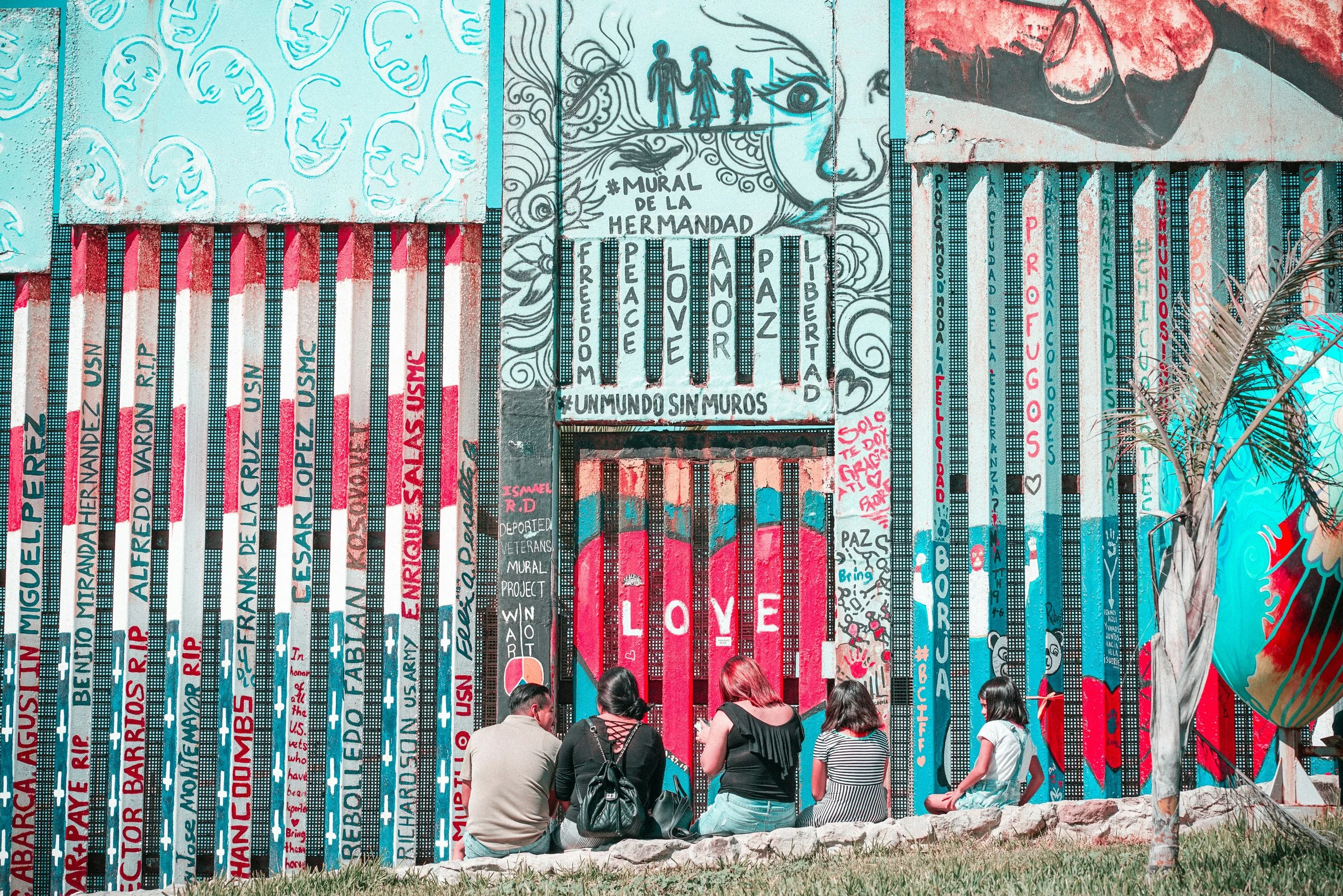
Photograph by Barbara Zandoval via Unsplash
Rev. Dr. Anna Piela
The following interview was conducted by The Christian Citizen Editor Rev. Dr. Anna Piela with Paulina Olvera, executive director of Espacio Migrante, during the Baptist Peace Fellowship of North America Peace Camp. Before the interview, Camp delegates watched “Teacher, Veterinarian, Astronaut,” a short film about the barriers migrant children face in gaining access to education in Mexican schools. In the conversation, Olvera discusses Espacio Migrante’s work.
Can you tell me about Espacio Migrante?
Yeah, so we are a nonprofit organization. We have a shelter for migrant families, and we have a cultural and community center in the same building where we have programs for migrants in Tijuana, like legal services, education programs. In the shelter, we have capacity for 35 people, maximum 40, and they’re families, so it can be parents and their children, or a single mom, or dad with their child.We are a secular organization, but we do collaborate with a lot of local churches in Tijuana.
Why did you guys make this movie?
We made this movie, because besides being a shelter, we work with families, to support them, to exercise their rights while they are in Tijuana. And we saw that more and more, in the last decade, that instead of only adults, there’s a lot of families coming with school-aged children, and it’s a struggle for them to enroll their children in school, and also because they have to wait so long in Tijuana. Their goal wasn’t to be in Tijuana, but because of the U.S. policies, they have had to wait months or years, and now the border is closed. So what happens to their kids while they are in Mexico? Most of them don’t know that their right is to go to school. And also, the schools turn them away, like everything you saw in the film is based on true stories. They get turned away from the schools, and we want to create awareness in the community, that these kids have a right to go to school, and also educate the families about how they can enroll their children.
How are the churches helping? You said you work with churches. What are they doing?
So, in Tijuana, there have been shelters for about 40 years because it’s a big border. But since 2016, so 10 years ago, a lot of Haitians started arriving, and a lot more asylum seekers. And from having a few shelters in Tijuana, about seven shelters, by the end of 2016, we had about 35 shelters, and most of them were Christian churches, some Baptist, evangelical. Even though they didn’t have the infrastructure or the know how about running a shelter, they just responded to the crisis, and they opened their churches and got involved. That’s how met some Baptist pastors, like Pastor Leo Franco and Pastor Altamirano (who passed away during the pandemic).
Some of these shelters are still running. Some of them closed after that emergency, but the Christian community has always been very important. Even when migrants move out of those shelters, that’s where they find their community, so many of them go to their church. Many of these churches even started having service in Haitian Creole.
Most migrant families’ goal wasn’t to be in Tijuana, but because of the U.S. policies, they have had to wait months or years, and now the border is closed. So what happens to their kids while they are in Mexico? Most of them don’t know that their right is to go to school.
So that’s why even though we are not a religious or Christian organization, we just work a lot in solidarity. They might have families who need a shelter and they bring them to us, or we might need support. We just work with each other.
There’s a Haitian pastor who has a service in Creole on Sundays in our building, because his congregation lost access to another church’s sanctuary, so we let them use the space to have this. For them, it’s important because it’s a sense of community: being able to pray in their language and be together.
What are the biggest challenges for Espacio Migrante right now?
So, for the migrant community, the biggest challenge is that the border is completely closed. Before the closure they had to wait a long time in Tijuana, but now there’s not even a possibility to enter the U.S., at least for the next couple years.
So now, even our services are more oriented to helping them find a job in Tijuana or enrolling children in school, which we did before. We have more programs focused on social inclusion.
And the second challenge is the resources, the funding, because everybody has suffered, not just us, due to the cuts to USAID and humanitarian funds. A lot of organizations, not only in Mexico, but in Latin America, are having to shut down programs. So, for example, we used to have an immigration attorney, but we had to let her go. We’re working very hard to raise funds. So those are our biggest challenges.
One part of the challenge we saw in the film is helping families enroll their children in school. What happens after they’re enrolled?
We are working with Haitian children and Haitian middle school students, because since Spanish is not their first language, they’re sometimes struggling in school, and the schools don’t have the resources to support them and they fall behind. And many of these kids have been out of school for a long time because they were migrating, basically.
So, 18 months ago we created a homework club, and we have 16 kids who are enrolled in school in Tijuana, and they come every morning. We have college students from Tijuana help them to do their homework, and to see where they’re struggling, in Spanish or other areas. We also give them lunch, and their mentors talk to them and try to see if they’re struggling with other things. Sometimes it’s financial issues or bullying that they’re experiencing in school.
How have you become connected to the Baptist Peace Fellowship of North America?
It started when I met Ray [Schellinger, a global consultant for immigrants and refugees serving at the International Ministries of the American Baptist Churches], and he invited me to the last peace conference. I came with my family, and I told him, “But I’m not a Baptist. I don’t know how I would fit in this.” But he said, “The work you do is really aligned with the values we have.” And honestly, we have felt very welcome. The camp is a wonderful place for our whole family, so that’s why we decided to come and participate again.
Rev. Dr. Anna Piela is senior writer, American Baptist Home Mission Societies and associate editor of The Christian Citizen. She serves as co-associate regional minister for white and multicultural churches, ABC Metro Chicago. She is also the co-founder of Challenging Islamophobia Together Chicagoland, an initiative that brings together people of all faiths to counter Islamophobia from a religious perspective. She freelances for Religion News Service and other religion-focused outlets. Her most recent book, co-authored with Michael Woolf, Confronting Islamophobia in the Church: Liturgical Tools for Justice (Judson Press 2026) offers a theology of interfaith engagement with Muslims.
The views expressed are those of the author and not necessarily those of American Baptist Home Mission Societies.
Get early access to the newest stories from Christian Citizen writers, receive contextual stories which support Christian Citizen content from the world’s top publications and join a community sharing the latest in justice, mercy and faith.