
God, country, and Rocky, 50 years later
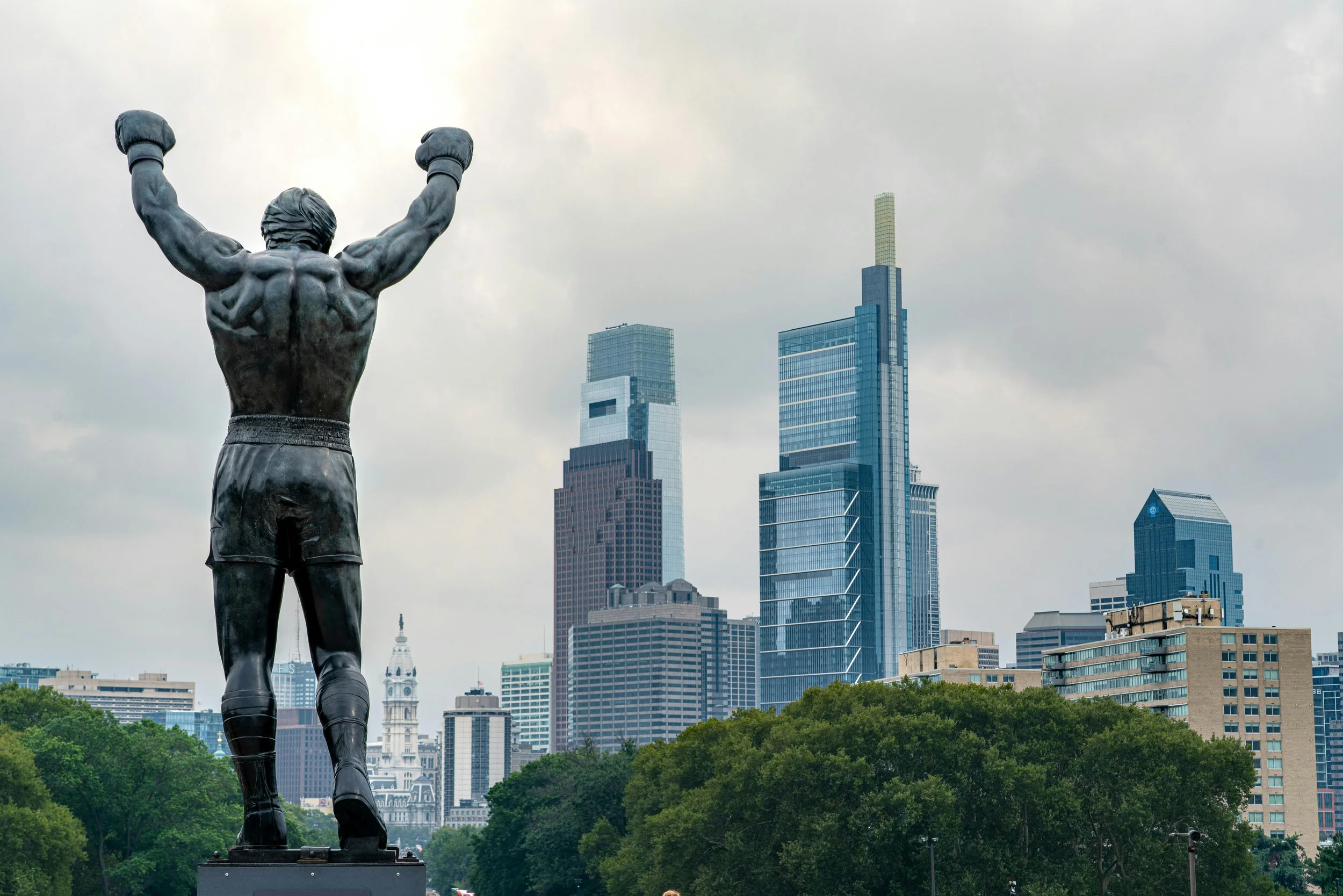
Photograph by Ramon Perucho via Pexels
Cliff Smith
The original “Rocky” was set, and released, in America’s bicentennial year, 1976. It was not a year of triumph. Instead, it was an era marked by the aftermath of Watergate, of the fall of Saigon, stagflation, a tense situation in the Cold War, rampant crime, drug use, and the backwash of social feuds that had brewed for decades yet never fully concluded.
Sound familiar?
50 years later, on America’s 250th anniversary, the troubled world of the original “Rocky” film mirrors and echoes ours. It’s still worth thinking about.
Rocky Balboa lives in the world of juvenile delinquents and local hoods drinking and singing around a burn barrel. A 30-year-old self-declared “half a bum,” in truth, Rocky is a petty criminal. A “leg breaker for a second-rate loan shark,” is how Mickey, the trainer from the local gym, describes him, declaring Rocky’s choices “a waste of life” since he had the talent to be a great fighter.
Rocky knows Mickey is right. In what might be single most haunting scene in the film, Rocky comes back from a club fight he barely won against a nobody boxer and looks at the mirror at his cuts and bruises, before the camera intentionally zooms in on him looking at a picture of himself at about age 10. The message is not subtle. Rocky had potential. He’s squandered it.
What makes “Rocky” stand out, both from other admittedly excellent, but pessimistic-bordering-on-cynical films of the era such as “The French Connection,” and “Chinatown,” is that it suggests we need not succumb to our environment entirely. Unlike many of the sequels, some of which are more-or-less fantasy-based triumphs against impossible odds against unbeatable opponents, the original film is focused a lot more on the person Rocky is, despite his circumstances and bad choices.
A key moment is easy to overlook: Rocky watches TV in a seedy Philadelphia bar as Heavyweight Champion of the World, Apollo Creed, a charismatic African American showman clearly reminiscent of Muhammad Ali, charms the press. The bar owner complains that all the “real fighters” are gone, and now all we have is “jig clowns.”
Rocky instantly pushes back against the casual racism and envy. “A clown? You callin’ Apollo Creed a clown? This man took his best shot and become champ!” He challenges not only the bar owner’s logic, but his mindset: “What shot did you ever take?”
It’s important to see what’s going on here. Rocky does not give in to the attitudes of too many of his fellow ghetto dwellers. He refuses to drag people down or use cynicism as a shield. He admires Apollo’s accomplishments, doesn’t use racism as a crutch, and still believes in his country. He is, to borrow a popular Christian admonition, in his world, but not of it. He accepts his circumstances, but he refuses to pretend that’s all there is in the world.
He communicates roughly the same thing to Adrian, the painfully shy and emotionally abused 29-year-old woman who works at the local pet store. His interest in her tells her that he sees more in her than her current condition. Their relationship exists because of this belief.
50 years later, Rocky’s lessons remain. The future does not, cannot, belong to people who see nothing but hopelessness.
At the same time, Rocky is all too aware his current life doesn’t match up. In another scene, Rocky removes Marie, an awkward 13-year-old girl, from a crowd of boys that are smoking and drinking. Rocky declares them “yo-yo friends” that will take her nowhere. When a resentful Marie calls out his hypocrisy, he admits it. “Yeah, who are you, creepo?” he asks himself derisively. But there’s an edge of self-challenge more than resignation in his voice.
Some people have reinterpreted “Rocky,” particularly in light of the later “Creed” films, as a triumph of wounded “white pride.” While it is certainly fair to notice that Apollo is an obvious homage to Ali, a clearly politically and racially divisive figure, it’s incomplete at best and backwards at worst to chock “Rocky’s” success to racial resentments. “Rocky” is calling America to the better angels of its nature, on both race and politics, just as Rocky did the bar owner.
At the time, Frank Capra, the director of “It’s A Wonderful Life” and “Mr. Smith Goes to Washington,” was explicit that he loved the film for that reason. “I think it’s the best picture of the last 10 years. It got my vote for Oscars all the way down,” Capra said in 1977, adding that “Rocky” was a film he wished he had made. Burgess Meredith, who played Mickey, explained its appeal by contrasting it with darker films like “Taxi Driver” and “One Flew Over the Cuckoo’s Nest,” saying that they were “brilliant pictures, perhaps, but not rooting pictures.”
Further proof of the film’s intentions is that this almost wasn’t the case. Early drafts of Rocky were much more jaded. In an early draft, Rocky threw the final bout to Apollo rather than accept being part of the “corrupt” world of boxing. This was fundamentally altered in later drafts.
Yet this kind of cynicism does not escape the final cut. In what I consider the most powerful scene in the film, Mickey, who had kicked Rocky out of his locker, asks to train Rocky. Rocky reacts volcanically, denouncing Mickey for not doing anything for him before, shouting that he’s going to “get my face kicked in,” and taunts Mickey, “You want to be ringside to see it?” Part of Rocky views this whole exercise exactly as Apollo does, a gimmick in which he has no hope. He’s just there to grab a quick buck.
Much like David asking God in the Psalms if he’s asleep, Rocky recants. He’s angry at himself, at God, more than Mickey. When Rocky runs after Mickey after having chased him out of his apartment and wordlessly accepts his offer, he’s doing a favor for a 76-year-old man who has never had the chance to enter the spotlight, but more fundamentally, he’s confirming that he rejects his disillusionment, even when it’s hard.
It doesn’t take a genius to figure out that the era of “Rocky” mirrors our own. The pervasiveness of scandals, corrupt politicians, inflation, racial resentments, concerns about recent upticks in the crime rate, and a tense international situation, are nearly identical. Moreover, we hear a great deal about “winning” these days but very little about what winning actually means, beyond it meaning our foes must lose.
But Rocky’s foe does win, in a split decision. It’s easy to forget, partly because Rocky is too busy screaming for Adrian to hear the announcer clearly. Rocky’s victory is that he went “the distance” with Apollo, proving to himself, to Adrian, to God, he’s more than “half a bum.”
And that’s more than enough.
50 years later, Rocky’s lessons remain. The future does not, cannot, belong to people who see nothing but hopelessness. Instead, it belongs to people who define victory in the only way that matters: in becoming the kind of people God wants us to be.
Cliff Smith is a lawyer, a former congressional staffer, a freelance writer and a lifelong film buff. He lives in Washington, D.C.
The views expressed are those of the author and not necessarily those of American Baptist Home Mission Societies.
Get early access to the newest stories from Christian Citizen writers, receive contextual stories which support Christian Citizen content from the world’s top publications and join a community sharing the latest in justice, mercy and faith.