
Give them this day their daily bread
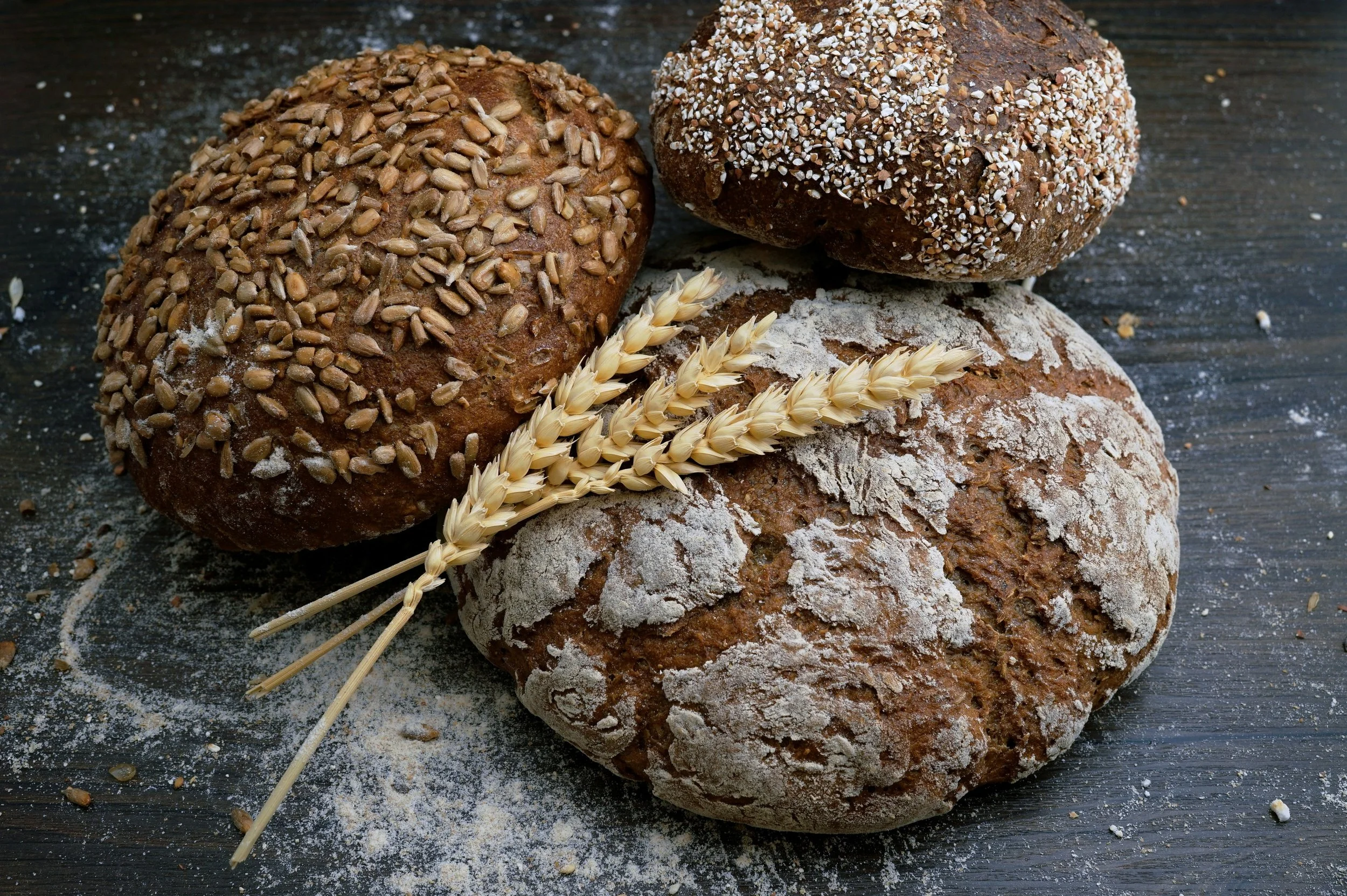
Photograph by Wesual Click via Unsplash
Rev. John Zehring
I don’t think I’ve ever gone hungry, never for more than half a day or so. That’s not hunger. Hunger is when you can’t get enough to eat, no matter what. It hurts even more when you can’t feed your hungry family. The Global Hunger Index reveals that hunger rates are serious or alarming in 42 countries. Nearly 3 billion people around the world cannot afford a healthy diet, and 673 million people went hungry during 2024, the last year with complete data on record. Lest we think hunger occurs mostly among remote people in faraway lands, we are well-served to consider that more than 13% of U.S. households were food insecure at some time during 2024.
Give us this day our daily bread. I have always been struck by how the prayer which most of Christendom uses to center itself spiritually employs the plural pronoun, starting with the first word “Our Father…” Wouldn’t we be more inclined to use the first-person singular? “My Father… Give me this day my daily bread, forgive me… lead me not into temptation, deliver me from evil…” In a culture that leans toward a “me first” mentality, the Lord’s Prayer calls us out of ourselves… “Give us this day our daily bread.” As I pray the prayer each day, I grow to understand that by using the plural – Give us this day our daily bread – that I am actually praying for those who are hungry: Give them this day their daily bread. I am blessed to have enough, and then some. Let them have enough too.
The prayer inspires us to wonder how God provides people’s daily bread. Is God’s providing not through people? Indeed, does not God need you and me to be God’s instrument in providing daily bread to others? A saying attributed to St. Teresa of Avila goes “Christ has no body on earth but yours. Yours are the eyes with which he looks compassionately on this world. Yours are the feet with which he walks to do good. Yours are the hands with which he blesses all the world. Christ has no body now on earth but yours!” Give them this day their daily bread requires people — us — to carry out God’s answering of their prayer. After praying the Lord’s Prayer, I am inclined to add “Make me an instrument of Thy feeding.”
Let us envision how “give us this day our daily bread” can also mean “use us this day to give others their daily bread.”
Dr. Martin Luther King Jr. spoke about feeding and helping others in his famous February 1968 sermon, “The Drum Major Instinct,” saying: “I want you to be able to say that day that I did try to feed the hungry.” José Andrés, the visionary founder of World Central Kitchen, shares:
There’s a reason why all the great religions tell us to feed the hungry. It’s what I hear around the Passover table with my Jewish friends, inviting all who are hungry to come and eat. It’s what I know from the Book of Matthew: “For I was hungry, and you gave me something to eat.” It’s what we learn from the hadith of Imam Ahmad: “The best of you are those who feed others.” Feeding strangers is a sign of strength, not a sign of weakness. It’s a sign that we are the best of humanity, living through the worst of situations.
Action Against Hunger reports that “There is more than enough food produced in the world to feed everyone on the planet. Yet 673 million people still go hungry.” Why? The answer is complex and multifaceted. Root causes of hunger include inequality, climate change, war and conflict, disasters and emergencies, poverty, and dirty water and unsafe sanitation. Other factors include poor public policy and political instability, economic downturns, food waste, gender inequality, the loss of fertile lands, and forced migration. Solutions to world hunger must address the root causes. It is not enough just to hand food to the hungry. We must eliminate the causes of hunger. That can feel like being David against a battalion of Goliaths. Yet if we cannot feed a hundred, then we will feed just one, as Mother Teresa once advised. If we cannot address all of the root causes of hunger, then we will address one.
One of the most powerful weapons we, as people of faith, possess when it comes to battling giants is the hope to influence attitudes and values, for when attitudes are altered, changed behavior follows. Let us embrace the plurality of the Lord’s Prayer. Let us envision how “give us this day our daily bread” can also mean “use us this day to give others their daily bread.” And let us act on this vision, so that like Martin Luther King, Jr., we can “be able to say that day that [we] did try to feed the hungry.”
Rev. John Zehring worked in higher education for a couple decades and then served United Church of Christ congregations as a pastor in Massachusetts, Rhode Island, and Maine. He is the author of dozens of books. His most recent book from Judson Press is “Get Your Church Ready to Grow: A Guide to Building Attendance and Participation.”
The views expressed are those of the author and not necessarily those of American Baptist Home Mission Societies.
Get early access to the newest stories from Christian Citizen writers, receive contextual stories which support Christian Citizen content from the world’s top publications and join a community sharing the latest in justice, mercy and faith.