
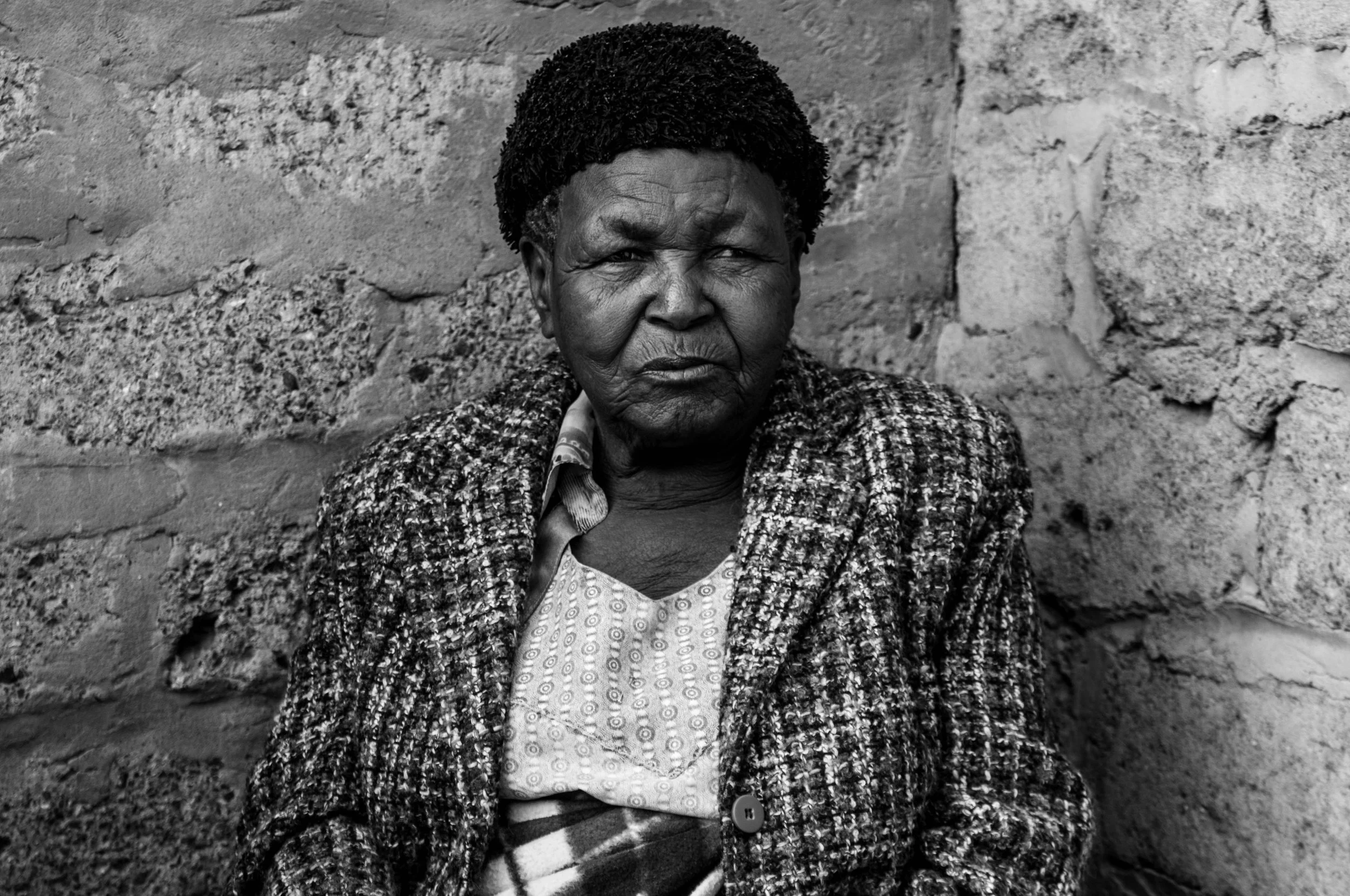
Photograph by Nkululeko Mabena via Unsplash
Rev. Elijah Gipson-Davis
When I first got to Morehouse College, I had no intention of joining the Chapel Assistants Program. Having received several simple-minded admonishments about how the chapel program would deter me from the Gospel, I fought every invitation. Turns out, the brother I had met during Admitted Students Day would be the Lead Resident Assistant in my dormitory, and the president of the Chapel Assistants Program.
At his request, I went to my first chapel service. While sitting in the hallowed nave, listening to the preacher I heard something that shook me: “God, she is always with us.” This was Morehouse College, a Baptist-founded institution for men, yet the preacher referred to God as “She.” In that moment, something deep within me resonated. It was the first time I heard articulated what I had long felt and known: that the God who sustained and nurtured me embodied the qualities of a Black woman. All my life, I had felt the attributes of God radiate through my mother, grandmother, and great-grandmother.
That moment set me on a journey of theological exploration, asking the question, “what all could God be?” I had often been told what God could not be and would not do, but I knew I did not worship a God of physical limitations. It was not until seminary that I was introduced to womanism by the Rev. Dr. Kelly Brown Douglas. At the time she served as visiting professor of theology at Harvard Divinity School. Dr. Douglas helped me to understand womanism as a theological framework that centers the experiences of Black women. She further challenged me to understand that faithful theology is not limited to traditional Christian doctrine and dogmas but is a lived, embodied, and intergenerational process of meaning-making.
My mother, grandmother, and great-grandmother were my first theologians, even though they would never identify as such. Their faith represented survival, provision, and love in action. Black women perform miracles daily, transforming low budgets into feasts, shielding their children from harm, and holding their communities together. Their lived experiences are a sacred text, one that womanism holds just as authoritative as traditional theology.
Womanism recognizes that theology is not formed amongst the leading gatekeepers of the tradition but in kitchens, pews, and living rooms of the people. It is found in the gentle touch of grandmothers’ hands, in the voices of women who sing their prayers into manifestation, and in the everyday resilience of Black folx navigating a world that refuses to see them.
Womanism recognizes that theology is not formed amongst the leading gatekeepers of the tradition but in kitchens, pews, and living rooms of the people. It is found in the gentle touch of grandmothers’ hands, in the voices of women who sing their prayers into manifestation, and in the everyday resilience of Black folx navigating a world that refuses to see them. Womanist wisdom is divine revelation, a valid and rich source of theological reflection. Diana L. Hayes, in “Standing in the Shoes My Mother Made,” affirms that Black women, particularly those denied formal education, carry an intelligence “grounded in a wisdom that came from deep within them.”[1] This is a wisdom formed through survival, struggle, and faith.
Unlike Western traditional theology that privileges detached objectivity, womanism embraces multiple ways of knowing through lived experience, history, and spirituality. Black women’s theologizing is forged in survival, resistance, and hope. It is not theoretical speculation but a lived reality that has sustained generations. It reclaims tradition as wisdom, applies reason as a tool for justice, and centers the experiences of Black women as sacred memory.
As a Black Baptist minister, I am proud to let womanism influence my ministry. In fact, I think every Black Baptist minister who desires to truly transform the lives of those they serve should embrace womanism. I often incorporate womanist theological thought in my sermons by centering the lived experiences of Black women in biblical interpretation, pastoral care, and community engagement. I seek to engage Scripture with a hermeneutic of liberation, lifting up the voices of those traditionally silenced. In my leadership, I work to create spaces where Black women’s wisdom is affirmed as foundational to the life of the church. My commitment to justice is informed by the intersectional realities that womanism highlights to address issues of race, gender, class, and sexuality holistically.
Womanism recognizes that Black women’s experiences encapsulate the struggles, resilience, and hope of all Black people, not just Black women. The historical and ongoing fight for Black women’s freedom inherently advances the liberation of the entire Black community. As I challenge my co-laborers of the Gospel to integrate womanist theology into their ministry, it is important that as a community we begin to emphasize how the stories, faith, and survival of Black women serve as a collective testimony of Black perseverance. In doing such, we can cultivate a faith community that not only affirms Black womanhood but also acknowledges its role in shaping the broader fight for wholeness for all Black people.
The Rev. Elijah Gipson-Davis, a native of Riverdale, GA, is currently a Master of Divinity candidate at Harvard Divinity School in Cambridge, MA and Minister of Administration at Myrtle Baptist Church in West Newton, MA.
The views expressed are those of the author and not necessarily those of American Baptist Home Mission Societies.
[1] Diana L. Hayes, “Standing in the Shoes My Mother Made: The Making of a Catholic Womanist Theologian,” in Deeper Shades of Purple: Womanism in Religion and Society, ed. Stacey M. Floyd-Thomas (New York: New York University Press, 2006), 54.
Get early access to the newest stories from Christian Citizen writers, receive contextual stories which support Christian Citizen content from the world’s top publications and join a community sharing the latest in justice, mercy and faith.