
Christian hope and climate anxiety
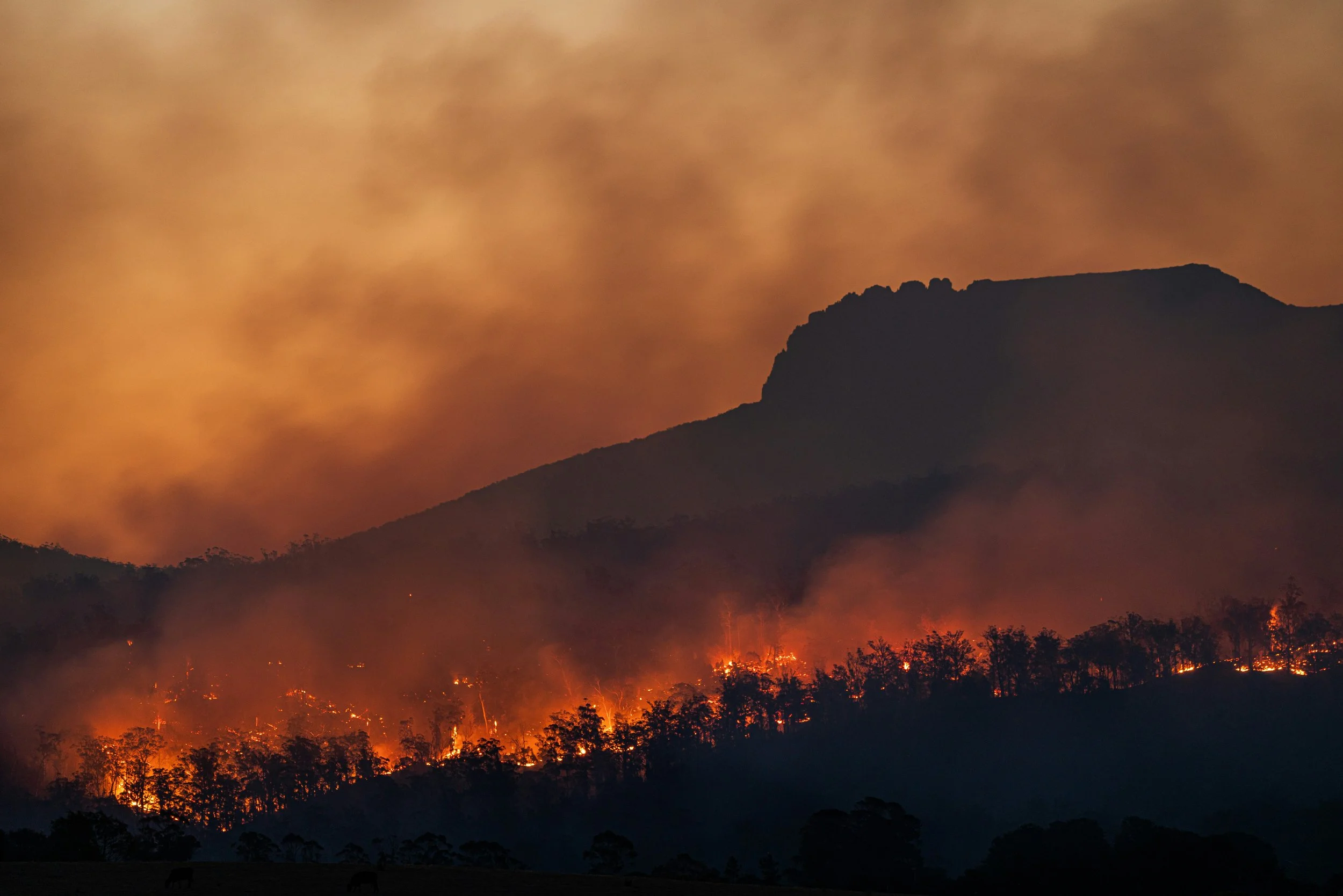
Photograph by Matt Palmer via Unsplash
Nathan Perrin
I’ve been examining my relationship with the earth, as well as my own anxieties around climate change. As I am primarily an antiwar activist, climate change has not been at the forefront of my mind for quite some time. Recently, I started writing a noir novel set during the ‘95 Chicago heat wave. More people died in that heat wave than the Great Chicago Fire, yet I didn’t even hear about it until this year when I was looking for a setting for my new novel. Heat Wave: A Social Autopsy of a Disaster by sociologist Dr. Eric Klinenberg was a horrifying read, and perhaps a grim glimpse into the climate refugee crisis that awaits us in a few decades.
In God’s strange sense of timing around this newfound anxiety, I met and became friends with Margaret Klein Salamon, founder of the Climate Emergency Fund. She wrote a self-help book for climate anxiety called Facing the Climate Emergency: How to Transform Yourself with Climate Truth. Armed with years of climate activism and a PhD in psychology, she writes about how we must all inevitably face the harsh realities of climate change looming on the horizon. She writes, “[D]on’t ask yourself whether you are ready to face the reality of our climate emergency or whether you can handle it. Instead, ask yourself, What is my priority? Would you rather protect yourself from painful knowledge or would you rather protect yourself, your family, and the entire human family from the actual climate emergency? These are your two options. The choice should be easy.”[1]
In many Christian circles, conversations around this topic are uncomfortable. We don’t like to think about the impact of our actions on the planet. In evangelical circles, I recall lots of skepticism around the topic to outright denial - how could God allow climate change to happen if he is in control? In my Anabaptist and Quaker circles, there is acknowledgement that it is happening but it is not discussed nearly as much as the authoritarian crisis we are facing under today’s administration.
A primary reason I got into social justice work is that I knew one day my future children, or perhaps my future grandchildren, would ask me what part I played in trying to help repair the world. I also know that I’m going to be held accountable to God one day. And as inclusive as I strive to be, I do not want to admit that I didn’t quite repent of my sins of harming the earth and future generations.
I’m writing this currently at Hungry World Farm, a Mennonite-owned farming community that is focused on regenerative agriculture. I’m surrounded by signs of hope and sustainability all around me. My cell phone even broke on my way into the community and I’m oddly grateful for it because I can finally pause and unwind. I’m reflecting that communities like this may become more and more rare in the future, so I’m soaking up every minute of it.
The climate emergency is here. Denying it, at this point, loses credibility with the neighborhoods we serve and causes us personal harm as we dig ourselves in deeper into ignoring the problems. How we respond as a church is entirely up to us.
Another basis for my activism is the theological concept of hope, as in trusting that God is somehow behind the scenes bringing about the resurrection and redemption of the world. At the same time, I need to recognize that I have a part to play in the redemption of the world as well. Embracing the very hard truth that we are having a climate crisis doesn’t negate the work that God calls us into, but rather adds the urgency and sense of importance to it.
I’m often reminded of Jeremiah’s letter to the Jewish diaspora after they were pushed out of their homeland. In verse 29:7, he shared: “Promote the welfare of the city where I have sent you into exile. Pray to the Lord for it, because your future depends on its welfare.” (CEB) Liberation, and redemption, first starts with recognizing that our common welfare is a priority for God as well. A part of that is recognizing the impacts of our actions on the earth and to people groups we don’t know personally matters.
My inner critic is already chiming in as I write this. I’m thinking of my plastic usage, my love for international travel, my love of meat and dairy in every meal, and not buying sustainably. I also recognize that I, alone, didn’t cause this crisis. It’s primarily a result of the hellish combination of greed and corruption of both the market economy and world governments. As US Americans, we live in a sick society in the sense that we are literally sick and in need of help.
Sin gives us the opportunity to do two things: stuff it down, and ignore conviction, or allow God’s grace and forgiveness to touch the deepest parts of ourselves so we can be of some use to God and our neighbors. As 1 John 1:9 says, “[I]f we confess our sins, he is faithful and just to forgive us our sins and cleanse us from everything we’ve done wrong.” (CEB)
I invite you, Christian reader, into repentance with me. Let’s both be cleansed of indifference, selfishness, and denial. Jesus waits for us patiently to let the light in and to see reality as it actually is, not the reality we want. Is it uncomfortable? Yes. Will it bring about possible exclusion from your faith community for bringing this up? Also yes. But is it worth the pain? Absolutely yes.
As Salamon points out, the climate emergency is here. Denying it, at this point, loses credibility with the neighborhoods we serve and causes us personal harm as we dig ourselves in deeper into ignoring the problems. How we respond as a church is entirely up to us. I hope you pray and work alongside me as we work to become liberated together.
Nathan Perrin (he/him/his) is a writer and Anabaptist pastor in Chicagoland. He holds an MA in Quaker Studies and is a doctoral student studying Christian Community Development at Northern Seminary. His doctorate work centers on creating a writing program for nonprofits and churches to use to help under-resourced communities process trauma. His work has been published in the Dillydoun Review, Bangalore Review, Collateral Journal, Esoterica Magazine, etc. His novella Memories of Green Rivers was published in 2026 by Running Wild Press. He is also a screenwriter. For more information, visit www.nathanperrinwriter.com
The views expressed are those of the author and not necessarily those of American Baptist Home Mission Societies.
[1] Margaret Klein Salamon, Facing the Climate Emergency: How to Transform Yourself with Climate Truth, 2nd ed. (Gabriola Island, BC: New Society Publishers, 2023), 16. Kindle edition.
Get early access to the newest stories from Christian Citizen writers, receive contextual stories which support Christian Citizen content from the world’s top publications and join a community sharing the latest in justice, mercy and faith.