
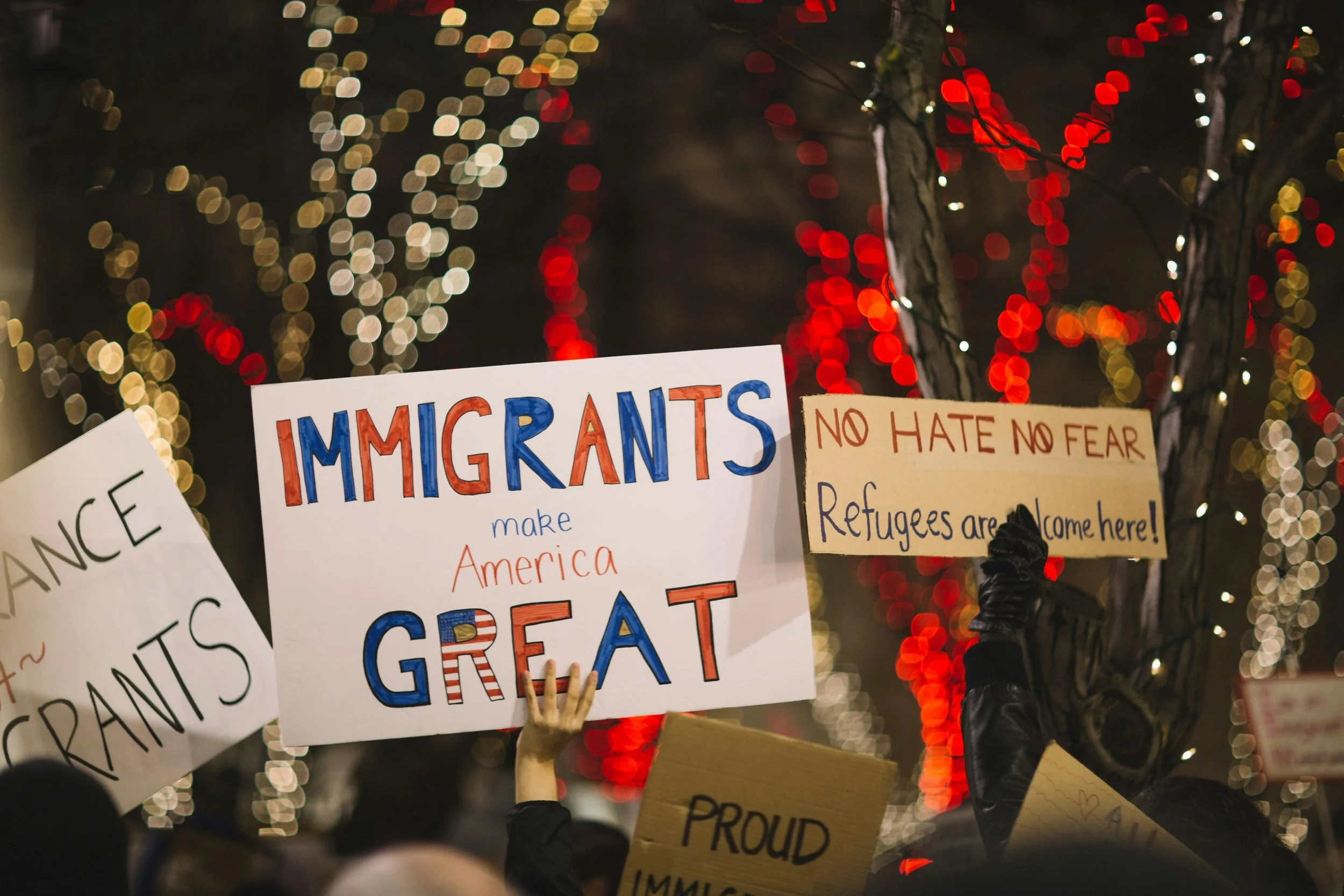
Photograph by Nitish Meena via Unsplash
Chuck Poole
Our nation’s current campaign of intimidation against our immigrant neighbors has called to mind Martin Luther King’s Letter from Birmingham Jail, written in April 1963 by King from a prison cell not far from where I am writing another letter this morning.
My letter concerns something about which King wrote all those years ago: The intersection of solidarity and resistance.
Concerning the spiritual discipline of solidarity, King wrote in his now-famous letter, “I cannot sit idly by in Atlanta and not be concerned about what happens in Birmingham. Injustice anywhere is a threat to justice everywhere. We are caught in an inescapable web of mutuality, tied in a single garment of destiny.”
That was a powerful echo of Paul’s prison epistle in which he called for us to “Look not to your own interests, but to the interests of others” (Philippians 2:4) — what the Torah and the Gospels call loving our neighbor as we love ourselves. Or solidarity.
Concerning the spiritual discipline of resistance, in that same letter from his Birmingham prison, King reminded his readers that, while people of faith have a legal responsibility to obey just laws, they have a moral responsibility to disobey unjust laws. He then offered them the examples of Shadrach, Meshach, and Abednego in the book of Daniel. They disobeyed the unjust law of Nebuchadnezzar just as Germany’s righteous Gentiles disobeyed an unjust law when they hid Jews from Nazi officers. That was civil disobedience in the face of unjust laws, or resistance.
Sixty-three years after King wrote those words from Birmingham to the world, we find ourselves, one more time, at the intersection of solidarity and resistance. To borrow a phrase from King, we cannot sit idly by in Birmingham and not be concerned about what is happening in Minneapolis, because injustice anywhere is a threat to justice everywhere.
Sixty-three years after King wrote those words from Birmingham to the world, we find ourselves, one more time, at the intersection of solidarity and resistance.
We are “caught in an inescapable web of mutuality” with our immigrant neighbors, called to stand up for the same people Jesus would stand up for by standing up against the same policies Jesus would stand up against, living in steadfast solidarity with those who are being pushed to the margins by standing in peaceful resistance against the policies that would keep them there.
Solidarity and resistance often are so inextricably interwoven that it can be impossible to tell where the solidarity ends and the resistance begins. When people march in the streets or carry signs calling on our government to repent of its campaign of cruelty against immigrants, is that an act of solidarity or resistance or both?
When we refuse to sit silently while the government’s advertised claim to detain and deport “the worst of the worst” destroys the lives of the best of the best, is that solidarity or resistance or both?
I was 7 years old when King wrote his letter from Birmingham to the world. Now I am 70 and, once again, our nation faces a moment of moral crisis — a moment when people of all faiths, along with those of no faith but good faith, need to lift our voices as one in a holy harmony of solidarity and resistance; an urgent anthem which is as kind as it is clear and as clear as it is kind.
It is a sad and serious song we can’t not sing because we know, as King knew, we are caught up in a web of mutuality with our immigrant neighbors, bound in a single garment of destiny with asylum seekers and refugees. And because our ultimate loyalty lies with the one who commanded us to love all others as we wish all others to love us, we also know at the center of our souls the truth that lives at the center of our faith, the clear and kind truth that all cannot be fully well for any of us until all is finally well for all of us.
Chuck Poole retired in 2022 after 45 years of pastoral life, during which he served churches in Georgia; North Carolina; Washington, DC; and Jackson, Miss. He has served as a visiting preacher and teacher on the campuses of multiple universities, seminaries and divinity schools. He was the founding teacher of the Wood Street Bible Class in Jackson, which he led for 21 years. The author of nine books, numerous published articles, one gospel song and the lyrics to three hymns, Chuck has served as a “minister on the street” and as an advocate for interfaith conversation and welcome. He now lives in Birmingham, where he serves on the staff of Together for Hope.
Originally published at Baptist News Global; republished with permission.
The views expressed are those of the author and not necessarily those of American Baptist Home Mission Societies.
Get early access to the newest stories from Christian Citizen writers, receive contextual stories which support Christian Citizen content from the world’s top publications and join a community sharing the latest in justice, mercy and faith.