
A Labor Day reflection
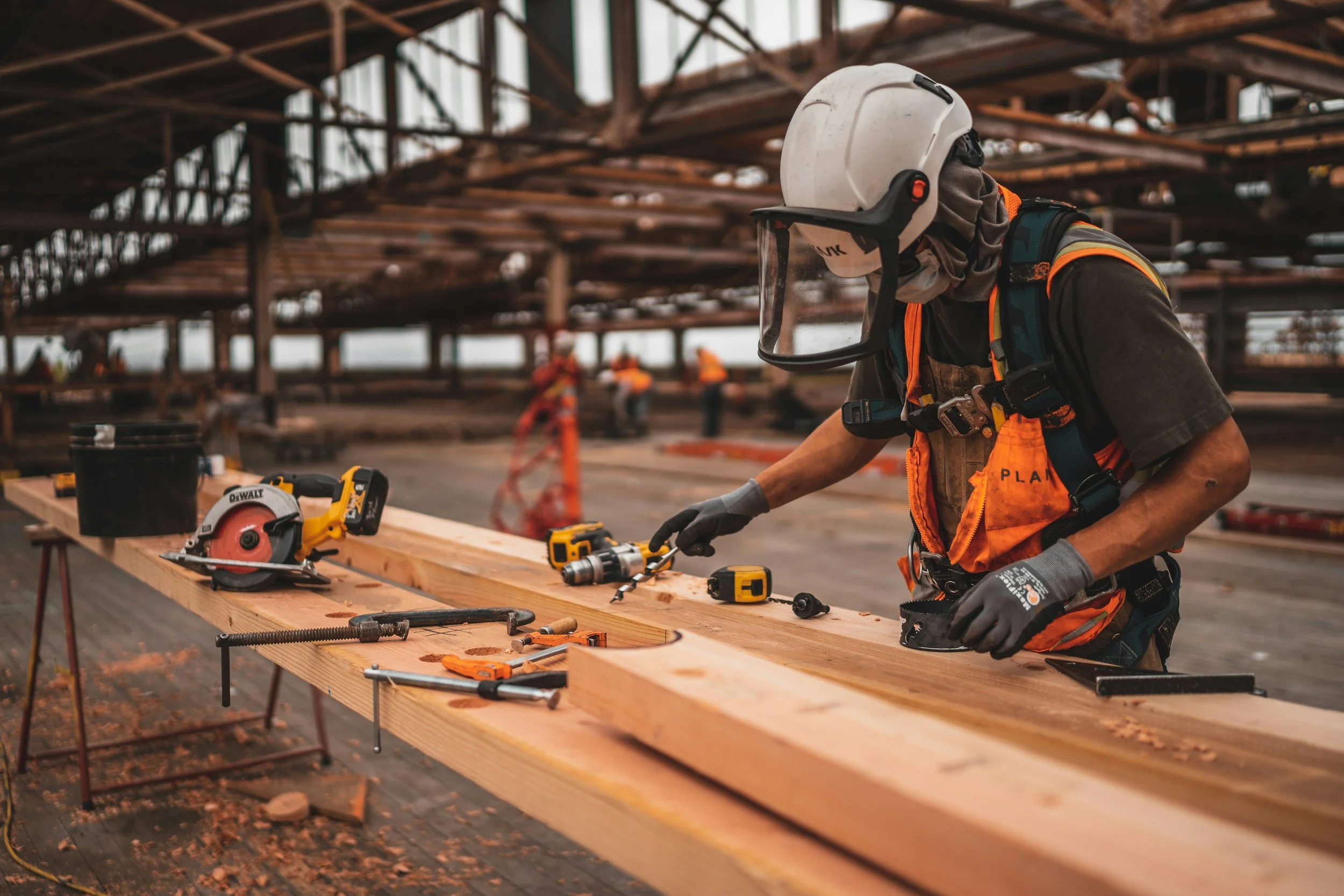
Photograph by Jeriden Villegas via Unsplash
Dr. Marvin A. McMickle
Observing Labor Day in 2026 in the United States of America forces us as a nation to confront two somewhat contradictory realities that directly impact the lives of those whose efforts we are being urged to celebrate and applaud. The first reality is what has come to be known as “affordability.” As a result of various factors contributing to the increase in costs for everything from gasoline to groceries, housing, health care and education, it is becoming hard for the average family in this country to make ends meet. A recent story in my hometown newspaper, The Plain Dealer, focuses on senior citizens who had already retired from the workforce needing to return to work just to make ends meet.
The reasons for these sudden cost increases may be traceable to two policy decisions made by President Donald Trump. One is a rise in the use of tariffs on imported products. What Trump has never seemed to understand is that tariffs are not paid by the country of origin. Tariffs are paid by those who import foreign goods, who in turn pass the increased cost of those goods on to the American consumer. Whether it is an automobile, an agricultural product, a large appliance, or a bottle of liquor, tariffs have made many products too expensive for many families, no matter how hard they may be working. At the same time, other nations may retaliate against the U.S. over tariffs and decide to import products from other countries instead of the U.S. As a result, those who pay for imported goods are being asked to pay more, and those trying to export their products are finding global markets being closed to them.
The second policy decision that has impacted the issue of affordability is the war of choice Donald Trump has launched against Iran. While that war has not met its stated objectives, which have been criticized as disingenuous, it has had one major effect that we are feeling this Labor Day. Iran has shut down or selectively limited access to the Strait of Hormuz, a narrow waterway through which passes roughly 20% of the world’s oil and liquefied natural gas. In addition to costs for gasoline and diesel fuel, the cost of fertilizer for U.S. farmers has escalated because that product also passes through the Strait of Hormuz. That raises the price of production for farmers that can raise a crop after they have secured fertilizer, but it also raises the cost of those products to the consumer when they are brought to market.
Affordability is not a hoax by the Democratic Party, as Trump and his acolytes want to suggest. Affordability is an economic crisis brought on by bad policy decisions by the White House in the last two years, the negative impacts of which had been forewarned and predicted. As we think about the efforts of those we celebrate during Labor Day, we should do more than fire up our backyard grills for one more summer cookout, or rush off to purchase an appliance, furniture, or a vehicle as part of an end-of-summer sale. We need to think about what can be done to bring prices down, so they are affordable for the average American family. We need to think about increasing the minimum wage. We need to think about restoring and not cutting the Supplemental Nutrition Assistance Program. We need to think about all the programs designed to assist people with meeting their most basic daily needs.
The law of Moses warned the people of ancient Israel not to muzzle the ox that grinds the grain (Deuteronomy 25:4). Likewise, let those who share in the production of goods and services today be rewarded for their efforts in that process.
The second reality that poses a challenge as we observe Labor Day in 2026 is the rise of AI or artificial intelligence. Like all new technologies, AI brings some valuable benefits in terms of efficiency and creativity in an almost limitless number of tasks. What has yet to be determined, but what needs to be of concern, is the degree to which AI may result in the loss of jobs currently being performed by human beings. AI may result in cost savings for various products, but it may also result in a shrinking workforce where more profit can be achieved by paying fewer people with salaries and benefits. How tragic it would be for our country this Labor Day if people who once shared in the manufacturing of certain products cannot afford to purchase the very same products due to the loss of their jobs.
The use of robotics has already had an impact on assembly lines and other work sites. A first wave of job losses has already occurred as a result. What does the expansion of more AI portend for the future of the American workforce? Let us concede the fact that robotics and AI have a positive impact for those who own or are heavily invested in the means of production. This should not be construed as a call for the status quo for the way in which the American economy works. What is being raised is simply a warning light about what happens when profits become so important that the people who help create those profits become a secondary consideration.
It is hard to imagine that this question is receiving much attention from the millionaires and billionaires that constitute the Cabinet for the Trump administration. We seem to be headed back to the gilded age of the 1890s when a handful of industrialists like John Rockefeller, J.P. Morgan, Cornelius Vanderbilt, and Andrew Carnegie held enormous sway over politicians and public policy. Today, the names have changed, but the practice seems to be the same; Elon Musk, Jeff Bezos, Mark Zuckerberg, Larry and David Ellison to name only a few. Their prominence for the present administration in Washington, DC was cemented when they sat immediately behind Donald Trump when he was inaugurated for his second term as president, with the most senior members of Congress seated with the general audience. It is this gilded age that Trump has in mind when he uses the phrase Make America Great Again.
Now is the time for our nation to make a renewed commitment to the worth and value of people who live off their wages and not just their investments. We need a commitment to a safe work environment. There should be a way for workers to make a living wage, and to have the security of health benefits and a retirement plan. Workers should have the right to organize for collective bargaining if that is their desire. There should be much stronger rules that govern the length of both the workday and the work week. Ideally, workers should be able to share in the profits they helped to produce for their employers.
The law of Moses warned the people of ancient Israel not to muzzle the ox that grinds the grain (Deuteronomy 25:4). Likewise, let those who share in the production of goods and services today be rewarded for their efforts in that process.
Marvin McMickle is pastor emeritus at Antioch Baptist Church in Cleveland, Ohio, professor emeritus at Ashland Theological Seminary, OH, and retired president of Colgate Rochester Crozer Divinity School in Rochester, NY.
The views expressed are those of the author and not necessarily those of American Baptist Home Mission Societies.
Get early access to the newest stories from Christian Citizen writers, receive contextual stories which support Christian Citizen content from the world’s top publications and join a community sharing the latest in justice, mercy and faith.