
A kairos moment for Palestine and the Church
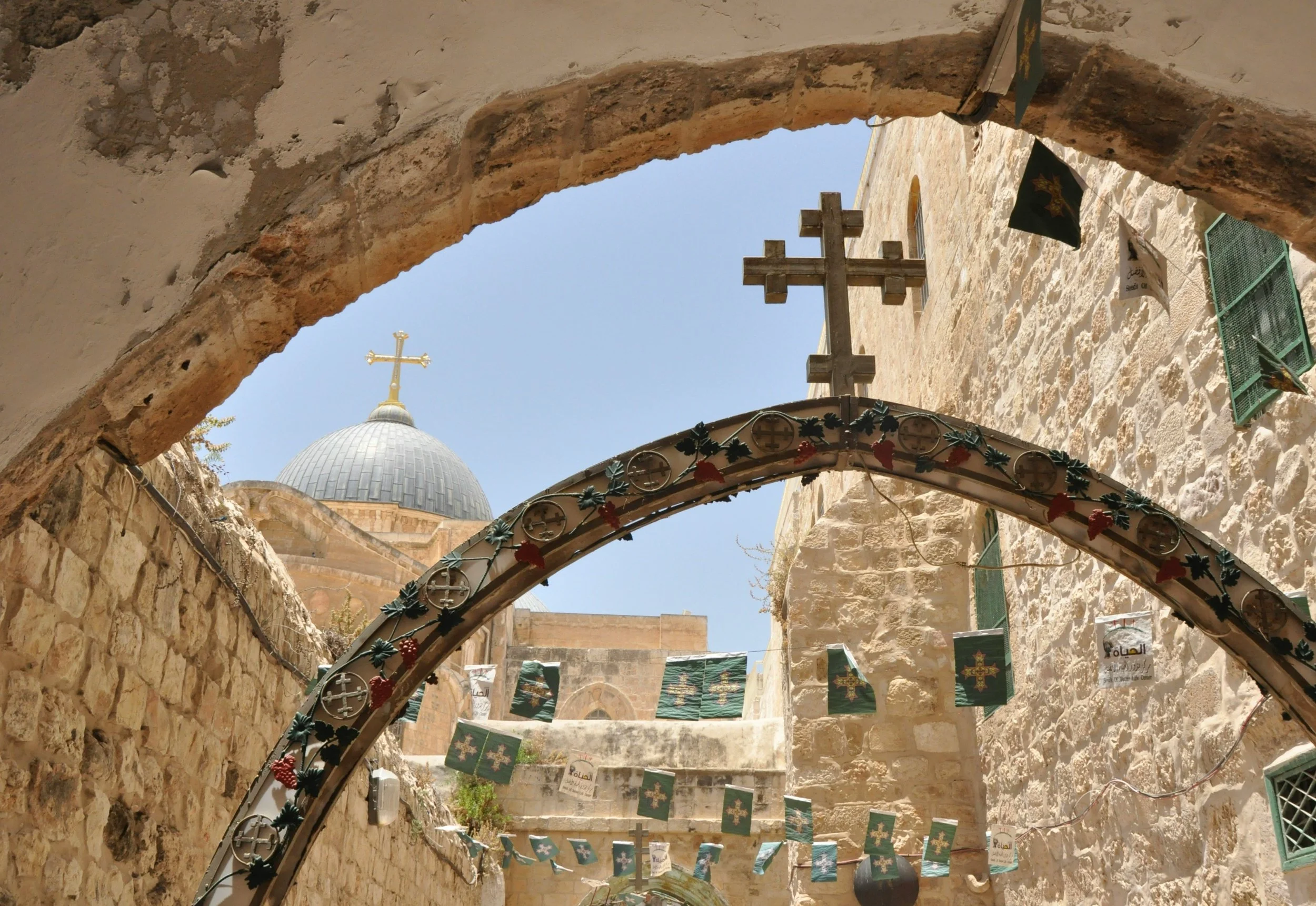
Photograph by Lisa Forkner via Unsplash
Rev. Dr. Allison Tanner
Kairos: a Greek word signifying a divinely inspired moment in time when God acts in a decisive way on behalf of God’s people.
Palestinian Christians, whose ancestral families bore witness to the birth of Christianity and whose generations have been tending to the ancient holy sites of our faith, have been reaching out to the international Christian community in a profound act of faith. Sixteen years ago, they issued a modern-day epistle, Kairos Palestine, to the international Church. This document, A moment of truth: A word of faith, hope and love from the heart of Palestinian suffering, offered clear analysis of daily realities endured by Palestinians, profound theological reflection on the role of faith, hope, and love in the midst of these realities, and a clarion call to the international Church to take action with Palestinians seeking freedom, justice, and equality.
Palestinian Christians, whose ancestral families bore witness to the birth of Christianity and whose generations have been tending to the ancient holy sites of our faith, invite the global church to participate in the divine work of sharing love and bringing liberation – for the Palestinian people and all people.
In November, in recognition of a new context of intensified suffering, Palestinian Christians launched Kairos II. This document, A Moment of Truth: Faith in a Time of Genocide, is a development and expansion of the original document, rooted in the desire of Palestinians to live at peace in their land, along with all of its inhabitants. Kairos II offers a more developed analysis of the root causes of Palestinian suffering, namely settler colonialism, apartheid, and genocide. It doubles down on its theology of justice and righteousness, affirming God’s presence for and with oppressed peoples and insisting on the logic of love through which God calls the church to act. Churches have a responsibility to act, in light of the tenets of our faith and the harm being done to Palestinians in the name of our faith, through the corrupt theology of Christion Zionism. To the international Church, Kairos II articulates what the church needs to do, how we can do it effectively, and how we can avoid causing further harm. Here are several takeaways from the document that can guide our efforts to respond.
5 points to advocate - What to do
1. Clearly name genocide, settler colonialism, apartheid
2. Advocate for accountability and international law
3. Reject and expose theologies that justify oppression, e.g., Christian Zionism
4. Practice costly solidarity through public, active engagement
5. Support creative nonviolent resistance, including BDS
5 points to avoid - What NOT to do
1. Avoid “both-sides” framing; do not conflate oppressor and oppressed
2. Do not promote dialogue without justice
3. Do not spiritualize or depoliticize the struggle, reducing it to a “religious issue”
4. Do not accept or promote solutions that don’t include justice
5. Do not remain silent or passive in the face of genocide
The gospels call the religious community, and the larger society, back to the ways of love and justice, connection and inclusion, righteousness that cultivates a peaceable kin-dom. Kairos Palestine articulates a similar prophetic voice, naming clearly how the present dominant power structures are the antithesis of God’s ways and calling us to address them through insisting on justice rooted in profound love for all of God’s children, both the oppressed and the oppressors. This ancient call comes from the little town of Bethlehem where God first came to show us how to follow the ways of God. Kairos Palestine continues in this tradition, inviting us to participate in the work of incarnation, embodying together, as God’s church, the divine work of sharing love and bringing liberation – for the Palestinian people and all people.
The Reverend Dr. Allison J. Tanner is a pastor, educator, and organizer working for justice and healing in her community. She works for the American Friends Service Committee as the National Organizer of the Apartheid-Free Communities initiative and is the pastor of Public Witness at Lakeshore Avenue Baptist Church in Oakland, California.
The views expressed are those of the author and not necessarily those of American Baptist Home Mission Societies.
If you would like to join other Baptists in the ABC community in responding to the call of our Palestinian siblings, please join the ABC Palestine Justice Network.
Get early access to the newest stories from Christian Citizen writers, receive contextual stories which support Christian Citizen content from the world’s top publications and join a community sharing the latest in justice, mercy and faith. Subscribe to our Weekly newsletter today!